PALMOILMAGAZINE, JAKARTA – The Indonesian government has reaffirmed the strategic role of universities in accelerating the transformation of the national palm oil industry toward a more innovative, sustainable, and value-added sector. Bogor Agricultural University (IPB University) is seen as having a key position in driving research-based downstream development for Indonesia’s palm oil industry.
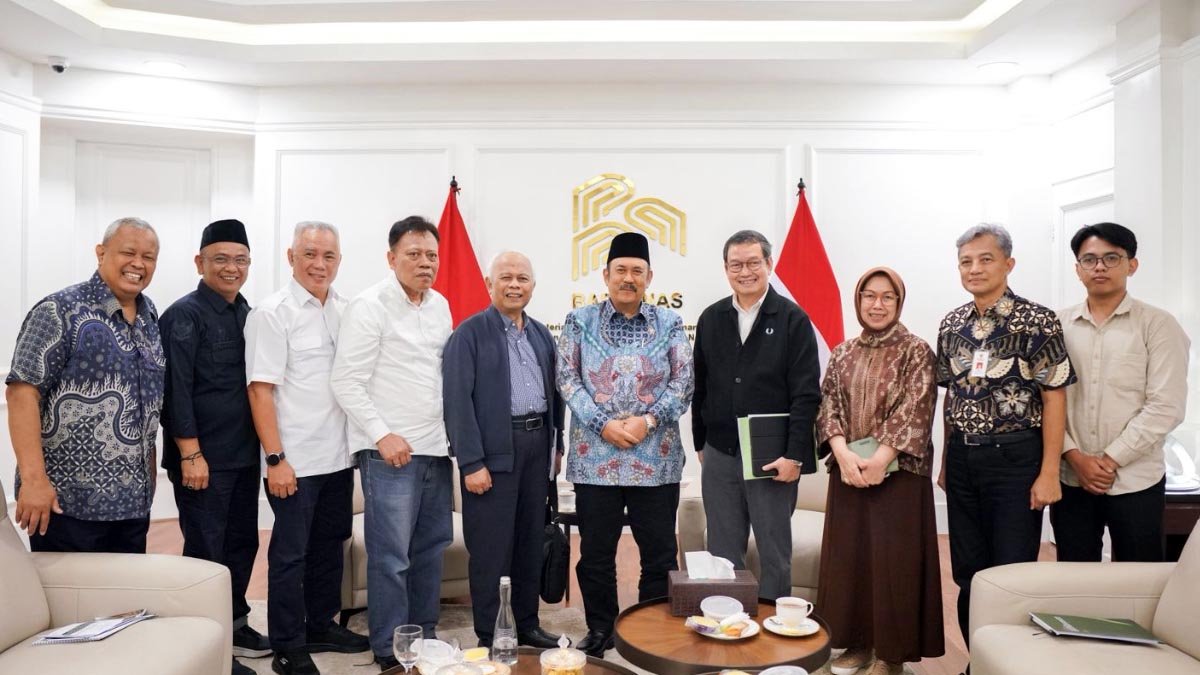
The statement was delivered by Minister of National Development Planning/Head of Bappenas, Rachmat Pambudy, during a meeting with an IPB delegation led by Professor Sudrajat from the Faculty of Agriculture at the Bappenas headquarters in Jakarta on Monday (25/5).
The meeting discussed several strategic agendas, including land management, strengthening palm oil research centers, and developing downstream industrial models involving universities, government institutions, and industry stakeholders.
Also Read: Agriculture Ministry Presses 139 Palm Oil Mills to Reverse FFB Price Cuts
According to Rachmat, Indonesia’s palm oil sector is entering a new phase that can no longer rely solely on raw commodity exports. He noted that the government has received direct instructions from President Prabowo Subianto to accelerate palm oil downstreaming through cross-sector collaboration.
“We received direct instructions from the President. Specifically for palm oil, at least three institutions have been tasked with supporting this agenda: ministries handling land and higher education, Agrinas, and Bappenas, which has been assigned to oversee palm oil downstreaming. This is where IPB should step in and take a strategic role,” Rachmat stated in an official statement received by Palmoilmagazine.com on Friday (29/5/2026).
Also Read: One-Gate Export System and a New House Called Danantara
Palm Oil Beyond CPO and FFB
Rachmat emphasized that Indonesia’s palm oil industry has enormous potential to produce a wide range of high-value products through science and technology-based innovation.
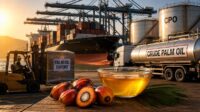
He argued that downstream development should no longer focus solely on crude palm oil (CPO) and fresh fruit bunches (FFB), but also on developing innovative derivative products capable of strengthening national competitiveness while expanding economic benefits.
Also Read: Bappenas Pushes Palm Oil–Cattle Integration to Drive Food Security and Circular Economy
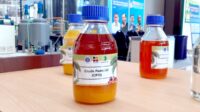
“It is time for us to move beyond simply selling CPO or FFB. A single bunch of palm fruit can be transformed into many high-value products—from natural lipstick and beta carotene capsules to composite materials and various industrial products. Palm oil becomes truly extraordinary when processed through science and technology,” Rachmat said.
“That is why I want the palm oil research center at IPB to continue and be strengthened, even if it starts on a small scale, because the long-term impact could be monumental,” he added.
The statement reinforces Indonesia’s evolving palm oil development strategy, which is increasingly focused not only on production volume but also on innovation-driven industrialization and higher value creation.
Also Read: Bappenas and CSES Seal MoU to Accelerate Low-Emission and Sustainable Palm Oil Development
Strengthening Collaboration Between Academia, Government, and Industry
During the meeting, the government also encouraged IPB to support supply chain strengthening and the development of rural economic institutions through the Red and White Village Cooperative program.
Collaboration between universities, government agencies, and industry players is viewed as essential to ensuring that palm oil development generates broader economic benefits, particularly for local communities and smallholders in plantation regions.
Also Read: Indonesia Sets June CPO Reference Price at USD 1,029.51/MT Amid Softer Global Demand
Meanwhile, Prof. Sudrajat explained that IPB is currently preparing several partnership schemes aimed at supporting sustainable palm oil plantation management while building an industry-based education ecosystem.
One model under consideration involves professionally managed plantations supported by experienced industry practitioners. The scheme would not only focus on production but also integrate education, research, and community service activities.
The meeting between Bappenas and IPB reflects broader efforts to strengthen synergy between government and academia in supporting the transformation of Indonesia’s palm oil industry toward a more innovative, sustainable, and value-added development model. (P2)