PALMOILMAGAZINE, JAKARTA – Indonesia’s National Research and Innovation Agency (BRIN) is intensifying efforts to address Ganoderma-related basal stem rot disease, a longstanding challenge that continues to threaten the productivity and sustainability of the country’s oil palm industry.
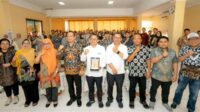
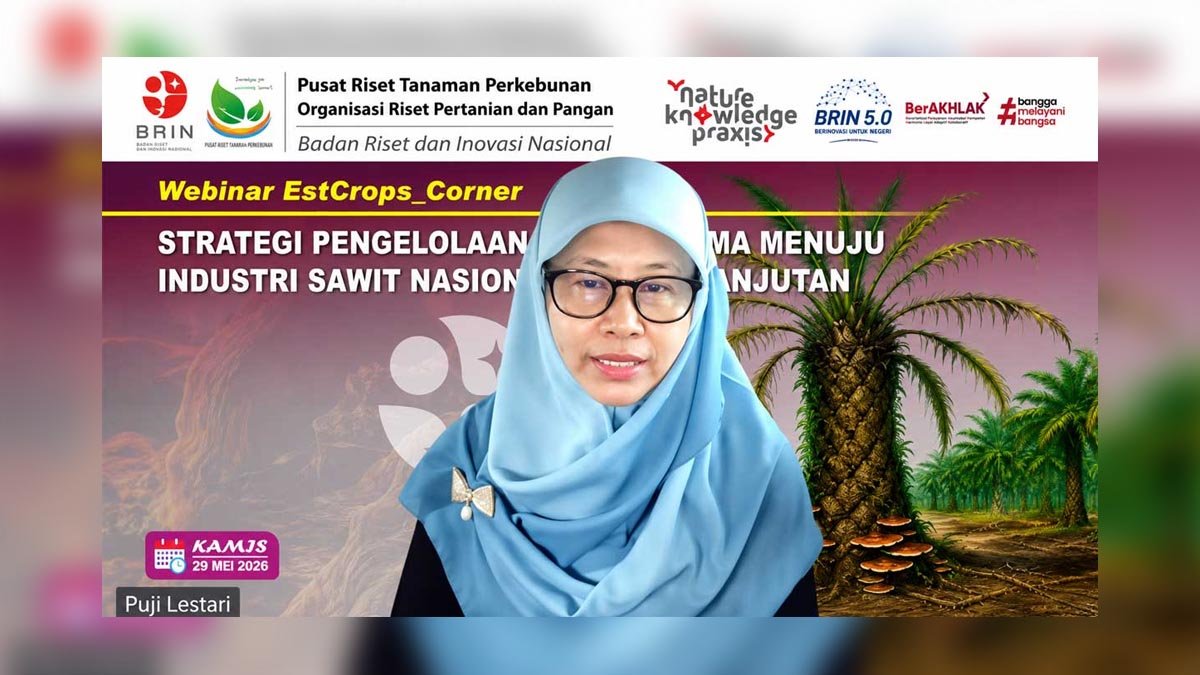
The issue was highlighted during the EstCrops_Corner #26 Webinar organized by BRIN on May 29, 2026, where researchers, industry stakeholders, and experts discussed innovative approaches to disease management. The event was attended by Palmoilmagazine.com.
Speaking at the webinar, Puji Lestari, Ph.D., Head of BRIN’s Research Organization for Agriculture and Food (ORPP), emphasized the strategic importance of the oil palm sector to Indonesia’s economy, society, and environmental development.
Also Read: Bappenas Pushes IPB to Become Hub of Palm Oil Innovation and Downstream Development
According to Puji, the industry supports the livelihoods of more than 16.2 million families across the country, making the protection of plantation productivity a national priority. However, maintaining sustainable production remains challenging due to various biotic and abiotic factors, with Ganoderma standing out as one of the most damaging pathogens.
“Oil palm has enormous potential from economic, social, and environmental perspectives, but it also faces significant challenges. Ganoderma, as a soil-borne pathogen, remains one of the major constraints to production,” Puji said.
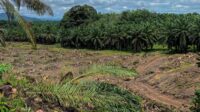
Ganoderma, which causes basal stem rot disease, attacks root systems and the lower stem of oil palm trees, eventually leading to plant death. The disease has long been regarded as one of the most serious threats to oil palm cultivation in Indonesia.
What makes the problem increasingly complex, Puji noted, is that Ganoderma no longer affects only aging palms. The pathogen is now frequently found in younger, productive trees that have already entered their harvesting phase. Moreover, infections often remain hidden during the early stages, making detection and intervention particularly difficult.
“To this day, the disease remains a serious challenge because early detection is difficult and its spread can occur rapidly,” she explained.
Recognizing the growing threat, BRIN views technological innovation as a critical component of future disease management strategies. The agency is advocating for more precise and integrated monitoring systems capable of detecting infections earlier and more accurately.
Also Read: One-Gate Export System and a New House Called Danantara
Such an approach, according to Puji, would not only improve disease control but also help reduce operational costs associated with excessive chemical usage.
“The challenge is how to implement precision disease management while reducing the operational costs linked to the overuse of chemical treatments,” she said.
As part of this strategy, BRIN is encouraging the adoption of biological control agents and beneficial microbes as environmentally friendly alternatives for managing plant diseases, including Ganoderma.
Also Read: Indonesia Sets June CPO Reference Price at USD 1,029.51/MT Amid Softer Global Demand
The use of bacteria and other biological technologies could significantly reduce dependence on chemical inputs while providing more sustainable and long-term disease control solutions.
Puji added that ongoing research and innovation programs are expected to deliver practical technologies for early detection and more effective disease management systems that can be readily adopted by plantation operators.
“One of our key goals is to ensure that research and innovation can be optimally utilized to develop early detection methods and sustainable disease management solutions that prevent further losses in oil palm plantations,” she said.
Also Read: Agriculture Ministry Presses 139 Palm Oil Mills to Reverse FFB Price Cuts
She also stressed the importance of collaboration among research institutions, plantation companies, universities, and industry research centers, including the Indonesian Oil Palm Research Institute (PPKS).
According to Puji, scientific findings should not remain confined to laboratories. Instead, research outcomes must be communicated effectively to industry stakeholders to accelerate implementation and maximize their impact on the ground.
For that reason, she emphasized the growing importance of public communication in raising awareness about plant diseases and introducing innovative control measures to plantation managers and policymakers.
Also Read: Bumitama Strengthens Palm Oil Traceability Down to Smallholder Plot Level
“Our hope is that the research being conducted will generate tangible benefits and contribute meaningfully to the industry, supported by stronger public communication so that research outcomes can be utilized on a national scale,” she said.
As Ganoderma continues to spread across major oil palm-growing regions, strengthening early detection capabilities and expanding the development of environmentally friendly control technologies are increasingly viewed as essential strategies to safeguard productivity while ensuring the long-term sustainability of Indonesia’s oil palm industry. (P2)