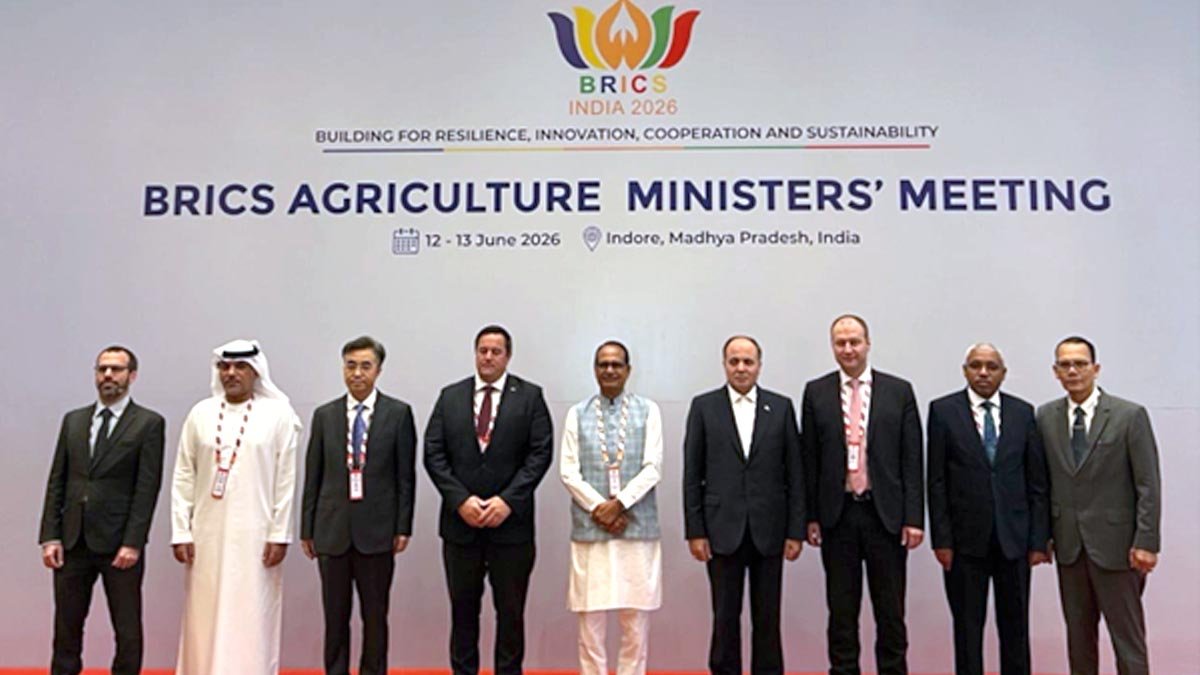
PALMOILMAGAZINE, INDIA – Cooperation among BRICS member countries is creating significant opportunities for Indonesia to strengthen national food security through agricultural modernization, higher productivity, and the development of more sustainable farming systems. These commitments were highlighted during the 2026 BRICS Agriculture Ministers’ Meeting, held in Indore, India, on June 12–13.
Under the theme Building for Resilience, Innovation, Cooperation, and Sustainability, the meeting concluded with a Joint Declaration reaffirming BRICS members’ commitment to enhancing global food security, improving the livelihoods of smallholder farmers, women, and youth, and expanding collaboration in innovation, technology, trade, and sustainable agricultural development.
According to information released by Indonesia’s Ministry of Agriculture on Monday (June 15, 2026), the Indonesian delegation was led by Acting Director General of Plantations Ali Jamil, representing Minister of Agriculture Andi Amran Sulaiman.
Also Read: RSPO Strengthens Smallholder Support with IDR416 Billion Amid Stricter Global Sustainability Rules
During the forum, Indonesia expressed strong support for expanding cooperation in seed systems, agricultural inputs, plant genetic resources, and digital agriculture as part of efforts to modernize the country’s agricultural sector.
“Indonesia highly values the BRICS Agriculture Ministers’ Meeting as an important platform for strengthening cooperation toward resilient, inclusive, and sustainable agricultural and food systems,” Ali Jamil said.
He noted that Indonesia is actively encouraging deeper collaboration in seed development, agricultural production facilities, plant genetic resources, and digital farming technologies to support a more modern and sustainable agricultural transformation. Indonesia also emphasized the critical role of farmers in preserving agricultural biodiversity and ensuring long-term food system sustainability.
Also Read: FORTASBI Empowers Certified Smallholders as KUD Tani Subur Showcases RSPO Success Story
For Indonesia, the outcomes of the meeting offer a range of strategic opportunities, including expanded research partnerships, innovation, and technology transfer through the BRICS Agricultural Research Platform (BARP). Additional collaboration under BRICS AGRIN could strengthen access to improved seeds, genetic resources, fertilizers, and other agricultural inputs, helping to boost productivity and reinforce national food security.
The BRICS declaration also paves the way for greater cooperation in digital agriculture, artificial intelligence (AI), satellite-based agricultural monitoring, and digital extension services, all of which are expected to support the modernization of farming systems.
Beyond crop production, member countries identified opportunities to collaborate in livestock technologies, feed development, animal health, fisheries, and aquaculture. Efforts to strengthen post-harvest handling, storage infrastructure, cold chain systems, and food loss reduction were also highlighted as important measures to increase value creation and improve farmers’ incomes.
Also Read: CPOPC Empowers Global Youth to Champion Sustainable Palm Oil Through YEAs Program
BRICS members further agreed to deepen cooperation in food safety, sanitary and phytosanitary (SPS) measures, and digital certification systems. Such initiatives could help expand market access and improve the global competitiveness of Indonesian agricultural products.
Climate-resilient agriculture, agroecology, and regenerative farming practices also emerged as key priorities. In addition, the declaration opened opportunities for member countries to access various development financing mechanisms, including support from the New Development Bank (NDB), to facilitate investments in sustainable agriculture.
On the sidelines of the meeting, Indonesia held bilateral discussions with South Africa and India. Indonesia and South Africa agreed to strengthen technical cooperation aimed at improving food quality and safety standards while facilitating market access for agricultural products from both countries. The two sides also committed to accelerating the finalization of a Memorandum of Understanding (MoU) on agricultural cooperation.
Also Read: West Sumatra FFB Prices Ease as Palm Oil Market Adjusts in Mid-June 2026
Meanwhile, discussions with India focused on potential collaboration in wheat and garlic seed supplies, capacity-building programs, digital agriculture, and the downstream development of Indonesia’s gambier industry through farmer training and technical support.
The outcomes of the 2026 BRICS Agriculture Ministers’ Meeting align closely with Indonesia’s current agricultural agenda, which prioritizes food self-sufficiency through productivity gains, modernization, stronger agricultural inputs, and the adoption of innovation and technology.
Minister of Agriculture Andi Amran Sulaiman has consistently emphasized that technology-driven modernization, mechanization, and farmer capacity building are essential to maintaining national food security amid climate challenges and shifting global food dynamics.
Also Read: North Sumatra FFB Prices Climb to IDR 3,720/kg as Palm Oil Market Remains Firm
“Agricultural modernization is the key to safeguarding national food security. We are promoting innovation- and technology-based agriculture. Technology increases productivity, raises cropping intensity, lowers production costs, and ultimately improves farmers’ welfare,” Amran said.
Through BRICS cooperation, Indonesia stands to gain broader access to innovation, technology, investment, and international markets that can accelerate the transformation of its agricultural sector. The collaboration is expected to contribute directly to the country’s food self-sufficiency goals, improve farmer prosperity, and strengthen Indonesia’s position as one of the world’s leading agricultural economies. (P3)