PALMOILMAGAZINE, JAKARTA – On paper, Indonesia’s B50 biodiesel mandate promises significant foreign exchange savings while accelerating the downstream development of the country’s palm oil industry. Yet major policy initiatives inevitably raise a more fundamental question: Is the industry’s supply chain—and the financing mechanism that supports it—strong enough to sustain such an ambitious transition? That is why caution should remain at the center of implementation.
Palm oil has long been one of Indonesia’s economic pillars. Stretching across Sumatra, Kalimantan, Sulawesi, and Papua, the crop has evolved into the country’s leading non-oil-and-gas export commodity, generating substantial foreign exchange earnings. Initially, Indonesia was recognized primarily as a supplier of crude palm oil (CPO), but global demand has gradually shifted toward higher-value downstream products, including refined, bleached, and deodorized (RBD) olein, the key ingredient in palm cooking oil.
The industry’s rapid expansion is evident in its production figures. National CPO output increased from around 40 million metric tons in 2020 to approximately 51.66 million metric tons in 2025, representing nearly 29% growth within just five years.
Also Read: Prabowo Launches B50 Biodiesel, Declares Indonesia First Nation to Mandate 50% Palm-Based Fuel Blend
This expansion has delivered broad economic benefits. Palm oil plantations have driven regional development, created millions of jobs, boosted rural incomes, and strengthened Indonesia’s export revenues. At the same time, downstream industries have flourished, particularly biodiesel, which has become a central pillar of the government’s energy security strategy.
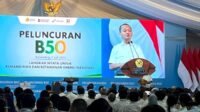
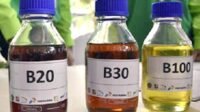
That downstream push has gained momentum through Indonesia’s biodiesel blending mandate. Beginning with B2.5 in 2008, the program gradually progressed to B40 and is now preparing for its next phase—B50, scheduled to take effect on July 1, 2026. Over nearly two decades, the policy has fundamentally reshaped Indonesia’s palm oil market, with domestic consumption becoming an increasingly important destination for CPO production alongside exports.
From a fiscal perspective, the projected benefits are compelling. Indonesia’s Ministry of Energy and Mineral Resources estimates that B50 could save Rp157.28 trillion (approximately US$9.6 billion) in foreign exchange annually—around Rp17.28 trillion more than the estimated savings generated under the B40 program. Such figures naturally support President Prabowo Subianto’s vision of strengthening national energy and economic resilience.
Also Read: Indonesia to Launch B50 Biodiesel in July 2026, Saving 4 Million KL of Fuel
However, as with many strategic policies, the real challenges lie beyond the headline numbers.
The first concern is industrial readiness. Meeting B50 demand is expected to require around 26 million kiloliters of biodiesel production capacity. Indonesia’s existing biodiesel refining capacity currently stands at only 22 million kiloliters, sufficient for the B40 mandate but below the level needed for B50. Moreover, installed capacity is never fully utilized due to maintenance schedules and operational constraints, with normal utilization rates averaging around 80%.
Another challenge lies in the palm oil refining sector. Indonesia’s refining capacity is currently estimated at 21 million metric tons annually, which is considered adequate through the end of 2026. Beyond that, however, projected demand will require an additional 5 million metric tons of annual capacity, raising the total requirement to around 26 million metric tons to ensure sufficient feedstock for biodiesel production.
Also Read: Indonesia Targets Higher Palm Oil Productivity and Downstream Growth in 2026
At the same time, Indonesia’s broader downstream palm oil industry faces another structural issue. Domestic oleochemical production has already exceeded global demand for several products, including fatty acids and fatty alcohols. As export markets become increasingly saturated, expanding domestic demand through biodiesel mandates offers an attractive alternative outlet.
Yet downstream development is not simply a matter of diverting CPO directly into biodiesel tanks.
In practice, CPO produced by palm oil mills is first processed through refineries that primarily produce cooking oil. While direct use of CPO for biodiesel is technically possible, doing so would significantly increase production costs, making the refining stage economically essential.
Also Read: Palm Oil Remains Indonesia’s Top Trade Surplus Contributor as Non-Oil Exports Reach US$16.31 Billion
According to the Indonesian Palm Oil Association (GAPKI), producing 19.5–20 million kiloliters of biodiesel under the B50 program would require approximately 17.5–18 million metric tons of CPO, a substantial increase from the 13.9–14 million metric tons needed under B40.
That additional demand of 3–4 million metric tons would likely reduce Indonesia’s CPO exports by an estimated 2–3 million metric tons annually. Combined with tighter supply resulting from smallholder replanting programs, weather-related disruptions, and government land enforcement measures, the domestic market could experience increased supply pressure, potentially pushing CPO prices even higher.
Higher prices would undoubtedly benefit palm oil producers. However, they also create important fiscal considerations.
Also Read: Palm Oil as a Renewable Natural Resource
Indonesia’s biodiesel program relies heavily on incentives managed by the Plantation Fund Management Agency (BPDP), which are financed through export levies on palm oil. If exports decline as more CPO is absorbed domestically, levy collections could also decrease. At the very moment when biodiesel subsidies may require greater funding, the revenue source supporting those incentives could begin to shrink.
This creates a policy paradox.
The biodiesel mandate depends on substantial financial incentives, yet those incentives are financed primarily through export activities that may decline precisely because the biodiesel program is succeeding in diverting more CPO to the domestic market. Without careful planning, Indonesia could eventually face funding shortfalls for its biodiesel incentive scheme.
Also Read: Palm Oil Remains Indonesia’s Top Trade Surplus Contributor as Non-Oil Exports Reach US$16.31 Billion
For that reason, the B50 mandate should not be viewed solely as a milestone in downstream industrialization or a symbol of energy independence. It should also be seen as a critical test of the resilience of Indonesia’s palm oil supply chain, downstream industrial capacity, and the fiscal framework that underpins the entire program.
The ambition to strengthen national energy security deserves recognition. History, however, has repeatedly shown that the success of major public policies depends less on their objectives than on the quality of their implementation.
For B50, caution is essential. The program’s long-term success will depend not only on increasing domestic CPO utilization but also on maintaining a delicate balance among exports, supply availability, price stability, industrial capacity, and the sustainability of its financing mechanism.
Also Read: PTPN Group Reports 181% Jump in 2025 Net Profit as Transformation Drives Strong Growth
B50 holds tremendous promise for Indonesia. But realizing its full potential will require careful planning and prudent execution. Otherwise, declining CPO exports could gradually weaken the very funding mechanism that has enabled Indonesia’s biodiesel program to flourish. (*)
By Ignatius Ery Kurniawan, Editor-in-Chief Palmoilmagazine.com