
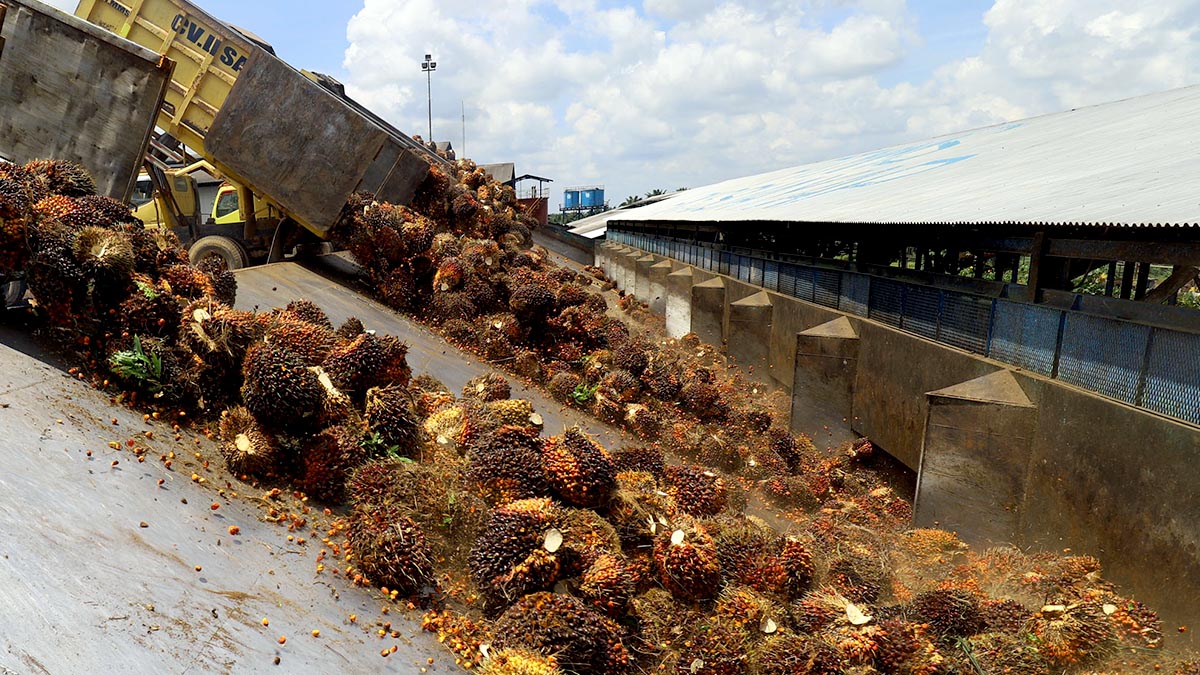
FFB quality, disciplined sorting, processing controls and data-driven monitoring of oil losses are critical to improving palm oil extraction while maintaining CPO quality and mill efficiency.
PALMOILMAGAZINE, JAKARTA — Improving palm oil extraction rates is not solely a matter of mill performance. The quality of fresh fruit bunches (FFB) delivered to the mill, the discipline of fruit sorting and the effectiveness of processing controls all play a critical role in determining how much oil can ultimately be recovered from the raw material.
Bonar Saragih, a palm oil mill specialist and Director of PT Mitra Agro Servindo, highlighted the importance of taking a holistic approach to mill performance during the IPS Planter Talk Series #4, themed “Building a High Extraction, Low Loss and Reliable Palm Oil,” on Saturday (Oct. 24, 2026).
Also Read: South Sumatra FFB Prices Reach IDR 3,541.39/kg for 10–20-Year-Old Palms
Bonar said raw material quality is among the most important factors influencing extraction rates. Drawing on his experience advising a number of palm oil mills, he estimated that roughly 80% of extraction performance is related to the condition of the raw material, while the remaining 20% is influenced by mill processing.
The 80:20 estimate reflects Bonar’s practical experience and was presented as an industry observation rather than the result of a controlled research study.
He said immature or otherwise poor-quality fruit can significantly reduce the potential amount of oil recovered. As a result, FFB quality control needs to begin at the purchasing stage and continue through delivery and processing at the mill.
Also Read: KPBN Inacom CPO Price Rises to IDR 15,100/kg on Oct. 28 as Rotterdam CPO Falls
“The poorer the fruit quality, the more it will affect the extraction rate,” was a key point in his presentation.
FFB Sorting as a Critical Control Point
Bonar placed particular emphasis on the handling of externally sourced FFB and purchased fruit, which he said requires strict quality control.
An effective sorting system, he said, needs adequate manpower, clearly defined assessment parameters and procedures that are applied consistently across incoming consignments.
Also Read: Malaysia CPO Falls to RM4,687 on Oct. 28 as Rotterdam Drops US$20, KPBN Rises to IDR 15,100
He cautioned that quality control should not depend solely on individual judgment or subjective assessments by sorting personnel. Mills need clear fruit-reception standards, proper training for sorting teams and procedures that allow inspection results to be documented and accounted for.
Bonar also highlighted the risk of irregularities in FFB reception. Strengthening supervision, documentation and internal controls can help ensure that decisions on whether to accept or reject fruit remain aligned with the mill’s established standards.
The waiting time between FFB reception and processing is another factor that requires attention. Bonar stressed the importance of controlling the period from fruit arrival to processing, with the objective of minimizing unnecessary delays before FFB enters the production line.
Also Read: Is Palm Industry The Real Culprit Behind Forest and Land Fires?
The appropriate operating window, however, needs to be adapted to mill capacity, raw material conditions, transportation systems and vehicle queuing arrangements.
Data-Driven Control of Oil Losses
Beyond extraction rates, Bonar emphasized the importance of controlling oil losses throughout the palm oil processing chain.
Mill operators need to identify where oil is being lost by conducting consistent measurements, he said. Laboratory analysis, monitoring of processed material quality and regular evaluation of processing parameters can help mills identify loss points and determine where corrective action is required.
Also Read: PTPN IV PalmCo Expands RSPO Certification to 124 Estates and 67 Mills, Certified Sales Jump 148%
He also highlighted the need to monitor residual oil in palm oil mill effluent. Excessively high oil content in effluent can indicate that the mill needs to review the effectiveness of its oil separation and recovery processes.
In this context, operational data should not be treated merely as an administrative reporting requirement. Measurement results should serve as the basis for corrective action, evaluating the effectiveness of process improvements and comparing mill performance across different periods.
Bonar also cautioned that efforts to increase extraction rates should not come at the expense of product quality. Changes to processing parameters should be evaluated for their impact on final output, energy consumption and operating costs.
Also Read: South Sumatra Forest Fires Require Peatland Governance, Not Just Firefighting
In his view, higher extraction rates need to go hand in hand with CPO quality control and overall processing efficiency.
By improving FFB quality, strengthening sorting procedures and managing oil losses through reliable operational data, palm oil mills have an opportunity to increase the value recovered from each tonne of raw material rather than relying solely on higher FFB volumes.
Such measures are increasingly important for building palm oil mills that are more efficient, reliable and competitive as the industry faces growing pressure to improve productivity while maintaining product quality and operational performance. (P2)