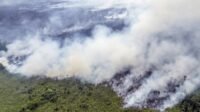
PALMOILMAGAZINE, SIERRA LEONE — Africa’s rate of forest loss has reached alarming levels. Between 2010 and 2020, the continent recorded the highest deforestation rate globally, averaging around 3.9 million hectares per year. Agricultural expansion, unsustainable fuelwood use, logging, and mining activities remain the primary drivers behind the rapid decline in forest cover.
Amid mounting environmental pressure, a transformative initiative has emerged from Sierra Leone. Planting Naturals has strengthened its commitment to sustainable palm oil production by partnering with KOLTIVA, a global leader in sustainable supply chain technology. The collaboration aims to establish a fully traceable, transparent palm oil supply chain that complies with international sustainability standards.
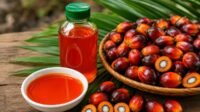
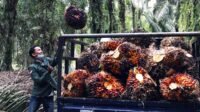
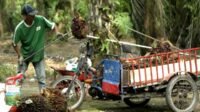
Planting Naturals produces organic crude palm oil and palm kernel oil for export markets, sourcing raw materials from its own plantations as well as a network of more than 7,200 smallholder farmers. The company is recognized as the first operator of organic and RSPO-certified palm oil plantations in Sierra Leone and has developed an outgrower partnership model aligned with evolving global regulations, including the European Union Deforestation Regulation (EUDR).
Also Read:
With traceability technology and on-the-ground support from KOLTIVA, Planting Naturals now achieves full visibility down to the plot level across its supply chain. This capability has become increasingly critical as global regulatory pressure intensifies, particularly under the EUDR, which requires all commodities entering the EU market to be proven deforestation-free and legally produced.
For Planting Naturals, compliance goes beyond regulatory obligation. “With the EUDR significantly impacting global trade, we are taking decisive action to ensure every drop of palm oil we produce is legal, deforestation-free, and fully traceable,” said Jan Hein De Vroe, Co-Founder and CEO of Planting Naturals, in an official statement received by Palmoilmagazine.com on Thursday (25/12/2025). Through KOLTIVA’s KoltiTrace platform, he added, the company integrates geolocation data, legal documentation, and sustainability practices into a comprehensive system.
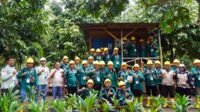
This transformation is supported by KOLTIVA’s traceability platform, which enables detailed farm mapping, real-time data collection, and continuous compliance monitoring throughout the supply chain. Trained field teams collect verified data on farmer profiles, land mapping, and sustainability practices directly on-site. All information is consolidated into a centralized system to support EUDR risk assessments, shipment reporting, and audit readiness.
Also Read: Barito Timur Reviews PT Indopenta’s Plantation Downsizing and Palm Oil Mill Proposal
The impact extends beyond administrative compliance. By integrating more than 7,200 smallholder farmers into a verified and traceable system, Planting Naturals is building an inclusive business model that strengthens rural livelihoods while safeguarding biodiversity.
Planting Naturals Sustainability Manager, Marvellous Ogala, noted that the collaboration has delivered tangible improvements on the ground. “Our operations have become more efficient and transparent. Field agents can now collect data faster and more accurately, while communicating with farmers in local languages. This enhances data quality, compliance, and relationships with farming communities,” he said.
From KOLTIVA’s perspective, the partnership demonstrates that African agribusiness players can lead responsible production practices. “By combining technology with field-level engagement, Planting Naturals is strengthening traceability, smallholder inclusion, and deforestation-free sourcing,” said KOLTIVA Co-Founder and CEO Manfred Borer.
Also Read: Article 33, Palm Oil, and the Limits of State Power
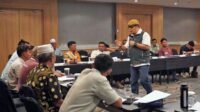
This approach was echoed by Chris Yohan Avié, KOLTIVA’s Customer Success Officer and Implementation Manager, who emphasized the human element behind the technology. “From training rooms to plantations, we see knowledge translated into real action. Technology is only a tool—people are the ones who make the difference,” he said.
By investing in human capacity and digital traceability systems, Planting Naturals is setting a new benchmark for responsible palm oil production in Sierra Leone. Amid Africa’s deforestation crisis, the initiative shows that transparent, inclusive, and deforestation-free supply chains are not merely aspirational, but achievable at scale and competitive in global markets. (P2)