PALMOILMAGAZINE, JAKARTA – For decades, Indonesian agriculture has largely followed a conventional model built around monoculture farming, intensive chemical fertilizer use, and maximizing production. While this approach has delivered higher yields, it has also contributed to declining soil fertility, environmental degradation, and limited economic returns for farmers, who remain at the bottom of the agricultural value chain.
Today, a growing number of farming communities are embracing regenerative agriculture and agroforestry as practical solutions to restore soil health, strengthen climate resilience, and create greater economic value at the village level.
According to Mansuetus Darto, Secretariat of the Association for Sustainable Agricultural Innovation (Tani Baik), transforming agriculture begins with changing mindsets rather than simply introducing new farming techniques.
For generations, farmers have relied on production systems centered on single crops and chemical fertilizers. Over time, this model became deeply embedded in agricultural practices, reinforced by decades of aggressive fertilizer marketing, demonstration programs, and financing schemes that encouraged dependence on external inputs.
“Farmers have been exposed to chemical fertilizer promotion for decades,” Darto said.
In contrast, sustainable alternatives such as regenerative agriculture have received far less attention, leaving many farmers unaware of practices that can improve long-term soil health and farm productivity.
Also Read: SNV Impact Forum 2026 Calls for Stronger Partnerships to Scale Regenerative Agriculture
The Challenges of Conventional Farming
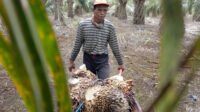
Conventional agriculture has become a tradition passed from one generation to the next. Young farmers typically adopt the same cultivation methods used by their parents, even as environmental conditions continue to change.
Climate change has made weather patterns increasingly unpredictable. Irregular rainfall, rising temperatures, and growing pest and disease pressures demand farming systems that are more adaptive and resilient.
However, many farmers lack access to the knowledge and training needed to transition toward these new approaches.
Also Read: SNV Forum Urges Farmer–Industry Collaboration to Scale Regenerative Palm Oil Farming
“As a result, farmers continue using conventional methods because those are the only systems they know,” Darto explained.
Over time, this dependence has contributed to declining productivity while reducing the number of farming communities capable of sustaining profitable agricultural businesses.
Large-scale monoculture has also weakened agricultural ecosystems by reducing biodiversity, degrading soil biology, and diminishing the soil’s capacity to retain water.
Climate Change Adds New Pressure
The impacts of climate change are further exposing the weaknesses of conventional farming systems.
Longer dry seasons in some regions, heavier rainfall in others, and increasingly frequent extreme weather events have disrupted planting cycles and increased production risks.
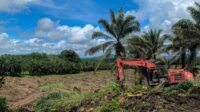
At the same time, agricultural expansion and plantation development have contributed to deforestation in some areas, accelerating environmental degradation and placing additional pressure on natural resources.
According to Darto, these challenges demonstrate that Indonesia’s agricultural model must evolve.
Also Read: From Soil Health to Higher Yields: Regenerative Agriculture and the Future of Smallholder Oil Palm
Sustainability Is Becoming a Market Requirement
The push toward regenerative agriculture is no longer driven solely by environmental concerns. Global markets are increasingly demanding sustainably produced agricultural commodities, particularly for export-oriented sectors.
Consumers worldwide are paying closer attention to how food and agricultural products are produced, expecting farming systems that protect natural resources rather than degrade them.
This shift is creating new opportunities for regenerative agriculture.
Darto said regenerative farming seeks to balance economic performance with environmental protection, social well-being, and long-term agricultural sustainability.
“Regenerative agriculture is designed to maintain that balance,” he said.
Beyond Farming Practices
For Darto and fellow advocates, regenerative agriculture represents more than a new cultivation technique.
Their broader objective is to transform the agricultural system itself by strengthening farmer knowledge, improving market access, and encouraging supportive public policies.
Under this approach, regenerative agriculture is viewed as a pathway toward aligning economic productivity, ecosystem restoration, and rural community development—creating a more resilient agricultural sector capable of meeting both environmental and market challenges in the years ahead. (P2)