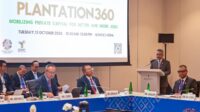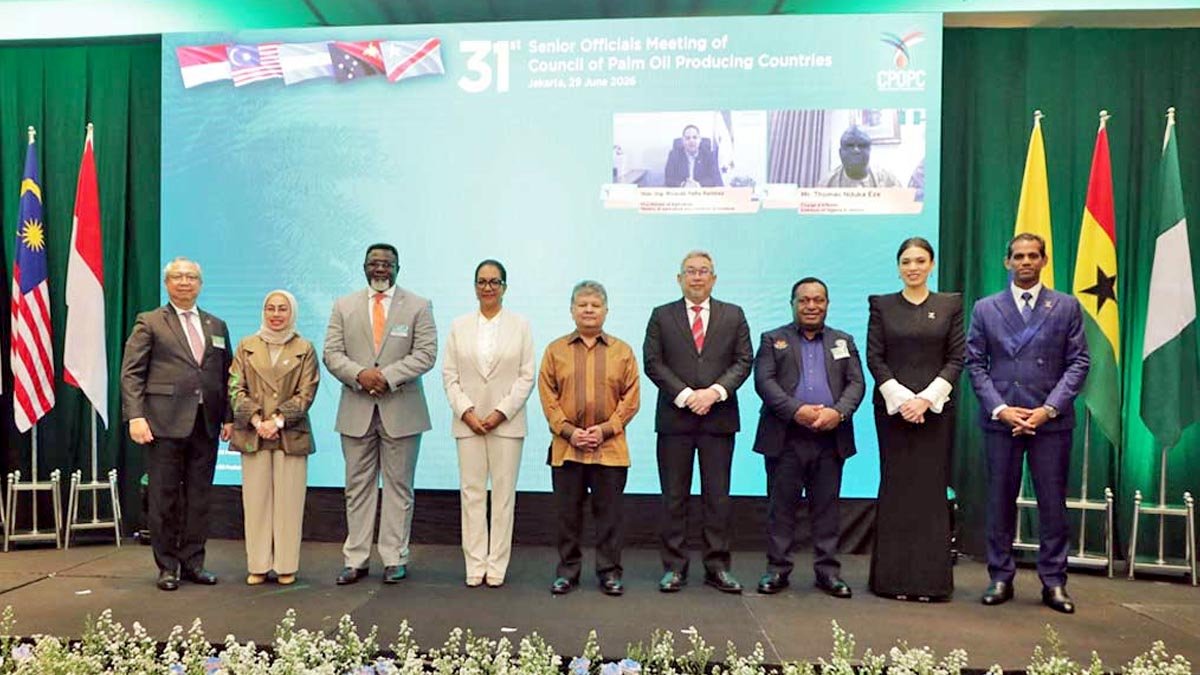
PALMOILMAGAZINE, JAKARTA – The Council of Palm Oil Producing Countries (CPOPC) is reinforcing its role in advancing the global palm oil agenda by expanding its membership, deepening international partnerships, and enhancing support for smallholder farmers. These strategic initiatives were among the key outcomes of the 31st Senior Officials Meeting (SOM), held in Jakarta at the end of June.
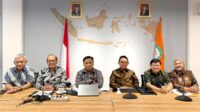
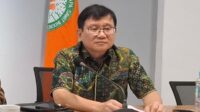
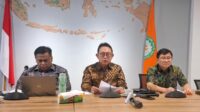
According to an official statement received by Palmoilmagazine.com, the hybrid meeting took place on June 29, 2026, and was chaired by Dida Gardera, Senior Advisor for Connectivity and Services at Indonesia’s Coordinating Ministry for Economic Affairs.
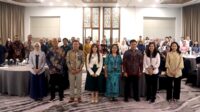
Senior officials from CPOPC member countries—including Indonesia, Malaysia, Honduras, Papua New Guinea, and the Democratic Republic of the Congo—participated in the meeting. Ghana and Nigeria also attended as observer countries, reaffirming their commitment to completing the process toward full membership.
Also Read: KPBN CPO Price Rises to IDR15,650/kg on Thursday (July 16)
A major outcome of the meeting was the approval of Costa Rica’s application to join CPOPC. The Central American nation will first be granted observer status while completing the accession procedures required under the organization’s membership framework.
The CPOPC Secretariat will formally notify the Government of Costa Rica of the decision. The country will then have up to two years to finalize its domestic approval process and submit its instrument of accession before becoming a full member.
During the meeting, senior officials emphasized the importance of strengthening cooperation among palm oil-producing countries amid growing global economic uncertainty and geopolitical challenges.
Also Read: SNV Impact Forum 2026 Calls for Stronger Partnerships to Scale Regenerative Agriculture
They underscored CPOPC’s increasingly strategic role as a platform for coordinating producer countries and presenting a unified voice in promoting the interests of the global palm oil industry—particularly the millions of smallholder farmers whose livelihoods depend on the commodity.
Beyond membership expansion, CPOPC reaffirmed its commitment to strengthening engagement with major palm oil consuming countries, including India, China, and Pakistan. The organization also plans to broaden cooperation across Africa while continuing constructive dialogue with the European Union on sustainability-related issues.
Also Read: SNV Forum Urges Farmer–Industry Collaboration to Scale Regenerative Palm Oil Farming
Advancing International Cooperation
The meeting also commended the CPOPC Secretariat for expanding international cooperation through partnerships with global organizations, including the United Nations (UN), UN Trade and Development (UNCTAD), the FAO Committee on World Food Security (CFS), and ASEAN.
Officials noted that CPOPC’s active participation in international forums has helped strengthen global collaboration while promoting the role of sustainable palm oil in supporting food security and sustainable development.
Also Read: GAPKI: Indonesia’s Palm Oil Output Slips in May 2026, but CPO Stocks Rise to 3.04 Million Tons
GAP Training Enhances Smallholder Capacity
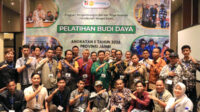
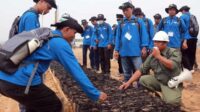
In addition to trade and diplomacy, CPOPC reported positive progress from its Good Agricultural Practices (GAP) training program for independent smallholder farmers.
The program has been implemented in Sumatra, Central Kalimantan, and West Sulawesi in Indonesia, as well as Sabah and Sarawak in Malaysia. Through the initiative, participating farmers have improved their adoption of best agricultural practices, strengthened sustainability standards, and expanded knowledge-sharing across CPOPC member countries.
The meeting also reviewed developments in the global palm oil market, noting that industry prospects continue to be shaped by external factors such as climate change, geopolitical tensions, elevated energy prices, and the expansion of biofuel mandates in several countries.
While these trends are expected to support stronger demand and higher industry revenues, officials also acknowledged challenges arising from increasing competition for palm oil as an energy feedstock, tightening global supply, and more stringent sustainability requirements in international markets.
Also Read: VEOPAN Urges Stronger Domestic Palm Oil Industry Over Import Reliance
YoungElaeis Ambassadors Foster Future Sustainability Leaders
The 31st SOM also praised the progress of the YoungElaeis Ambassadors (YEA) program, which aims to develop a new generation of advocates for sustainable palm oil.
Through the YEA Induction Week, participants gained first-hand exposure to the palm oil industry through field visits, stakeholder discussions, and knowledge exchanges in Indonesia and Malaysia, the world’s two largest palm oil producers.
Also Read: Malaysia CPO Prices Fall for Second Straight Day, Indonesia’s KPBN Tender Climbs to IDR 15,650/kg
The initiative is expected to cultivate young leaders with a broader understanding of the palm oil sector’s contribution to economic development, food security, and global sustainability. (P2)