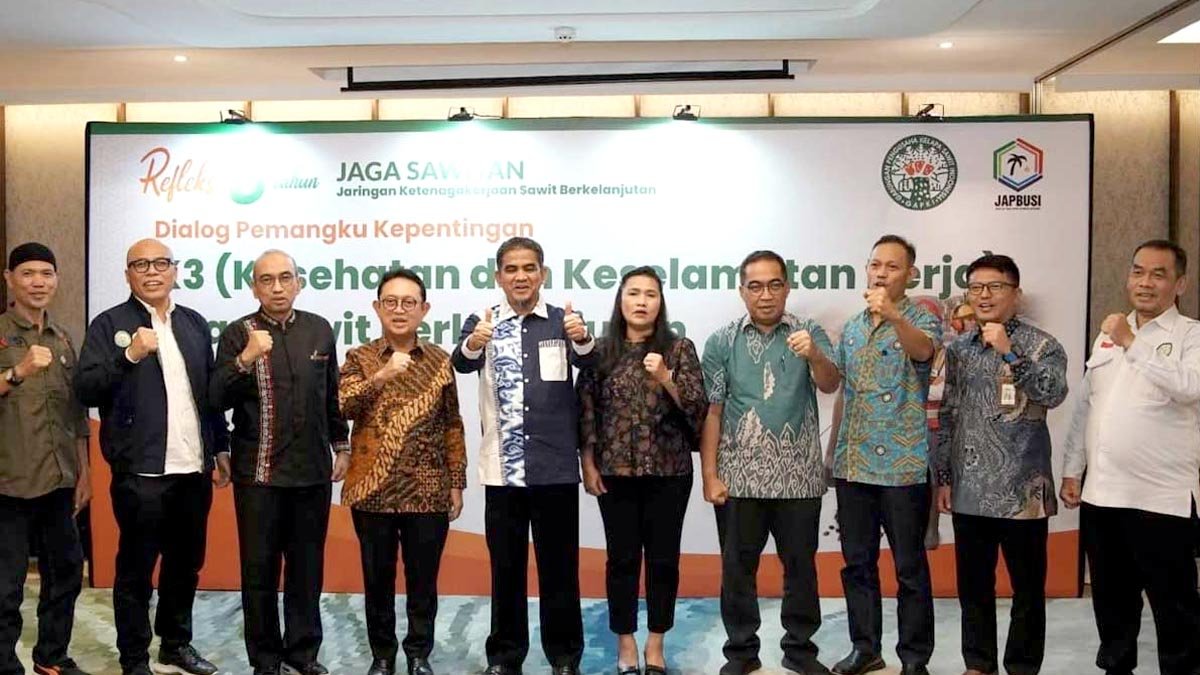
PALMOILMAGAZINE, JAKARTA – Social dialogue has been increasingly recognized as a critical approach to addressing labor challenges in Indonesia’s palm oil industry, as the Sustainable Palm Oil Labor Network, Jaga Sawitan, marks its third anniversary since its establishment on February 16, 2023.
The collaborative initiative, spearheaded by the Indonesian Palm Oil Workers Union Network (JAPBUSI) in partnership with the Indonesian Palm Oil Association (GAPKI), continues to promote solutions to labor-related issues through constructive engagement among stakeholders.
JAPBUSI Executive Secretary Nursanna Marpaung emphasized that workers’ welfare and business sustainability should not be seen as conflicting interests. Instead, she highlighted social dialogue as a pathway to finding balanced and inclusive solutions.
Also Read: BPS Reports 219 Palm Oil Companies Dominate East Kalimantan Plantation Sector in 2025
“Protecting palm oil is not only about safeguarding the crops and products, but also about protecting the people behind the industry,” she said during a discussion marking three years of Jaga Sawitan on Monday (March 16, 2026).
According to Nursanna, workers play a vital role in sustaining the national palm oil industry. Over the past three years, JAPBUSI has worked to ensure that workers receive fair working conditions, while Jaga Sawitan has served as an educational bridge to improve understanding of labor rights, employment agreements, and the protection of female workers.
However, she acknowledged that significant challenges remain. Key issues still requiring attention include access to social security, clarity of employment status, and adequate occupational safety and health (OSH) facilities.
Also Read: IPB Develops EC+ Technology to Treat Palm Oil Wastewater, Boosting Sustainable Palm Oil Industry
“These are shared challenges—social security, employment status, and proper OSH facilities. We need to sit together and resolve them collectively,” she stated.
GAPKI Chairman Eddy Martono described Jaga Sawitan as an important platform for fostering joint solutions among stakeholders in the palm oil sector. Over the past three years, the network has facilitated various initiatives, including worker training, advocacy, and efforts to improve labor governance in plantation operations.
“Collaboration must continue, as there is still much work ahead. Discussions should lead to concrete actions, respect workers’ rights, and enhance the credibility of Indonesia’s palm oil industry globally,” Eddy said.
He also underscored the strategic global role of Indonesia’s palm oil industry—not only as the world’s largest producer but also as one of the largest consumers of palm oil.
Eddy added that the sector demonstrated resilience during the COVID-19 pandemic, maintaining operations without layoffs and even continuing recruitment while many other industries faced severe disruptions.
Looking ahead, GAPKI reaffirmed its commitment to strengthening the implementation of occupational safety and health standards across plantations.
Also Read: Global Tensions Push Palm Oil Shipping Costs Up 50%, GAPKI Says Export Demand Begins to Slow
Meanwhile, Abdul Hakim, Program Officer for ILO Indonesia–Timor Leste, highlighted social dialogue as a key instrument in shaping a sustainable future of work. He noted that in global labor forums, including international conferences in Geneva, social dialogue is consistently recognized as a cornerstone of labor development.
“Many leaders have described social dialogue as an investment in civilization, ensuring that growth remains dynamic and sustainable,” he said.
In addition, Special Staff to the Minister of Manpower, Indra, stressed the importance of occupational safety and health, which is mandated under labor regulations. He emphasized that every worker has the right to proper protection, and it is the responsibility of employers to fulfill these obligations. (P2)