PALMOILMAGAZINE, JAKARTA – Indonesia’s National Police Food Task Force has launched an investigation into suspected cartel practices and collusion in the pricing of oil palm fresh fruit bunches (FFB), following concerns that farmers are being disadvantaged by falling prices despite strengthening global crude palm oil (CPO) markets.
The investigation comes after authorities identified declining FFB prices in several palm oil-producing regions, even as international CPO prices and the U.S. dollar exchange rate against the rupiah have continued to rise.
Head of the National Police Food Task Force, Brig. Gen. Ade Simanjuntak, said the agency will work closely with the Business Competition Supervisory Commission (KPPU) to examine indications of coordinated market behavior that may be suppressing prices received by farmers.
Also Read: Indonesia and EU Fast-Track IEU-CEPA Ratification, Target Early 2027 Implementation
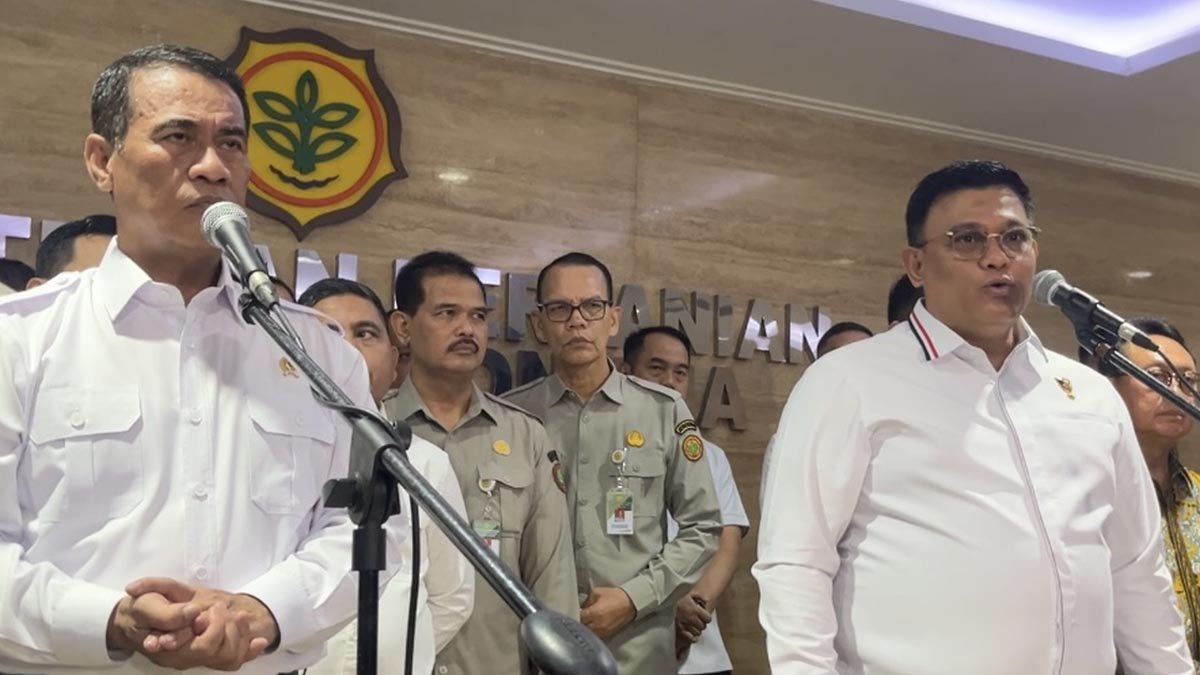
“We suspect there may be cartel-like practices or collusion causing FFB prices to fall at a time when global CPO prices are stable or even increasing. Therefore, we will conduct a joint investigation with KPPU at both the national and regional levels,” Ade said during a coordination meeting chaired by Agriculture Minister Andi Amran Sulaiman at the Ministry of Agriculture headquarters in Jakarta on Monday.
The meeting brought together palm oil industry representatives, farmer associations, the National Police Food Task Force, and senior investigators from the Special Criminal Investigation Units of regional police departments across 25 provinces.
Ade emphasized the task force’s full support for government efforts to prevent business practices that harm farmers or reduce state revenues. According to him, authorities have observed unusual purchasing patterns in which FFB prices have weakened despite favorable market fundamentals.
Also Read: Indonesia Raises June 2026 Biodiesel Price Index to IDR 14,643 Per Liter
“The National Police Food Task Force fully supports government programs aimed at preventing practices that disadvantage both the public and the state. We are seeing indications of FFB purchases at unreasonable prices while global CPO markets continue to strengthen,” he said.
He noted that the divergence between rising global palm oil prices and declining farmgate FFB prices raises concerns that warrant further investigation.
The task force, he added, will take firm legal action if violations are found.
Also Read: POPSI Warns PP 24/2026 Could Increase Costs and Pressure Palm Oil Smallholders
“We will not hesitate to enforce the law in accordance with existing regulations. We hope all stakeholders support the government’s efforts to improve public welfare and strengthen the competitiveness of Indonesian commodities,” Ade stated.
Meanwhile, Minister Amran reaffirmed the government’s commitment to protecting the livelihoods of approximately 15 million oil palm farmers across Indonesia. He described the recent decline in FFB prices as an anomaly that does not reflect developments in global palm oil markets or currency movements.
“President Prabowo’s directive is clear: protect the farmers. FFB prices must return to previous levels. In fact, they should have the potential to rise given higher global CPO prices and a stronger U.S. dollar. There is no justification for FFB prices to decline,” Amran said.
Also Read: DSI and the Future of Indonesia’s Palm Oil Industry: Will Farmers and Workers Benefit?
According to monitoring conducted by the Ministry of Agriculture, between 270 and 300 palm oil companies out of roughly 1,900 operating nationwide have yet to adjust their FFB purchasing prices in line with prevailing market conditions. The ministry plans to submit the list of companies to law enforcement authorities for further examination.
“We will hand over the data to regional police chiefs, special criminal investigation units, and the Food Task Force for follow-up investigations. If there are still companies suppressing FFB prices, there will be no compromise. We will proceed in accordance with the law,” Amran stressed.
The minister added that coordinated actions between the government and law enforcement agencies are already producing results. Reports received by the ministry indicate that around 70% of FFB prices that had previously declined have started returning to more normal market levels.
Also Read: DPR Calls for Transition Period Before Full Rollout of Palm Oil Export Reform
The government expects cooperation among the Ministry of Agriculture, the National Police Food Task Force, regional administrations, KPPU, and industry stakeholders to foster a healthier, more transparent, and fairer palm oil trading system. Such improvements are considered essential to ensuring that the benefits of Indonesia’s palm oil industry are shared more equitably among millions of smallholders.
“We want a healthy palm oil ecosystem. Businesses must have certainty to operate, while farmers must receive fair prices that reflect market conditions. Most importantly, farmers should not be the ones bearing the losses,” Amran concluded. (P3)