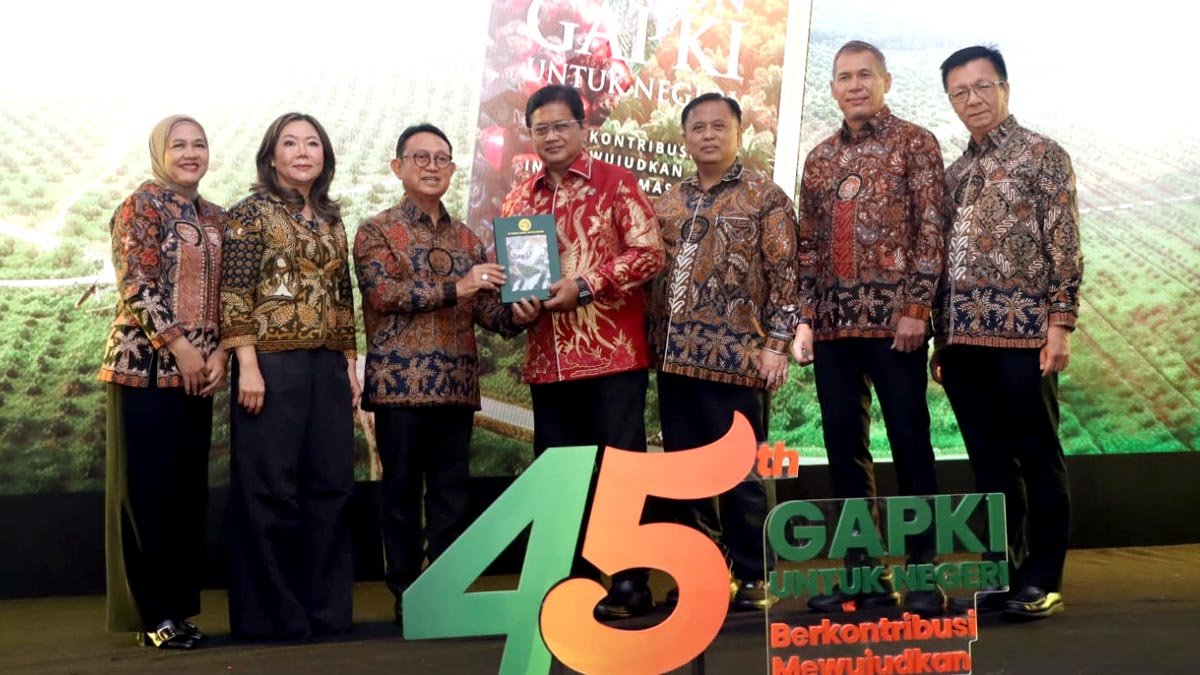
PALMOILMAGAZINE, JAKARTA – The Indonesian Palm Oil Association (Gabungan Pengusaha Kelapa Sawit Indonesia/GAPKI) held a celebration marking its 45th anniversary, combined with the launch of a book titled “45 Tahun GAPKI untuk Negeri,” on Wednesday (April 29) at the Pullman Hotel in Thamrin, Central Jakarta.
The event served as a moment of reflection on GAPKI’s long journey since its establishment in 1981, during which the organization has played a key role in guiding and advancing the palm oil sector as one of Indonesia’s strategic economic pillars.
GAPKI Chairman Eddy Martono said the 45-year milestone was not merely a celebration of age, but a reflection of decades marked by challenges, transformation, and continuous learning.
Also Read: KPBN Palm Oil Drops Over 2% on Tuesday (April 28), Malaysian Futures End Slightly Higher
“This 45-year milestone is not just a marker of age, but a reflection of a long journey full of dynamics, challenges, and lessons learned, while reinforcing GAPKI’s role as a strategic partner of the government,” Eddy said in an official statement received by Palmoilmagazine.com on Wednesday (April 29).
He emphasized that the palm oil industry has made a significant contribution to Indonesia’s economy, including job creation and regional development.
“The palm oil industry has become one of the pillars of the national economy, creating millions of jobs and driving development, especially in regional areas,” he added.
Also Read: GAPKI and the Government Strengthen National Preparedness to Mitigate Forest Fire Risks
The celebration was attended by various stakeholders, including Deputy Minister of Transmigration Viva Yoga Mauladi, Director General of Agro Industry at the Ministry of Industry Putu Juli Ardika, ambassadors from friendly nations, BPDP Director Eddy Abdurrachman, leaders of palm oil associations, GAPKI senior figures, regional branch representatives, and members of the domestic and international media.
The event featured a video presentation on GAPKI’s history, remarks from the chairman, an introduction by the book’s authors, symbolic handover of the publication, and a ceremonial rice cone cutting.
The book 45 Years of GAPKI for the Nation documents the association’s role in building a resilient, sustainable, and globally competitive palm oil industry. It also highlights palm oil’s contribution as a major source of foreign exchange, a driver of regional development, and a source of livelihood for millions of Indonesians.
Also Read: Agrinas Palma Nusantara Targets 500,000 Hectares for Palm Oil Replanting Push
Putu Juli Ardika expressed appreciation for GAPKI’s achievements in supporting the development of Indonesia’s palm oil industry.
“We extend our appreciation and gratitude for all of GAPKI’s contributions. The launch of this book provides a valuable legacy and reference for all of us,” he said.
Over more than four decades, GAPKI has evolved into an organization that not only represents industry players, but also acts as a strategic government partner in shaping and supporting palm oil policies.
Also Read: Indonesia’s Biodiesel Success Boosts Palm Oil Demand, but Methanol Imports Remain Weak Link
The association has actively provided data-driven input and field-based experience on major policy issues, ranging from non-oil export growth and smallholder replanting programs to sustainability implementation and biodiesel development as part of Indonesia’s national energy security strategy.
Its role has also expanded globally through economic diplomacy and strategic communication efforts aimed at strengthening Indonesia’s palm oil position in international markets.
At the same time, GAPKI has served as a bridge between government, businesses, farmers, and communities to ensure that policy decisions balance economic, social, and environmental interests.
Also Read: From Plantations to Energy: Downstreaming Becomes Key to National Self-Reliance
Eddy said cooperation between the government and industry players remains essential to maintaining stability and global competitiveness.
“We appreciate the government’s policies in supporting the development of the palm oil industry. Synergy between the government and businesses is a key factor in maintaining stability and competitiveness in global markets,” he said.
Looking ahead, he stressed that stronger collaboration among all stakeholders will be needed to address future challenges while safeguarding national interests.
Also Read: Indonesia Moves Closer to B50 Rollout as Multi-Sector Trials Confirm Readiness
As it enters its 45th year, GAPKI reaffirmed its commitment to supporting Indonesia Gold 2045 through the development of an inclusive, sustainable, and highly competitive palm oil industry.
The anniversary also served as a reminder that the progress of Indonesia’s palm oil sector is the result of collaboration among government institutions, businesses, farmers, and society as a whole. (P3)