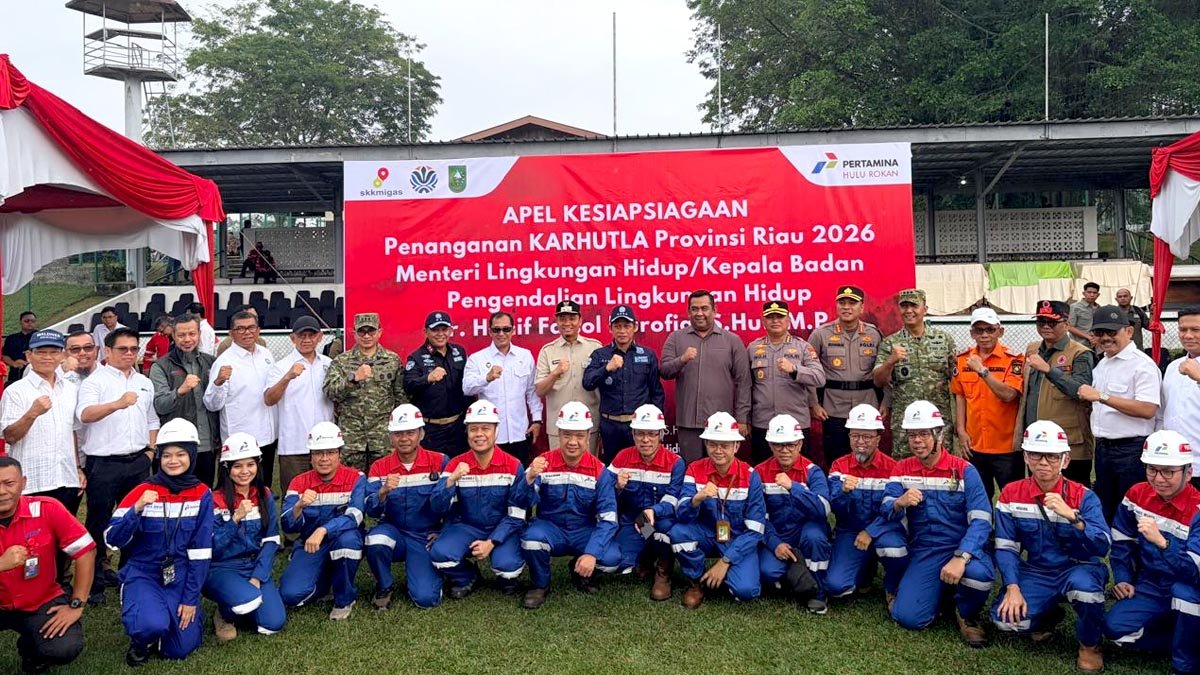
PALMOILMAGAZINE, PEKANBARU — The Gabungan Pengusaha Kelapa Sawit Indonesia (GAPKI) has reaffirmed its commitment to preventing forest and land fires (karhutla) by participating in a joint preparedness roll call with the Kementerian Lingkungan Hidup (Ministry of the Environment) in Riau Province on April 25, 2026.
The initiative marks a key step in strengthening cross-sector coordination as Indonesia faces elevated fire risks linked to extreme climate conditions expected this year.
Speaking at the event, Environment Minister Hanif Faisol Nurofiq warned that the threat of forest and land fires must be taken seriously. A prolonged dry season, potentially intensified by the El Niño phenomenon, along with significantly reduced rainfall, is expected to heighten the risk of widespread fires—particularly in peatland-rich regions such as Riau.
Also Read: GAPKI Pushes for Palm Oil Industry Synergy Through the 6th Andalas Forum
“Low rainfall and highly vulnerable peat conditions will significantly increase the risk of drought. Riau is among the most vulnerable areas, with peatlands covering nearly half of its land area and more than 13,000 kilometers of canals,” he said.
He called on all stakeholders, including businesses, to strengthen preparedness through measurable and coordinated operational actions.
Responding to the call, GAPKI Executive Director Mukti Sardjono emphasized that all GAPKI members are fully prepared to play an active role in fire prevention efforts. This includes enhancing early detection systems, improving human resource capacity, and strengthening collaboration with relevant stakeholders.
Also Read: KPBN CPO Prices Edge Up on Friday (April 24), Global Market Strengthens, Malaysia Posts Weekly Gain
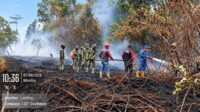
Mukti noted that GAPKI members have consistently implemented a Zero Burning Policy as part of the industry’s sustainability commitment. In addition, companies have developed and maintained fire prevention infrastructure such as watchtowers, water reservoirs, and technology-based monitoring systems.
“GAPKI and its members remain committed to strengthening integrated fire prevention measures. We are not only ensuring internal readiness through dedicated fire brigade teams, but also promoting community involvement by supporting Fire-Aware Community groups in high-risk areas,” he explained.
He further stressed that effective fire prevention cannot be carried out in isolation, but requires strong synergy between the government, private sector, and local communities. GAPKI, he said, stands ready to support government directives to ensure that preparedness efforts go beyond ceremonial activities and translate into concrete operational actions on the ground.
“GAPKI has issued plantation fire management guidelines to all members and conducted outreach on the projected 2026 dry season and its potential impacts on oil palm plantations,” he added.
GAPKI’s participation in the preparedness roll call underscores its support for government efforts to build a more responsive and sustainable fire management system. By strengthening coordination and early preparedness, stakeholders aim to significantly reduce the risk of forest and land fires while ensuring better protection for both the environment and surrounding communities. (P3)