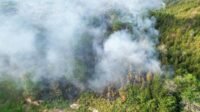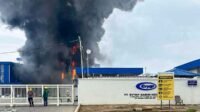
PALMOILMAGAZINE, JAKARTA – The wildfires currently happening in Spain, as well as in France and Italy, are, above all, a humanitarian and environmental tragedy. Thousands of people have had to leave their homes, losing not only their belongings but also their sense of safety. At the same time, large areas of land have been damaged, and firefighters continue to risk their lives to protect communities and control the fires. This situation shows how serious the impact is, both for people and the environment, and why we need to pay close attention to how these events are understood and discussed.
Based on reports from European media such as BBC, The Guardian, and El País, the causes of these fires are explained in a fairly consistent way. Extreme heat, long periods without rain, strong winds, and the buildup of dry vegetation are often mentioned as the main reasons why the fires spread so quickly.
These explanations are indeed important and seem to have a scientific basis, so they deserve attention. However, they also invite us to look deeper and reflect further.
Also Read: BMKG Warns El Niño to Keep Indonesia’s Palm Oil Regions Drier Until October 2026
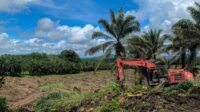
For years, the palm oil industry has often been seen as the main symbol of deforestation and forest fires in tropical regions. However, when large fires happen in Europe, the discussion usually focuses on natural conditions like weather, drought, and forest management, instead of quickly blaming a specific industry.
This difference in how we talk about similar problems is worth thinking about.
Every fire starts from a source of ignition. Heat, drought, and wind can make fires spread faster, but they do not start fires on their own. To understand who or what is responsible, we need careful investigation, solid evidence, and objective thinking—not quick assumptions based on location or industry.
Also Read: Indonesia Develops 83 Superior Palm Oil Varieties to Boost Productivity and Climate Resilience
The same idea should apply to sustainability.
If we use scientific methods to measure things like environmental impact, land use, carbon emissions, and biodiversity, then those methods should be applied in the same way everywhere. The credibility of global sustainability depends not only on strong goals, but also on fairness and consistency in how we apply scientific standards.
Maybe this is the bigger lesson we can learn from what is happening in Europe.
Also Read: Can Indonesia’s Oil Palm Residues Power the Future of Aviation?
Nature reminds us that no place is completely safe. Under extreme conditions, any area can become vulnerable. Any country can face serious wildfires. Indonesia has experienced this in the past, where fires were linked not only to land conditions but also to water management, especially in peatland areas. Europe is now facing its own challenges, as seen in its media reports. The United States has also gone through severe wildfire seasons in recent years, with large fires causing major damage and showing similar issues like drought, heat, and water management. Instead of blaming each other, this could be a moment for all of us to learn together, improve environmental management, manage water better, and share knowledge and experience openly.
A truly global approach to sustainability should be built on cooperation, not conflict; openness, not suspicion; and science, not selective storytelling. It should not be influenced by narrow interests or one-sided narratives.
Because science should remain science—no matter where it is applied, what industry is involved, or what political interests exist.
Also Read: Palm Acid Oil Gains Ground in Europe Amid Biofuel and Oleochemical Expansion
The atmosphere does not differentiate between Europe and the tropics. Scientific integrity should not either.
In the end, this reflection is not about comparing tragedies, but about encouraging fairness, consistency, and honesty in how we understand and respond to them. Only by applying the same scientific standards everywhere can we build a sustainability framework that is truly credible and effective.
“Science loses its credibility when evidence is applied selectively. And sustainability will loses its legitimacy when different standards are used to judge Europe and tropical producing countries.” (*)
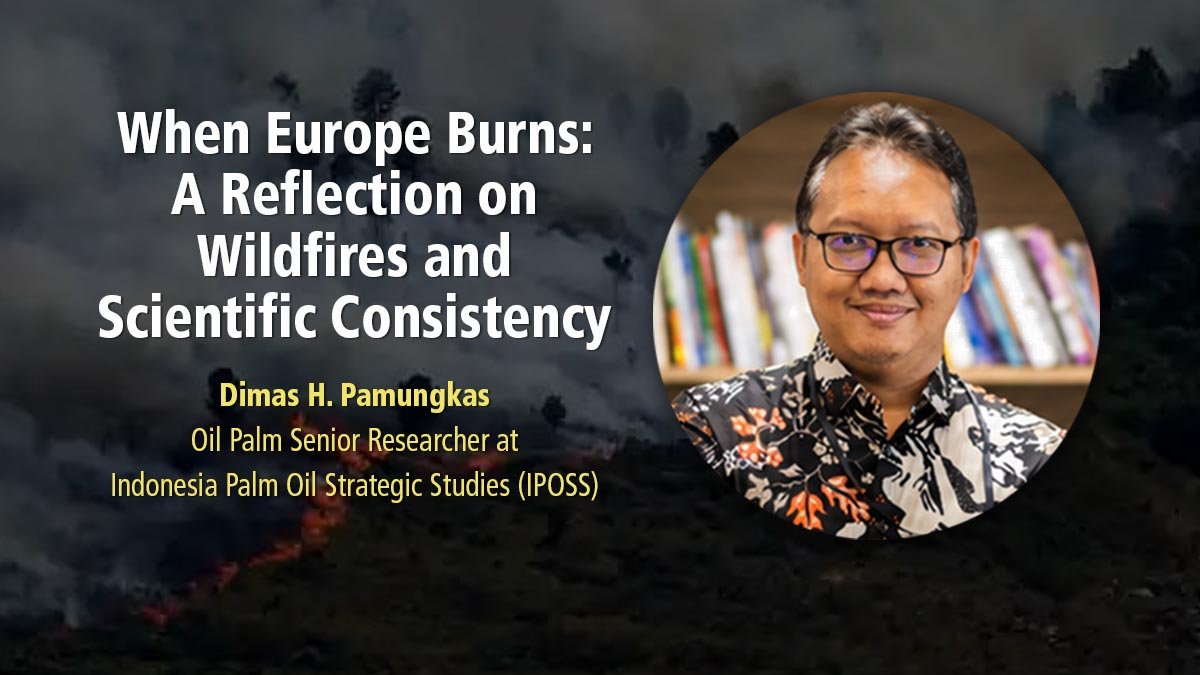
By Dimas H. Pamungkas, Oil Palm Senior Researcher at Indonesia Palm Oil Strategic Studies (IPOSS)
Disclaimer: This article reflects the author’s personal views and is the sole responsibility of the author.