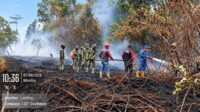
PALMOILMAGAZINE, Jakarta — As climate experts warn that the current El Niño could persist into early 2027, Indonesia once again faces one of its most persistent environmental challenges: forest and land fires (karhutla). A prolonged dry season will test not only the country’s ecological resilience but also the effectiveness of its fire prevention and governance systems.
According to Indonesia’s Meteorology, Climatology, and Geophysics Agency (BMKG), the number of wildfire hotspots has entered the red-alert zone. West Kalimantan has recorded the sharpest increase nationwide, with more than 1,000 hotspots burning thousands of hectares of land.
The consequences extend well beyond Indonesia’s borders. Severe drought conditions associated with El Niño heighten the risk of widespread fires across Sumatra and Kalimantan, potentially triggering transboundary haze that affects neighboring countries while creating broader ecological, economic, and public health challenges throughout Southeast Asia.
Also Read: Mitigating impacts of ideological shift from a market economy to state capitalism
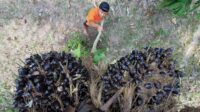
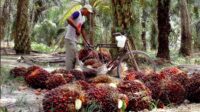
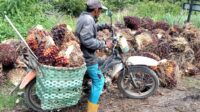
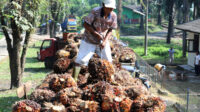
Palm oil, as one of Indonesia’s most important land-based commodities, frequently becomes the focal point of public criticism whenever major fires occur. Public discourse often follows a familiar pattern—reducing a complex issue to a simple narrative that portrays the palm oil industry as the primary cause of forest fires.
However, evidence from the field tells a far more nuanced story.
Governance, Not Climate Alone
Climate conditions undoubtedly increase fire risk, but drought alone rarely ignites a wildfire. Numerous studies have shown that forest and land fires are more closely linked to governance challenges, including weak land management, inadequate monitoring of unmanaged areas, the high cost of mechanical land clearing, and limited coordination among stakeholders.
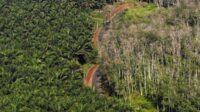
In North Penajam Paser, East Kalimantan, near Indonesia’s future capital Nusantara (IKN), several fires that recently raised public concern were traced to traditional land-clearing activities outside plantation concessions. Similar patterns have been documented in other regions, indicating that fire vulnerability is spread across broader landscapes rather than concentrated within a single industry.
Also Read: GAPKI Ensures Palm Oil Remains Strategic Amid a Changing World
Recent research in West Kalimantan further reinforces this conclusion. Ramdani et al. (2026) found that many hotspots emerged in enclave areas—land located within concession boundaries but socially and economically managed by local communities. In these areas, slash-and-burn practices remain the cheapest and most familiar method of land preparation, driven by both economic necessity and long-standing agricultural traditions.
These findings suggest that forest and land fires should be understood primarily as a governance issue rather than merely a technical firefighting challenge. Fires often occur where economic pressures intersect with weak supervision, unclear land tenure, and limited access to affordable alternatives to burning.
Also Read: Palm Oil and Decarbonization
Industry Has Strengthened Fire Prevention
Indonesia’s plantation and forestry sectors, together with the Ministry of Forestry and the Ministry of Environment, have significantly strengthened fire prevention systems over the past decade. These improvements were acknowledged during the ASEAN meeting on Transboundary Haze Pollution held in Bali on July 9.
Yet important governance issues remain unresolved.
Also Read: When Europe Burns: A Reflection on Wildfires and Scientific Consistency
Many regional governments continue to face budget constraints and limited capacity to monitor unmanaged lands. In several areas, traditional burning practices remain socially accepted, reducing the effectiveness of sophisticated mitigation systems implemented elsewhere.
Today, many plantation companies operate advanced early-warning systems, including fire watchtowers and thermal surveillance technologies capable of detecting hotspots before fires spread. Companies operating on peatlands are also required to maintain groundwater levels at approximately 40 centimeters below the surface through canal management and water-control structures to keep peat soils moist.
These measures are supported by dedicated internal firefighting teams and community-based initiatives such as Fire-Aware Villages (Desa Peduli Api/DPA) and Independent Peat Care Villages (Desa Mandiri Peduli Gambut/DMPG), which remain on standby throughout the dry season.
Also Read: Pakistan’s Palm Oil Imports Hit Record 3.48 Million Tons in FY2026 Despite Higher Tax Burden
Fire Is a Business Risk, Not a Business Tool
From an economic perspective, companies managing large-scale land investments have little incentive to use fire as a land-clearing tool. Wildfires represent a direct threat to assets, productivity, and long-term business sustainability.
The risks facing the palm oil industry today are substantially greater than they were a decade ago. Sustainability certification schemes such as ISPO and RSPO, together with international market requirements including the European Union Deforestation Regulation (EUDR), have significantly raised the cost of fire-related non-compliance. Domestic regulations likewise impose severe legal and financial consequences for companies linked to fires.
Against this backdrop, portraying the plantation industry as solely responsible for forest and land fires oversimplifies a much broader governance challenge.
Also Read: Indonesia’s Palm Oil Export Policy Spurs India’s Push for Edible Oil Self-Sufficiency
Landscape Collaboration Is the Way Forward
Experiences from successful fire mitigation programs demonstrate that integrating governments, companies, and local communities into a landscape-based approach can significantly reduce wildfire incidents.
Because fires do not recognize concession boundaries or administrative borders, prevention efforts must also extend beyond those boundaries. Local communities should be viewed not as passive beneficiaries but as the first line of defense against wildfires through stronger social networks, early detection, and rapid local response.
Indonesia’s national strategy should therefore evolve from being primarily focused on firefighting toward landscape-scale prevention that recognizes forests, plantations, villages, and surrounding ecosystems as interconnected.
Also Read: Viva Yoga: Palm Oil Has Transformed Indonesia’s Transmigration Communities
The objective should no longer be assigning blame, but building shared accountability.
Ultimately, when the dry season arrives, the country’s strongest defense against forest and land fires is not technology alone, nor bureaucracy. It is well-organized communities supported by responsive government institutions and strengthened through collaboration with industry and all relevant stakeholders.
Effective fire mitigation depends on three strategic priorities: strengthening oversight of unmanaged and abandoned land, expanding education and economic incentives to eliminate slash-and-burn practices, and reinforcing integrated landscape-based collaboration among governments, communities, and the private sector. (*)
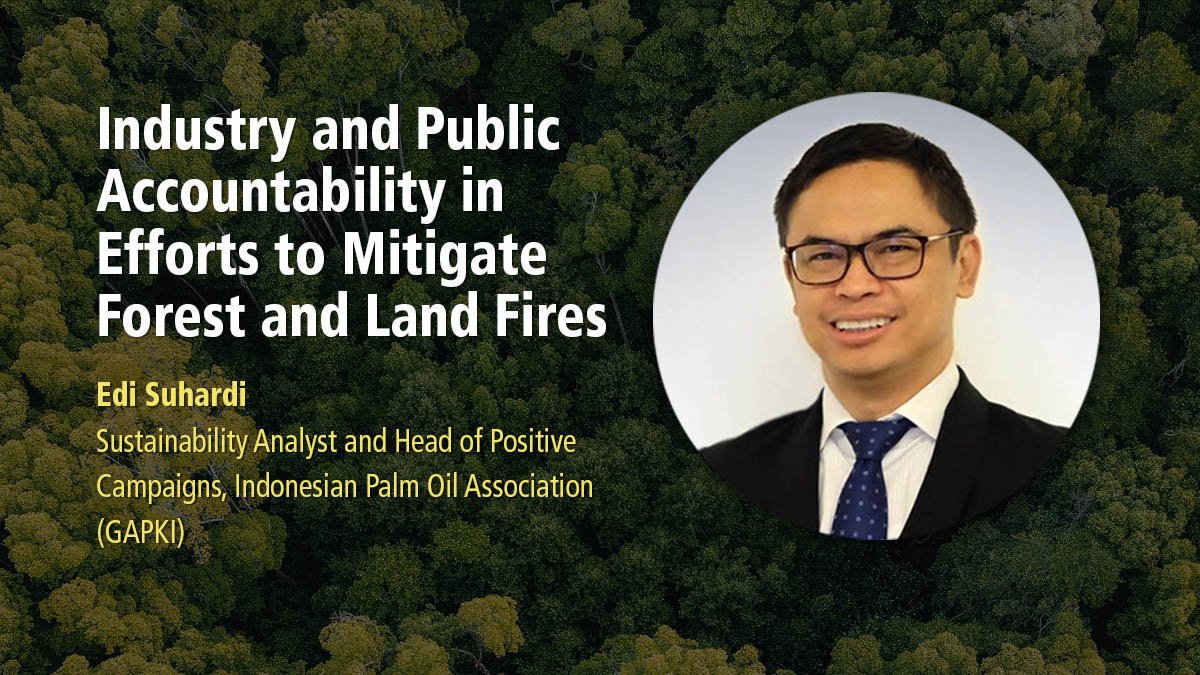
By Edi Suhardi, Sustainability Analyst and Head of Positive Campaigns, Indonesian Palm Oil Association (GAPKI)
The views expressed in this article are those of the author and do not necessarily reflect the editorial position of Palmoilmagazine.