Loading ramps and mills without their own plantations are often treated as weak links in the fresh fruit bunch supply chain. Yet for independent smallholders, these intermediaries are also essential market infrastructure. The policy challenge is not to remove them, but to make them visible, accountable and traceable.
PALMOILMAGAZINE, JAKARTA – Indonesia’s palm oil traceability debate often starts at the plantation and ends at the mill. The most difficult part, however, may lie in between. Millions of fresh fruit bunches move every day through traders, agents, cooperatives and loading ramps before reaching a mill. These actors connect dispersed smallholders to processing capacity, but they are also the point where information on origin can become fragmented, diluted or lost.
That makes the so-called middle of the supply chain increasingly important. Fresh fruit bunches are highly perishable. Smallholders typically harvest in volumes too small to deliver economically to a mill on their own. Aggregation is therefore not an anomaly. It is a practical response to geography, scale and time. Any attempt to strengthen traceability that ignores this commercial reality risks designing a system that works on paper but fails in the field.
Also Read: The Limits of the Market: Rethinking Palm Oil Sustainability Beyond Certification
The traceability gap is largely outside formal partnerships
Indonesia already has a relatively detailed framework for fresh fruit bunch purchases from formally partnered smallholders. Minister of Agriculture Regulation No. 13/2024 addresses issues such as pricing and reporting within partnership arrangements. The more difficult question is what happens outside those arrangements, where independent smallholders commonly sell through intermediaries rather than directly to mills.
This is where the governance gap becomes visible. The non-partnership channel can carry significant volumes, yet it does not necessarily have the same transparency architecture as the formal partnership channel. Meanwhile, sustainability requirements are moving in the opposite direction. Presidential Regulation No. 16/2025 and Minister of Agriculture Regulation No. 33/2025 broaden the reach of ISPO across the supply chain, while the EU Deforestation Regulation raises expectations for traceability to the geolocation of the production plot.
Also Read: Beyond Certification: The Next Chapter of Indonesia’s Sustainable Palm Oil
The consequence is straightforward: if market and certification requirements need to know where fruit originated, traceability cannot begin only when the truck enters the mill gate. The information chain has to survive each commercial handover before that point.
Regulate the function, not the business label
The same principle applies to mills without their own plantations, commonly described in the RSPO system as independent mills. Debate around these mills is often framed around ownership structure: whether a mill has an estate attached to it or depends primarily on external fresh fruit bunch supply. That distinction is administratively convenient, but it is not necessarily the best measure of sustainability risk.
A vertically integrated mill that buys large quantities of external fruit can face the same sourcing risks as a mill with no plantation of its own. The relevant questions are therefore operational: Who supplies the fruit? Is the source legal? Can the origin be identified? Are supplier records maintained? Is there enough local supply to match processing capacity without creating pressure to accept fruit of uncertain origin?
Also Read: Beyond Raw Commodities: Why Indonesia’s Palm Oil Smallholders Must Move Up the Value Chain
This risk-based approach also aligns with the competition dimension. Mills without plantations can increase buyer choice for growers in areas where procurement is otherwise concentrated among only one or two major mills. The governance objective should not be to suppress a business model that may improve market access and competition. It should be to ensure that any mill, regardless of ownership structure, operates under credible sourcing, legality and traceability controls.
What RSPO and ISPO suggest
The emerging direction from both voluntary and mandatory systems is more nuanced than simply removing intermediaries. RSPO experience with independent collection centres in Thailand and dealer-based approaches in West Africa shows that intermediaries can be brought into traceability systems rather than excluded from them. At the same time, RSPO has continued to examine how social and environmental requirements for independent mills should be strengthened beyond chain-of-custody controls alone.
ISPO starts from a different institutional basis because it is mandatory and embedded in Indonesian regulation. In my review of Presidential Regulation No. 16/2025 and Minister of Agriculture Regulation No. 33/2025, I did not find a separate certification category specifically called a loading ramp. This means a loading ramp is not automatically a stand-alone certification unit. Its practical responsibility, however, becomes increasingly important because origin information has to be passed onward to mills that are subject to ISPO requirements. Mills without plantations, by contrast, fall within the processing business category and are therefore covered by the certification obligation irrespective of whether they own an estate.
Also Read: KPBN Inacom CPO Price Falls IDR 57/Kg to IDR 15,900, CIF Rotterdam at US$1,600/Ton
The institutional routes are different, but the logic is converging. Business form alone is a weak proxy for risk. What matters is whether every node in the chain can preserve the identity, legality and traceability of the fruit it handles.
From exclusion to regulated inclusion
This is why I have proposed a regulated inclusion approach. Instead of treating loading ramps and mills without plantations as activities to be eliminated, they should be incorporated into a clearer governance architecture that recognizes their economic function while imposing proportionate transparency requirements.
The first step should not be an immediate nationwide mandate. A better route would be to test the model in several palm oil producing districts where the conditions are suitable: a substantial independent smallholder base, multiple aggregation points, several competing mills, and local government capacity to support implementation.
Also Read: KPBN Inacom CPO Price Falls IDR 57/Kg to IDR 15,900, CIF Rotterdam at US$1,600/Ton
A first-year pilot could begin with basic registration of loading ramps and mills, an initial supplier register, and practical literacy for growers on pricing, weighing and grading. The scope could then expand in stages to cover the full supplier base of participating mills and connect the resulting data with ISPO and relevant export-market traceability needs.
Measure outcomes, not registrations
The success of such a pilot should not be judged by how many loading ramps are registered. Registration is only an administrative output. The more important question is whether the intervention improves the functioning of the supply chain.
Useful indicators would include the share of fresh fruit bunch volume whose origin can be identified, the net price received by smallholders after logistics costs, payment speed, the frequency of weighing or grading disputes, the degree of buyer concentration in the district, and the compliance cost per tonne for smaller operators. These measures would show whether greater transparency is being achieved without unintentionally reducing competition or excluding small aggregators that provide essential access to market.
Also Read: Palm Oil Mills Without Plantations Raise Concerns Over Supply Traceability
This matters because traceability can create its own form of exclusion if compliance is designed only for large companies. A system that closes information gaps but drives small intermediaries out of business could leave independent smallholders with fewer buyers, longer transport distances and weaker bargaining positions. Good governance has to solve both problems at once: traceability and market access.
The policy question has changed
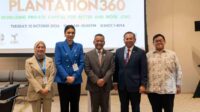
At a UNDP Indonesia multi-stakeholder forum in Jakarta on 10 September 2026, I argued that the debate should move beyond the question of whether loading ramps and mills without plantations are inherently good or bad. The more useful question is what minimum information, safeguards and accountability should follow every tonne of fruit as it moves through the supply chain.
That change in framing is important. Loading ramps are not merely informal side actors. In many producing areas they are part of the logistics infrastructure that makes smallholder participation possible. Independent mills are not automatically a traceability problem, just as integrated mills are not automatically low risk. Governance should focus on conduct, data and sourcing systems rather than labels.
Also Read: Strengthening Incentives Key to Advancing Smallholder Palm Oil Traceability in Indonesia
Indonesia now has an opportunity to test this approach in the field. A district-level pilot could generate evidence on farmer prices, logistics costs, competition, traceability and compliance burden before a broader national requirement is considered. If the model works, it would provide a practical bridge between smallholder realities, ISPO implementation and increasingly demanding market expectations.
The goal should be a supply chain in which intermediaries no longer represent a blind spot. They should become accountable connectors, preserving the commercial role that independent smallholders depend on while ensuring that origin information is not lost between the farm and the mill. That is the essence of regulated inclusion, and it may be one of the most practical ways to close Indonesia’s remaining traceability gap. (*)
By Dr. M. Windrawan Inantha
Dr. M. Windrawan Inantha is Strategic Advisor at CECT Sustainability, Universitas Trisakti. The article develops arguments presented during Session 1, “Diagnosing the Situation: Dynamics of Loading Ramps and Mills Without Plantations in Palm Oil Governance,” at a UNDP Indonesia multi-stakeholder forum in Jakarta on 10 September 2026.