

PALMOILMAGAZINE, JAKARTA – PT Dharma Satya Nusantara Tbk (DSNG) started 2026 on a positive note, reporting solid financial results for the first quarter as its palm oil business continued to serve as the company’s primary earnings driver.
The listed agribusiness and natural resources company posted revenue of IDR 2.9 trillion in the January–March 2026 period, up 8% year-on-year (YoY). Net profit rose even faster, climbing 15% YoY to IDR 421 billion.
The results reaffirm the importance of DSNG’s palm oil segment, which continued to underpin growth despite commodity price fluctuations and ongoing uncertainty in global markets.
Also Read: Indonesia’s Palm Oil Exports Hit US$3.69 Billion in February 2026, Up 28.88% YoY
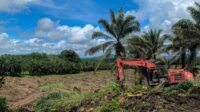
President Director Andrianto Oetomo said the company has prepared a number of strategic and prudent measures, including replanting programs aimed at preserving long-term plantation productivity.
“The company continues to implement careful strategic steps, including replanting initiatives to maintain estate productivity. To date, replanting realization has reached around 5,000 hectares,” Andrianto said in an official statement received by Palmoilmagazine.com on Monday (April 27, 2026).
Also Read: KPBN CPO Price Falls to IDR 15,459/kg as Global Palm Oil Market Softens
Higher CPO Sales Support Growth
Operationally, DSNG recorded an 18% YoY increase in crude palm oil (CPO) sales volume, although average selling prices declined around 3% during the first quarter. The stronger sales volume was sufficient to sustain revenue growth from the palm oil segment.
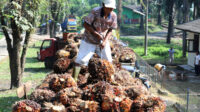
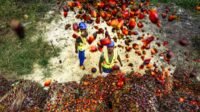
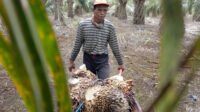
Fresh fruit bunch (FFB) production reached 492,000 tons, up 2.7% YoY. Growth was supported by a 6.2% increase in plasma estate output, while nucleus estate production rose 1.8% compared with the same period last year.
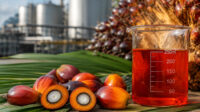
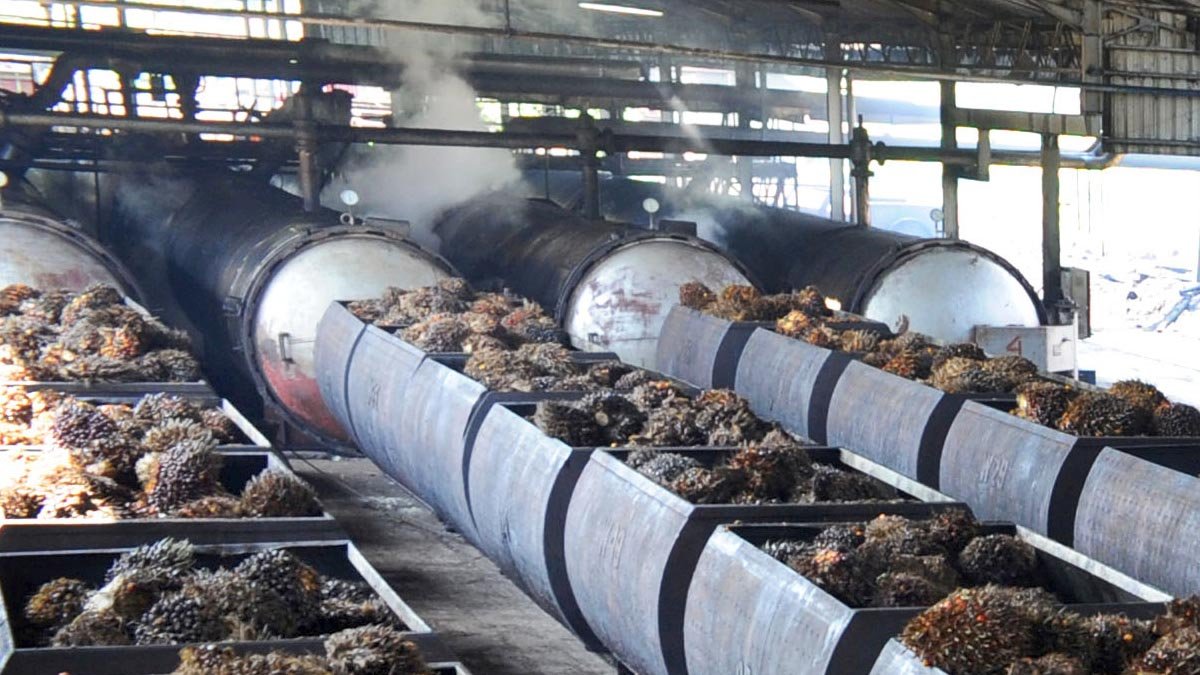
Downstream production also showed positive momentum. CPO production reached 141,000 tons, up 2.1% YoY, while palm kernel (PK) output rose 2.9% to 27,000 tons. Palm kernel oil (PKO) production climbed 5.7% YoY to 8,500 tons.
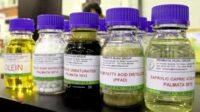
The company’s processing efficiency remained solid, reflected in an oil extraction rate (OER) of 23.32%, while free fatty acid (FFA) levels were maintained at around 3%.
Although revenue improved, DSNG’s cost of goods sold also rose 10% YoY to IDR 2 trillion, mainly due to higher CPO sales volumes. However, the company’s deleveraging strategy has begun to deliver positive results.
Also Read: From Plantations to Energy: Downstreaming Becomes Key to National Self-Reliance
Lower borrowing costs helped strengthen DSNG’s financial structure, preserving profit margins and enabling net profit growth to outpace revenue growth.
Wood Products and Renewable Energy Under Pressure
Meanwhile, DSNG’s wood products segment continued to face challenges amid weak global demand, particularly for wood panels and engineered flooring products with significant exposure to the United States market.
Uncertainty surrounding tariffs and global trade conditions led buyers to remain cautious, contributing to lower sales volumes.
Also Read: Strengthening Incentives Key to Advancing Smallholder Palm Oil Traceability in Indonesia
During the first quarter of 2026, wood panel sales totaled 26,000 cubic meters, down 11.5% YoY. Engineered flooring sales fell sharply by 63.2% YoY to 56,000 square meters.
In the renewable energy segment, revenue stood at IDR 40.2 billion, down 8.4% YoY, mainly due to weaker exports of palm kernel shell (PKS) following softer biomass demand from Japan.
Enters TIME’s Top 500 Asia-Pacific Companies List
As of March 31, 2026, DSNG reported total assets of IDR 17.7 trillion, with liabilities of IDR 5.7 trillion and equity of IDR 12 trillion, reflecting a healthy balance sheet.
In April 2026, the company also achieved a non-financial milestone by being included in TIME magazine’s list of the 500 Best Companies in Asia-Pacific. The ranking was based on key indicators including employee satisfaction, revenue growth, and environmental, social, and governance (ESG) performance.
The recognition further strengthens DSNG’s position as one of Indonesia’s leading agribusiness companies, maintaining growth amid market headwinds while reinforcing its long-term sustainability commitment. (T2)