PALMOILMAGAZINE, JAKARTA – Crude palm oil (CPO) prices on the Malaysian Derivatives Exchange extended their rally for a second consecutive session on Tuesday (April 21, 2026), supported by stronger prices of competing vegetable oils and Indonesia’s biodiesel policy. However, expectations of rising production continue to limit further upside.
According to Reuters, the benchmark July 2026 CPO contract on the Malaysian Derivatives Exchange closed up RM63 per ton, or 1.44%, at RM4,561 per metric ton. During the session, prices surged as much as 2.45%—reaching their highest level in over a week—before paring some gains toward the close.
In the domestic market, Indonesian CPO prices also moved higher. At PT Kharisma Pemasaran Bersama Nusantara (KPBN), CPO was set at Rp15,250/kg on Tuesday, marking an increase of Rp55/kg or approximately 0.36% compared to Rp15,195/kg recorded a day earlier.
Also Read: Agrinas Palma Nusantara Advances Cooperative-Based Downstreaming for Smallholder Palm Oil
The bullish trend was further supported by gains in other vegetable oils. On the Dalian Commodity Exchange, the most active soybean oil contract rose by 1.90%, while palm oil futures jumped 3.33%. Meanwhile, soybean oil prices on the Chicago Board of Trade edged up 0.62%.
CPO prices generally track movements in rival vegetable oils, as they compete closely in the global edible oil market. When soybean oil and other vegetable oils strengthen, palm oil typically follows suit.
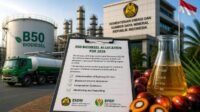
From a fundamental perspective, additional support comes from Indonesia—the world’s largest CPO producer and exporter—which plans to raise its palm oil-based biodiesel blending mandate to 50% (B50) starting July 1, 2026, up from the current 40% (B40). The policy is expected to boost domestic consumption while tightening export supply in the global market.
Also Read: Indonesia Accelerates B50 and E20 Rollout to Strengthen Energy Independence
However, market participants remain cautious about the prospect of increased production from major producing countries, which could cap further price gains. As a result, CPO prices are likely to remain volatile, balancing between demand-side optimism and supply-side pressures. (P3)