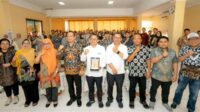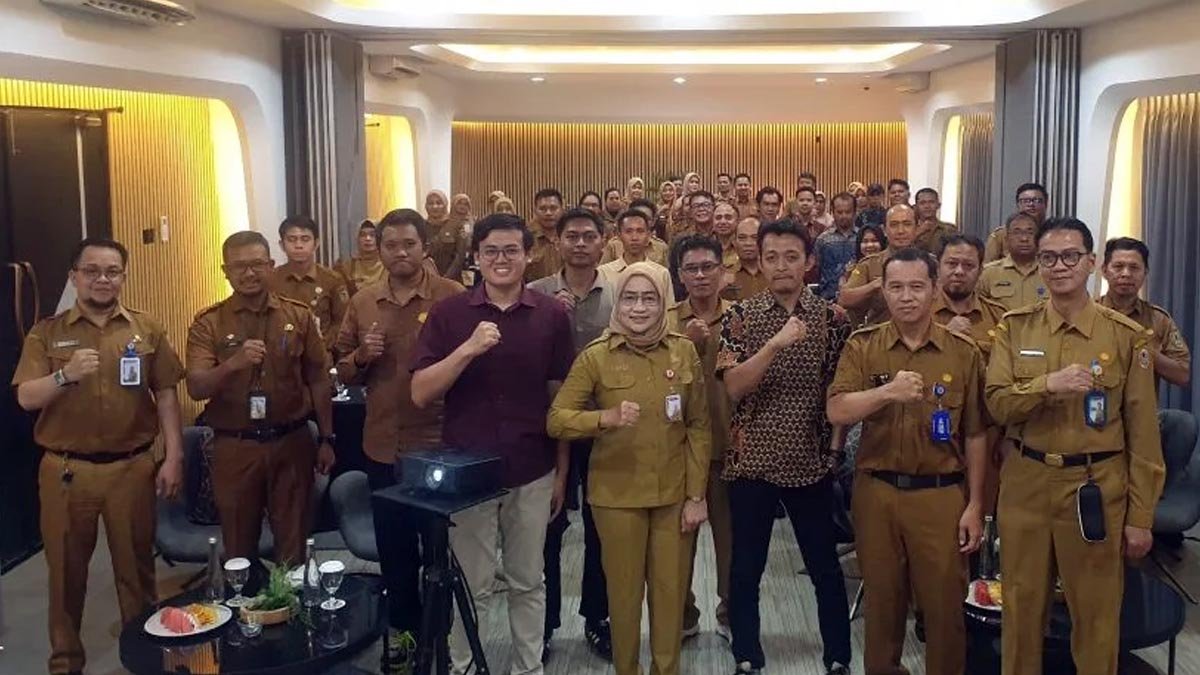
PALMOILMAGAZINE, BANJARBARU – The South Kalimantan Provincial Department of Plantations and Livestock is stepping up efforts to strengthen plantation governance by enhancing human resource capacity, particularly in data management and spatial mapping.
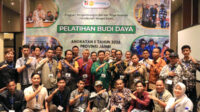
As part of this strategy, the agency has launched a 2026 technical training program focused on plantation data collection and land mapping, with a specific emphasis on improving the accuracy of palm oil spatial data. The initiative responds to increasingly complex data demands amid tightening global and national sustainability regulations.
Head of the agency, Suparmi, stressed that palm oil remains a strategic national commodity and a key driver of the regional economy in South Kalimantan. She underlined that accurate, integrated data is essential for effective planning and policy-making in the plantation sector.
Also Read: West Kalimantan Palm FFB Prices Climb to IDR 3,827/kg in Mid-April Period
“Palm oil is a backbone of our regional economy. As regulatory dynamics evolve—especially in sustainability and legality—accurate spatial data has become critically important,” she said, As quoted by Palmoilmagazine.com from an official statement by the South Kalimantan Provincial Agriculture and Plantation Office.
Suparmi noted that managing the sector’s vast potential cannot be optimized without reliable and precise data. Moving forward, all stakeholders are required to operate based on accountable, data-driven approaches.
“Development challenges can no longer be addressed through assumptions. We need precise spatial mapping and valid statistical data as the foundation for policymaking,” she emphasized.
Also Read: Indonesia Accelerates Palm Oil Downstreaming While Planning Major Plantation Expansion
Accurate data, she added, plays a crucial role in supporting key programs, including the identification of smallholder plantations for Indonesian Sustainable Palm Oil (ISPO) certification, as well as optimizing revenue-sharing funds (DBH) for plantation infrastructure development.
“With reliable data, we can properly identify smallholder plantation areas to support ISPO certification. It also serves as a foundation for planning infrastructure development through revenue-sharing mechanisms,” she explained.
On the ground, Suparmi highlighted the vital role of mapping personnel as the frontline in data collection. Field officers are expected to master precise coordinate-taking techniques, accurately verify land boundaries, and effectively use digital data collection tools.
Also Read: Riau Independent FFB Prices Fall to IDR 3,956.31/kg in Late April Period
She also stressed the importance of eliminating overlapping data and ensuring that all plantation areas are properly recorded within the government system.
“We must ensure there is no overlap in data or unregistered land. Every hectare of oil palm plantation in South Kalimantan must be accurately documented,” she asserted.
Through this technical training, participants are expected to strengthen their technical skills, utilize modern mapping technologies such as GPS and Android-based applications, and uphold integrity in data collection.
Also Read: North Sumatra Palm FFB Prices Edge Lower to IDR 3,906.61/kg in Late April Period
In addition, stronger coordination among field officers is seen as essential to ensure data consistency between district and provincial levels.
“Enhance communication among officers to ensure aligned data. Build integrity and make sure the data collected truly reflects conditions in the field,” she concluded. (P2)