PALMOILMAGAZINE, JAKARTA – Coordinating Minister for Economic Affairs Airlangga Hartarto reaffirmed that research, innovation, and downstream development are essential pillars for strengthening the competitiveness of Indonesia’s palm oil industry while reinforcing the country’s long-term economic resilience.
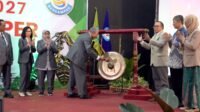
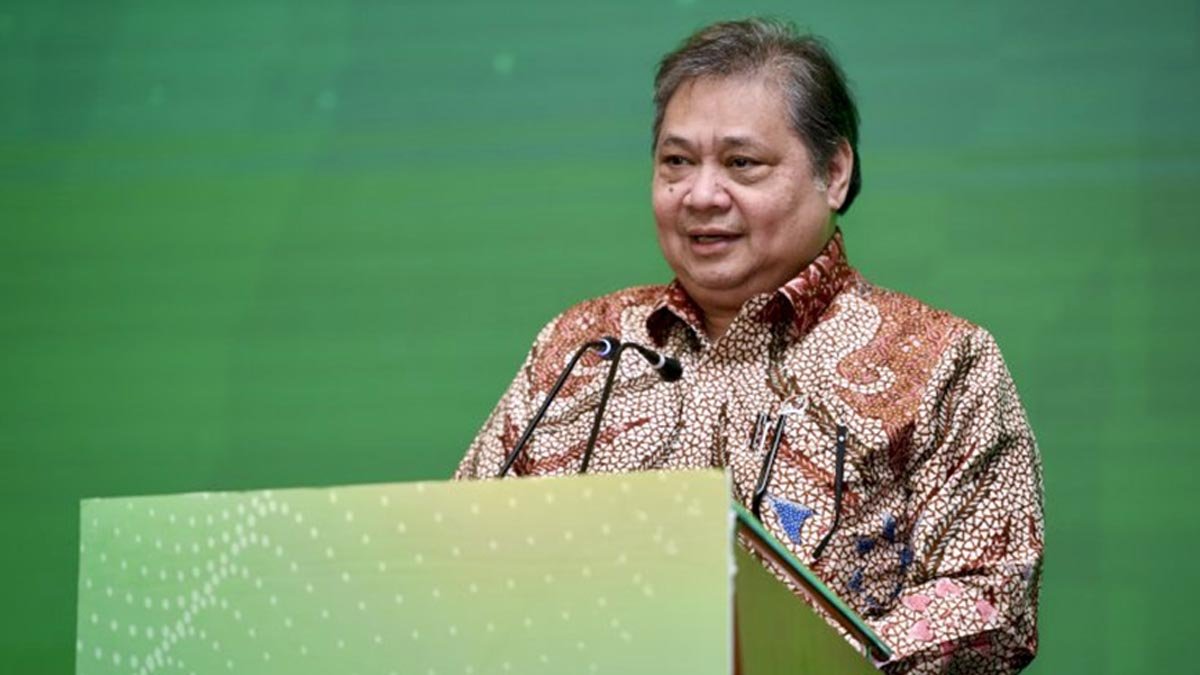
Speaking at the closing ceremony of the Indonesia Palm Oil Research Week (PERISAI) 2026, organized by the Plantation Fund Management Agency (BPDP) in Jakarta, Airlangga highlighted the strategic role of the palm oil sector in supporting Indonesia’s economy through exports, industrial development, and value-added processing.
According to Airlangga, the palm oil industry contributed approximately 3.5% of Indonesia’s Gross Domestic Product (GDP), generated USD 30.87 billion in export earnings, and delivered IDR 53.13 trillion in export levy and export duty revenues in 2025. He emphasized that sustaining this contribution will require continuous improvements in productivity, technological capabilities, and the development of higher-value downstream products.
Also Read: BPDP Puts Research at the Heart of Indonesia’s Sustainable Palm Oil Future
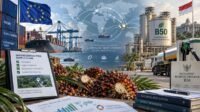
“The implementation of the B50 biodiesel program demonstrates that research, policy, investment, and industrial capacity can work in harmony,” Airlangga said, as quoted by Palmoilmagazine.com from BPDP on Sunday (July 26).
“Moving forward, this achievement should become the foundation for accelerating downstream development toward higher-value products such as Green Diesel, Sustainable Aviation Fuel (SAF), and palm-based gasoline,” he added.
Airlangga also expressed appreciation to BPDP and all stakeholders for their continued commitment to advancing Indonesia’s palm oil industry. He hopes PERISAI will evolve beyond a platform for exchanging ideas into a catalyst for tangible collaborations that accelerate the implementation and commercialization of research outcomes for the benefit of industry and society.
Also Read: Can Indonesia’s Oil Palm Residues Power the Future of Aviation?
Meanwhile, BPDP President Director Eddy Abdurrachman reaffirmed the agency’s commitment to strengthening support for research and innovation as part of Indonesia’s plantation sector transformation.
“PERISAI serves as a collaborative platform connecting researchers, government institutions, businesses, and investors to ensure that research results are translated into practical applications that create added value for both the industry and the national economy,” Eddy said.
To date, BPDP has allocated IDR 921 billion in research funding, supporting 109 research institutions and approximately 1,900 researchers across Indonesia. In 2026 alone, the agency signed 56 new research contracts, including studies on the development of Indonesia’s coconut industry and infrastructure readiness for the nationwide implementation of the B50 biodiesel program.
PERISAI 2026 attracted around 1,500 participants and featured scientific seminars, innovation exhibitions, business matching sessions, the Plantation Human Resources Scholarship Forum, the National Student Palm Oil Research Competition finals, and the launch of the Gender Mainstreaming Guidelines for Indonesia’s Palm Oil Industry.
The event underscored Indonesia’s commitment to leveraging science, innovation, and collaboration to enhance the sustainability, competitiveness, and value creation of its palm oil sector. (P3)