PALMOILMAGAZINE, JAKARTA – Indonesia’s Ministry of Trade has launched the implementation of a new regulatory framework governing exports of strategic natural resource commodities, marking a significant shift in the country’s palm oil export management system.
The new policy, outlined in Minister of Trade Regulation (Permendag) No. 16 of 2026 on Strategic Natural Resource Export Policies and Arrangements, positions palm oil as the first commodity to be regulated under the government’s revamped export governance model.
According to Bayu Wicaksono Putro, Director of Export and Import Facilitation for Agricultural and Forestry Products at the Ministry of Trade, the government is preparing a more integrated export management system through the establishment of a State-Owned Export Enterprise (BUMN Exporter). The entity will serve as the primary coordinator of strategic commodity exports, including palm oil and its downstream products.
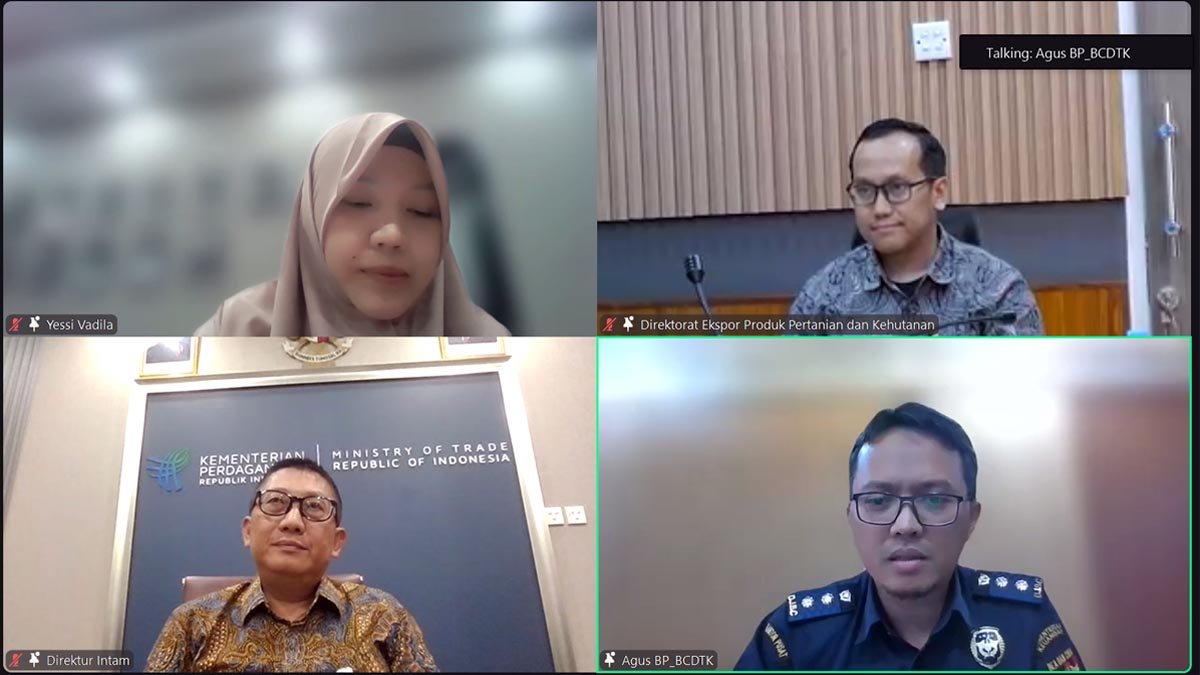
“Palm oil is the first commodity included in the strategic natural resource export scheme. The objective is to strengthen oversight, improve transparency, and ensure stronger linkages between domestic market obligations and export access,” Bayu said during a virtual socialization session on Tuesday attended by Palmoilmagazine.com.
The regulation covers a wide range of palm-based products, including crude palm oil (CPO), refined bleached deodorized palm oil (RBDPO), refined bleached deodorized palm olein (RBDPL), used cooking oil (UCO), and palm-derived residues such as POME oil, HAPOR, and EFB oil.

Export Access Linked to Domestic Supply Commitments
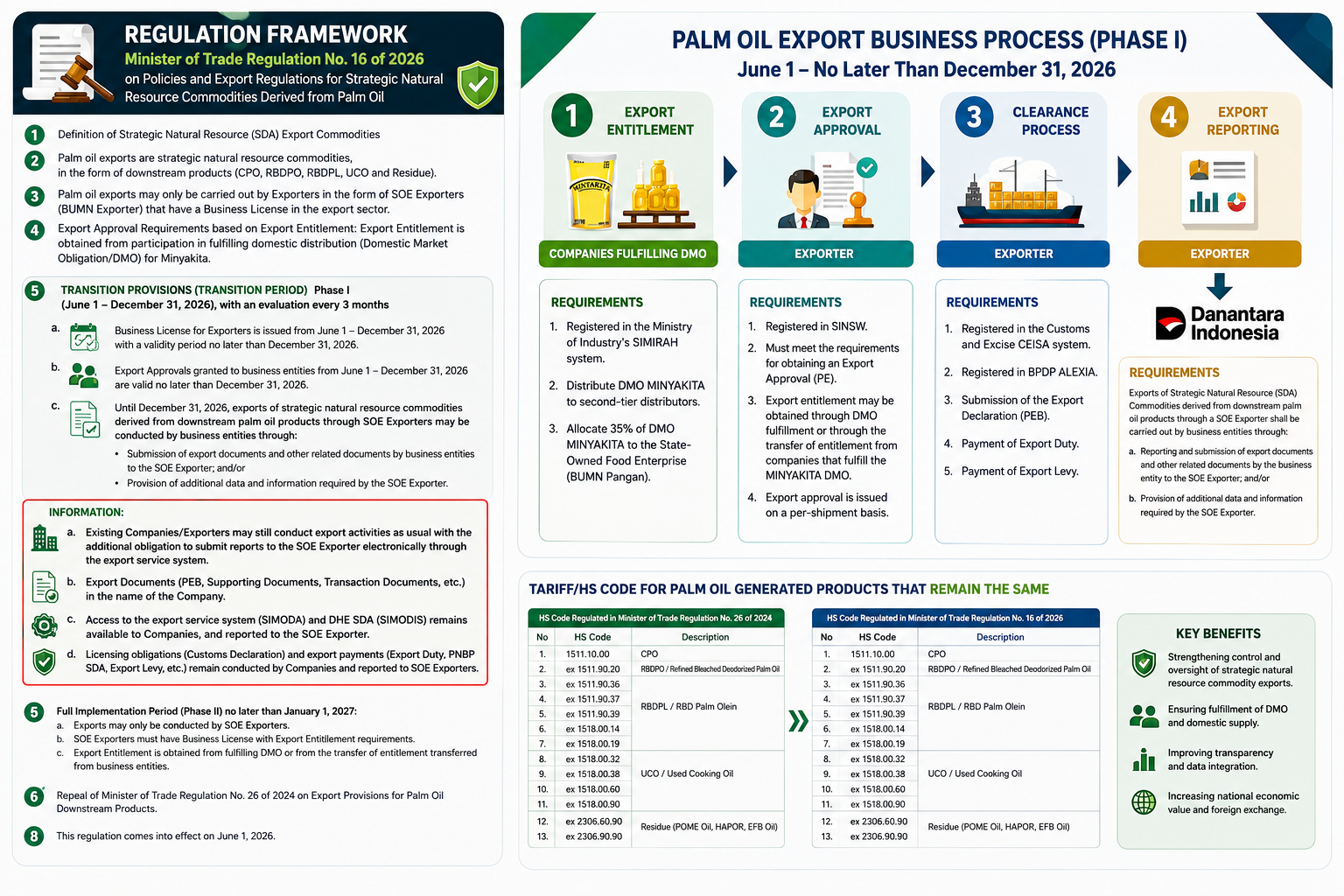
Under the new regulation, Export Approvals will be granted based on Export Rights earned through participation in Indonesia’s Domestic Market Obligation (DMO) program for Minyakita cooking oil distribution.
The government believes the mechanism will create a stronger connection between export activities and domestic supply fulfillment, helping maintain adequate cooking oil availability in the local market.
Also Read: KPBN CPO Price Climbs to IDR 15,175/kg as Malaysian Palm Oil Futures Extend Gains
The establishment of a State-Owned Export Enterprise is also expected to improve oversight of export activities while strengthening coordination among government institutions responsible for managing strategic commodities.
Transition Period Until End-2026
Bayu explained that implementation will be carried out in phases. The first phase began on June 1, 2026, and will continue until no later than December 31, 2026.
During this transition period, existing exporters will still be allowed to conduct exports under current procedures. However, companies will be required to submit additional reports to the designated State-Owned Export Enterprise through a digital export service platform currently being developed by the government.
Also Read: Minister Amran Warns Up to 300 Palm Oil Firms Over Depressed FFB Prices Despite Rising CPO Market
Exporters will remain fully responsible for all export documentation, including Export Declarations (PEB), customs supporting documents, commercial transaction records, and reports on Foreign Exchange Earnings from Natural Resource Exports (DHE SDA).
Other obligations, including export duties, non-tax state revenues (PNBP) related to natural resources, and export levies, will continue to be handled directly by companies throughout the transition period.
Full Implementation Begins in January 2027
The government aims to fully implement the new system no later than January 1, 2027.
Under the second phase, strategic palm oil exports will only be conducted through authorized State-Owned Export Enterprises that have obtained Export Approvals. Private companies will access export markets through Export Rights, which may be transferred to the designated state-owned exporter.
The government expects the model to create a more structured and controllable export system while preserving private sector participation in international trade.
Export Tariff Codes Remain Unchanged
Despite changes to export governance, the Ministry of Trade confirmed that product classifications and Harmonized System (HS) tariff codes remain unchanged from those stipulated under Minister of Trade Regulation No. 26 of 2024.
The regulated tariff codes continue to include HS 1511.10.00 for CPO, ex 1511.90.20 for RBDPO and cooking oil feedstock, ex 1511.90.36 and ex 1511.90.37 for RBDPL and cooking oil products, the ex 1518 category for used cooking oil (UCO), and ex 2306.60.90 and ex 2306.90.90 for palm residues such as POME oil, HAPOR, and EFB oil.
Also Read: Riau Smallholder FFB Prices Fall to IDR3,272/kg Following Market Correction
New Palm Oil Export Governance Workflow
Under the framework presented by the Ministry of Trade, the process begins with compliance with Minyakita DMO requirements through the Ministry of Industry’s SIMIRAH system. Companies fulfilling these obligations will earn Export Rights.
Businesses may then apply for Export Approval, provided they are registered in the Indonesia National Single Window (SINSW) system and possess sufficient Export Rights. The customs clearance process will subsequently be conducted through the Directorate General of Customs and Excise’s CEISA system and BPDP’s ALEXIA platform.
Also Read: Indonesia Sets June CPO Reference Price at USD 1,029.51/MT Amid Softer Global Demand
The final stage involves export reporting and submission of relevant documentation to the State-Owned Export Enterprise, forming part of a broader monitoring and control mechanism for Indonesia’s palm oil trade.
Through the rollout of Permendag No. 16/2026, the government reaffirmed its commitment to building a more transparent, integrated, and domestically oriented palm oil export system while maintaining the global competitiveness of one of Indonesia’s most important export commodities. (P3)