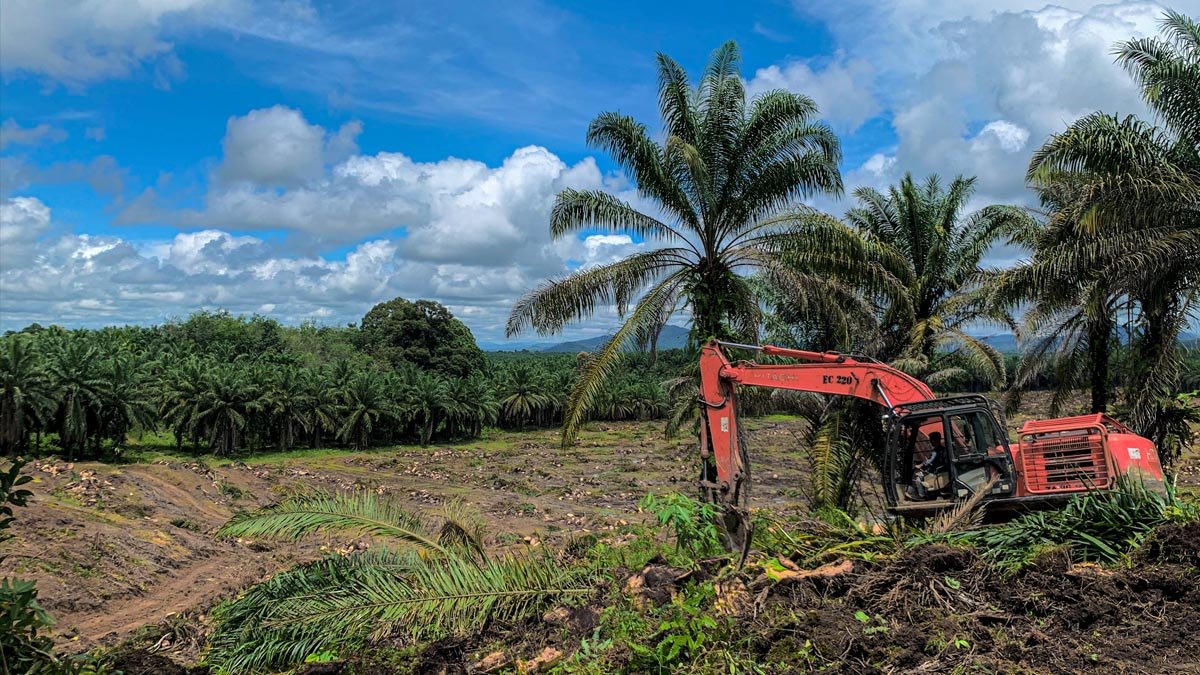
PALMOILMAGAZINE, Sangatta — The Indonesian government and Solidaridad are accelerating the implementation of the Smallholder Palm Oil Replanting Program (Peremajaan Sawit Rakyat/PSR) in East Kutai, East Kalimantan, targeting approximately 1,900 hectares of smallholder oil palm plantations.
The program is designed not only to replace aging oil palm trees but also to strengthen farmer organizations and accelerate smallholders’ compliance with the Indonesian Sustainable Palm Oil (ISPO) certification standards.
According to an official statement from Solidaridad received by PalmOilMagazine on Thursday (Sept. 3, 2026), the PSR program in East Kutai will receive funding support from the Plantation Fund Management Agency (BPDP) of IDR 60 million per hectare.
Also Read: 174 OKU Oil Palm Smallholders Train in Cultivation, Pest Control and Replanting
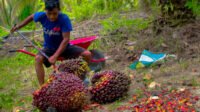
The program is expected to involve around 900 smallholders. The use of certified high-yielding planting material is expected to improve Fresh Fruit Bunch (FFB) productivity while supporting the long-term income of communities whose livelihoods depend on oil palm cultivation.
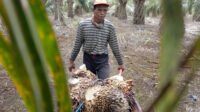
Oil palm plantations in East Kutai expanded rapidly from around 1999 through the early 2000s. After more than two decades of production, some plantations have now exceeded their optimal productive age.
Aging trees have become a growing challenge for smallholders as declining yields can put pressure on farmers’ incomes and the economic stability of plantation communities.
However, productivity is not the only challenge. Independent smallholders continue to face administrative and land-legality issues that can slow their access to the PSR program.
Solidaridad said simplifying the verification process would be important to accelerating program implementation. The mechanism should comply with Agriculture Ministry Regulation No. 5/2025 to ensure that government support reaches eligible farmers while maintaining accountability.
BPDP Funding Supports Smallholder Replanting
BPDP funding is a key instrument supporting PSR implementation in East Kutai. With an allocation of IDR 60 million per hectare, the funding supports replanting activities, including the use of certified high-quality planting material.
Solidaridad Indonesia Country Manager Yeni Fitriyanti said PSR should be viewed as part of a broader transformation in smallholder economic governance rather than simply a program to replace old trees.
Also Read: Government Sees Smallholder Replanting as Key to Boost Palm Oil Productivity
“PSR is a transformation of farmers’ economic governance. With BPDP funding and Agriculture Ministry Regulation No. 5/2025, 900 East Kutai farmers are ready to become key players in an ISPO-compliant palm oil supply chain,” Yeni said.
She added that productivity improvements through replanting must go hand in hand with stronger plantation governance. This would enable smallholder plantations to produce higher yields while meeting sustainability requirements throughout the palm oil supply chain.
Strengthening Smallholder Institutions
Accelerating PSR implementation in East Kutai will require coordination among the central government, local authorities, farmer organizations and supporting institutions.
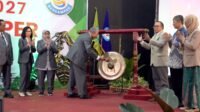
Solidaridad recently held a workshop on strengthening independent smallholders’ access to the PSR program in East Kutai. The event involved the Directorate General of Plantations at the Ministry of Agriculture, the East Kalimantan Plantation Agency, GPPI, and 22 cooperatives supported by Solidaridad.
Also Read: Solidaridad Indonesia Pushes for ISPO Certification Among Smallholder Oil Palm Farmers
The collaboration is aimed at strengthening farmers’ institutional capacity. Strong farmer organizations are considered an important foundation for meeting the requirements for ISPO certification.
I’im Mucharam, Director of Oil Palm and Other Palm Crops at the Ministry of Agriculture’s Directorate General of Plantations, said PSR is closely linked to efforts to meet sustainability standards in smallholder oil palm plantations.
“The PSR program is an essential foundation for meeting ISPO criteria. Inclusive downstream development can only be achieved if farmer organizations are strong and certified supply is secured,” I’im said.
Also Read: Indonesia Sees B50 Biodiesel as Catalyst for Higher Palm Oil Productivity
National PSR Funding Reaches IDR 12.86 Trillion
The acceleration of PSR in East Kutai is part of a broader national effort to strengthen Indonesia’s smallholder oil palm sector.
From 2016 through August 2026, the PSR program had distributed IDR 12.86 trillion to 187,782 smallholders covering 428,745 hectares.
In 2026 alone through August, PSR disbursements reached IDR 606 billion, supporting the replanting of 20,229 hectares owned by 10,403 smallholders.
With approximately 1,900 hectares targeted for replanting in East Kutai, the program is expected to provide a model that can be replicated in other regions. Collaboration among government agencies, cooperatives, farmers and support organizations could help accelerate replanting while improving smallholders’ readiness for ISPO certification.
For Indonesia’s palm oil industry, accelerating PSR is increasingly strategic because it addresses the sustainability of FFB production, smallholder welfare and Indonesia’s position in the global sustainable palm oil supply chain.
The East Kutai initiative therefore represents more than a tree-replacement program. It is also part of a broader effort to develop smallholder plantations that are more productive, better governed and capable of meeting increasingly stringent global market requirements. (P2)