PALMOILMAGAZINE, JAKARTA – The emergence of the European Union’s deforestation-free regulation (EUDR) has pushed commodity-producing countries to develop transparent information systems. For Indonesia, the answer lies in the National Dashboard—designed to meet global demands for traceability and sustainability.
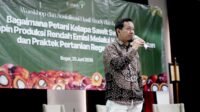
Speaking at a recent discussion in Jakarta, Diah Y. Suradiredja of the National Team for the Sustainable Commodity Information and Data Dashboard stressed that Indonesia’s initiative is not a knee-jerk response to the EUDR. Instead, it is a long-term journey that began in 2019, even before the term “Green Deal” gained international prominence.
“This is not just about the EUDR,” Diah explained. “We are addressing all global regulations that now demand traceability and sustainability for the commodities we export worldwide.”
Also Read: West Kalimantan Plantation Agency Backs Community Plantation Development in Sintang
She noted that Indonesia had recognized this urgency years ago. Through inter-ministerial discussions under the Coordinating Ministry for Economic Affairs, the government committed to creating an integrated system—a national data ecosystem—to ensure every exported commodity can be traced for origin, legality, and sustainability.
But the challenges remain significant. “Our data is fragmented, inconsistent, and recorded differently across agencies. Even data from Statistics Indonesia (BPS) can differ greatly from field records,” Diah said at the March 2025 event attended by Palmoilmagazine.com. She added that organizations such as the World Resources Institute (WRI) and World Wildlife Fund (WWF) also employ highly varied grassroots data approaches. High costs of data collection, weak coordination, and lack of integration between ministries further complicate the effort.
Out of these challenges came a solution: the establishment of a Joint Task Force—a national consortium in which all ministries are represented to collectively design and build the National Sustainable Commodity Dashboard.
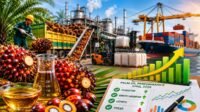
This dashboard is not just numbers. It contains geolocation data, legal documents, and transaction histories of every export product. “Every coordinate point, forest cover overlay, even farmer names—all will appear here,” Diah explained. The system is further strengthened by blockchain technology to guarantee reliability and secure data exchange.
Looking ahead, authorities and operators in importing countries will be able to directly access data from the National Dashboard. They will not only see the origin of commodities but also verify that the products are free from illegal deforestation. Through this system, Indonesia aims to demonstrate its capacity to compete in global markets with full transparency and integrity.
“This is not only about technology,” Diah concluded. “It’s about our courage to build a system that safeguards our own data, protects our farmers, and upholds Indonesia’s reputation on the world stage.” (P2)