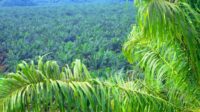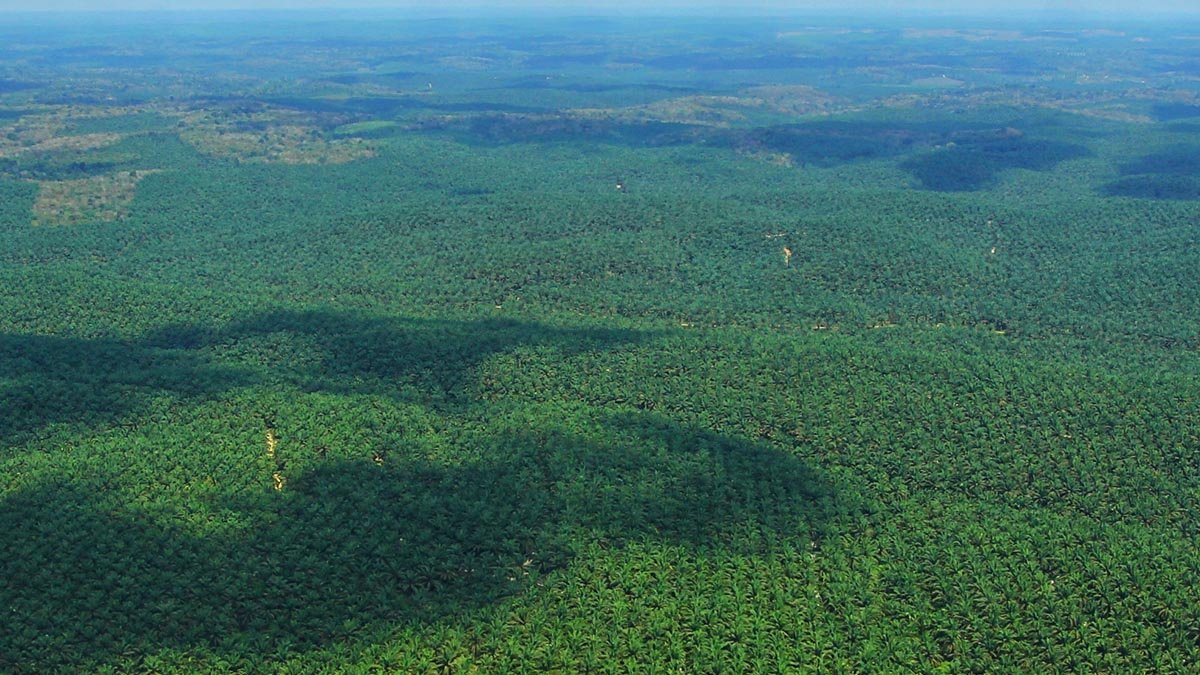
PALMOILMAGAZINE, SURAKARTA – At first glance, Indonesia’s landscape still appears lush and green. But behind that greenery, a fundamental shift has taken place in the structure and ecological function of its forests — from natural tropical rainforests to industrial timber estates and oil palm plantations. This raises a critical question: does visible greenery truly reflect environmental sustainability?
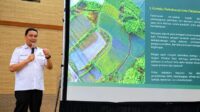
Aziz Akbar Mukasyaf, Ph.D., a lecturer at the Faculty of Geography at Universitas Muhammadiyah Surakarta (UMS), stated that ecologically, Indonesia should be dominated by tropical rainforests. However, field realities show significant changes in vegetation structure and ecosystem function.
Indonesia lies along the equator, naturally supporting vast tropical rainforest ecosystems stretching from Sumatra to Papua. Yet on Java Island, natural forests have long declined since the colonial era and were replaced by plantation forests such as teak. Today, substantial natural forests remain primarily in Sumatra, Kalimantan, Sulawesi, and Papua, although land-use pressure continues.
Also Read: BPDP Targets 50,000 Hectares Replanting to Boost Smallholder Yields and Regional Growth
Aziz estimates that Indonesia’s natural forest area has declined by more than 50 percent. He emphasized that frequent claims of declining deforestation rates do not necessarily indicate ecological recovery. In many cases, former natural forest areas have been converted into commercial forests, industrial timber plantations, or oil palm estates.
“Administratively, the land may still be recorded as vegetated. But ecologically, there has been a very significant decline in function,” he explained.
Different Meanings of Reforestation
According to Aziz, one core issue lies in differing definitions of reforestation. From a global and ecological science perspective, reforestation means restoring forests close to their natural condition — in terms of vegetation structure, species composition, and ecosystem function.
True reforestation prioritizes native species and encourages natural succession processes, enabling forests to regain their roles as carbon sinks, water regulators, and biodiversity habitats.
Also Read: Riau Eyes Up to IDR 160 Billion Boost in Regional Revenue from Surface Water Levy Revision
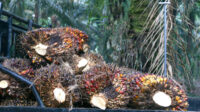
In contrast, in Indonesia, reforestation is often interpreted simply as replanting cleared land, without considering ecological suitability. In practice, planting frequently involves economically valuable crops such as oil palm or other industrial species that are not native to the local ecosystem.
“From an ecological standpoint, planting commercial crops on former natural forests cannot be called reforestation. It is a land-use change from a natural ecosystem into a production system,” he stressed.
Oil Palm Is Not a Tree
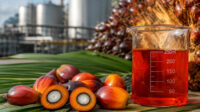
Aziz also addressed the common perception equating oil palm plantations with forest greening. He clarified that biologically, oil palm differs from trees.
“Oil palm is not a tree anatomically. It is a monocot, without cambium, with fibrous surface roots. Trees, on the other hand, have deeper root systems and can store water more effectively,” he explained.
Equating oil palm with trees, he warned, can mislead policy decisions. If oil palm plantations are classified as forest, natural forest conversion may still be recorded as forested land, despite fundamental ecological change.
He further noted that natural forests are heterogeneous, consisting of diverse species, while oil palm plantations are homogeneous. Heterogeneous forests are more resilient to pests, diseases, and climate change, whereas homogeneous systems are far more vulnerable.
“In a homogeneous system, when one component is disturbed, the impact spreads quickly. Natural forests have built-in buffering mechanisms,” he added.
Call for Forestry Policy Evaluation
Aziz emphasized that Indonesia must manage forests not merely as economic commodities, but as life-support systems. Forests provide oxygen, store carbon, regulate water systems, protect soil, and serve as habitats for biodiversity and local communities.
He urged policymakers to evaluate forestry policies beyond mere land-cover statistics, focusing instead on ecosystem quality and the sustainability of ecological functions. Sustainable development, he argued, requires honesty in defining what constitutes a forest and courage in placing ecological interests on equal footing with economic ones.
“The real question is not only how much land is green, but what kind of green and for what function. If oil palm continues to expand while natural forests shrink, then Indonesia’s environmental sustainability must be seriously questioned,” he concluded. (P2)