PALMOILMAGAZINE, JAKARTA – Malaysian crude palm oil (CPO) futures extended losses on Friday (June 5), marking a second straight day of decline as weakness in China’s vegetable oil market weighed on sentiment across the global edible oils sector.
Despite the downward pressure, losses remained relatively limited, supported by gains in U.S. soybean oil futures and a weaker Malaysian ringgit, which improved the competitiveness of the country’s palm oil exports.
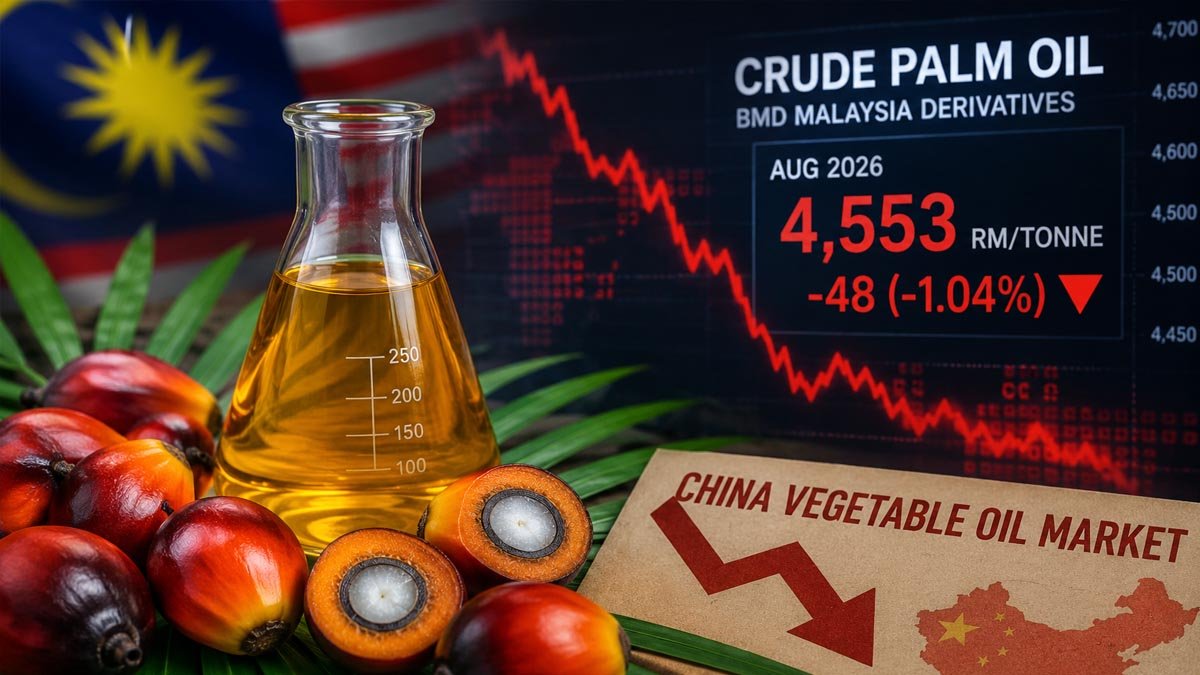
During morning trading on the Bursa Malaysia Derivatives Exchange, the benchmark August 2026 CPO contract fell RM48 per tonne, or approximately 1.04%, to RM4,553 per tonne.
Also Read: DSI and the Future of Indonesia’s Palm Oil Industry: Will Farmers and Workers Benefit?
The decline mirrored movements on China’s Dalian Commodity Exchange, a key benchmark for global vegetable oil markets. According to Reuters, the most active soybean oil contract on Dalian dropped 1.37%, while palm oil futures fell a steeper 2.49%.
In contrast, soybean oil futures on the Chicago Board of Trade (CBOT) rose about 0.33%, helping to cushion further losses in the Malaysian market.
Market participants attributed the downturn largely to profit-taking activity following a strong price rally over recent weeks. The weakness in Chinese vegetable oil markets also dampened broader sentiment, given China’s position as one of the world’s largest consumers and importers of edible oils.
Also Read: SPKS Urge Government to Keep MINYAKITA Affordable, Redirect BPDP Funds to Public Welfare
However, the decline in Malaysian palm oil prices was moderated by currency movements. The Malaysian ringgit weakened around 0.5% against the U.S. dollar on Friday, making palm oil exports cheaper and more attractive for foreign buyers using stronger currencies.
Meanwhile, Indonesia’s domestic CPO market also recorded a modest correction. PT Kharisma Pemasaran Bersama Nusantara (KPBN) set its CPO reference price at IDR 15,050 per kilogram on Friday.
The price was down IDR 25 per kilogram, or approximately 0.17%, from Thursday’s level of IDR 15,075 per kilogram.
Also Read: MINYAKITA Price Cap Under Review as Government Recalculates Economic Costs
The relatively mild decline suggests that the market is still searching for direction after receiving support in recent weeks from stronger export demand expectations and favorable movements in global vegetable oil prices.
Industry players are now closely monitoring demand trends from major importing countries, particularly China and India, as well as developments in soybean oil and crude oil markets, both of which remain important drivers of global palm oil pricing.
In the near term, fluctuations in the Malaysian ringgit and policy developments affecting vegetable oil trade are expected to remain key factors influencing market direction. With volatility still elevated across commodity markets, palm oil prices are likely to continue trading within a fluctuating range as investors respond to changing global sentiment. (P3)