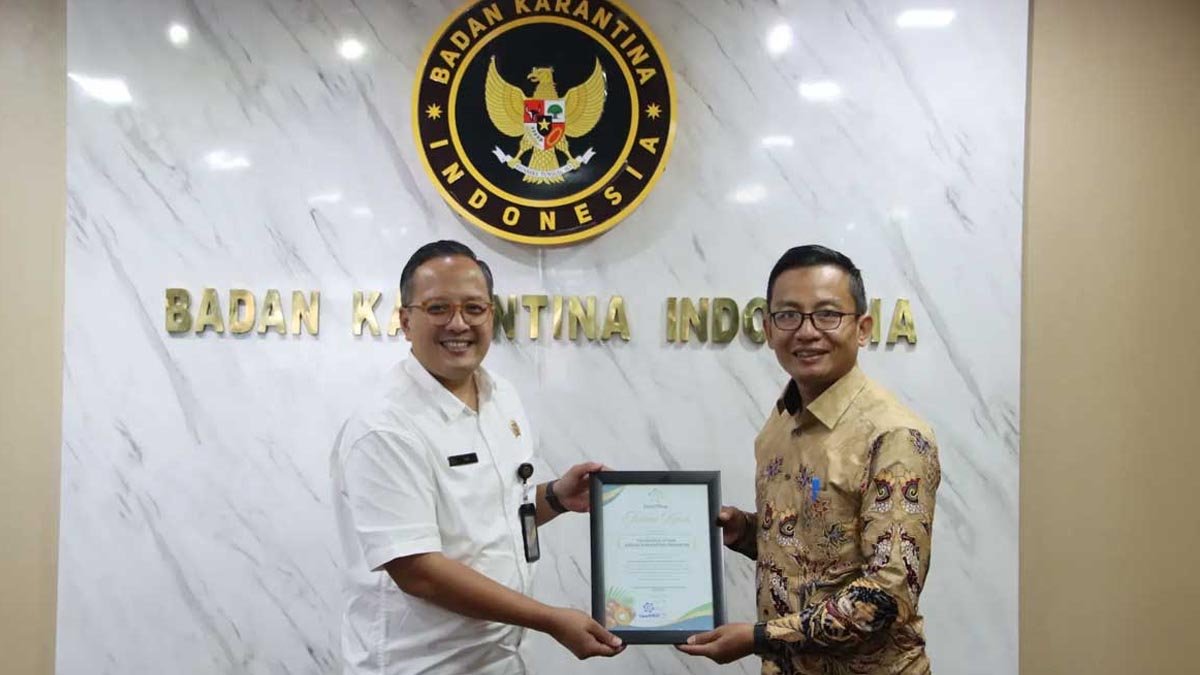
PALMOILMAGAZINE, JAKARTA – Indonesia’s Quarantine Agency (Barantin) is exploring collaboration with the Central Executive Board of the Young Reformist Movement for the Archipelagic Palm Oil Industry (SawitNus) to strengthen the capabilities of young professionals while supporting the sustainable development of the palm oil and coconut industries. The partnership is expected to enhance human resources, accelerate downstream industrial development, and reinforce the competitiveness of Indonesia’s export commodities.
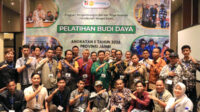
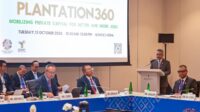
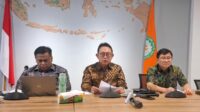
According to a statement from Barantin cited by Palmoilmagazine.com on Monday (July 13, 2026), the commitment was highlighted during a meeting in Jakarta on Wednesday between Barantin’s Head of the Bureau of Legal Affairs and Public Relations, Hudiansyah Is Nursal, and representatives of SawitNus.
During the discussion, Hudiansyah emphasized that Barantin plays a strategic role not only in protecting biological natural resources and safeguarding food and feed safety, but also as a trade facilitator supporting the smooth export of Indonesian commodities.
Also Read: Indonesia Mandates Palm Cooking Oil Producers to Prioritize Domestic Supply Under New Trade Rule
“In addition to protecting biological natural resources, we also enforce regulations and serve as an economic instrument to ensure Indonesian export commodities are accepted in destination markets,” he said.
Barantin reported positive performance in its palm oil quarantine services during the first half of 2026. Based on BEST TRUST data, export certification for palm oil and its derivative products reached 8.6 million tons between January and June 2026, representing an estimated economic value of IDR38.5 trillion.
Certified exports were dominated by palm kernel shells, palm kernel expeller (PKE), RBD Palm Olein, crude palm oil (CPO), and RBD Palm Stearin. These products were shipped to key export destinations including Japan, Thailand, South Korea, Poland, New Zealand, and Singapore.
Also Read: B50 Biodiesel Mandate Requires a Cautious Approach
Meanwhile, SawitNus Chairman Ujang welcomed Barantin’s openness to working with youth organizations engaged in the development of Indonesia’s palm oil and coconut plantation sectors.
He expressed hope that the partnership would lead to educational initiatives and capacity-building programs that help young people better understand the importance of a sustainable palm oil industry.
“We hope to establish strong synergy with Barantin through joint educational programs that improve the capacity of young people involved in the coconut and palm oil sectors,” Ujang said.
Also Read: RSPO Says Trust and Local Engagement Are Key to Advancing Sustainable Palm Oil Smallholders
Barantin is also strengthening its quarantine services by digitalizing documentation and integrating service systems to speed up export certification while maintaining compliance with international standards required by importing countries.
Beyond safeguarding commodity health, the agency regularly provides technical guidance to businesses, including micro, small, and medium-sized enterprises (MSMEs) producing value-added palm products. The assistance focuses on helping exporters meet regulatory and quarantine requirements in international markets.
Hudiansyah added that promoting downstream processing of local commodities remains a key strategy to increase added value and improve public welfare.
Also Read: VEOPAN Urges Stronger Domestic Palm Oil Industry Over Import Reliance
“To ensure sustainability while improving livelihoods, downstream development of Indonesian commodities, including coconut and palm oil, must continue to be encouraged,” he concluded.
The meeting was also attended by Barantin’s Head of the Data and Information Systems Center, Ichwandi, and Deputy for Plant Quarantine representative Andi Yusmanto. The collaboration is expected to strengthen Indonesia’s palm oil ecosystem by enhancing human resource quality and boosting the global competitiveness of Indonesian products. (P2)