

PALMOILMAGAZINE, JAKARTA – Indonesia’s Ministry of Trade and the National Food Task Force have stepped up monitoring of MINYAKITA distribution and pricing across the country to ensure the government-subsidized cooking oil is sold at the official retail ceiling price of IDR 15,700 per liter.
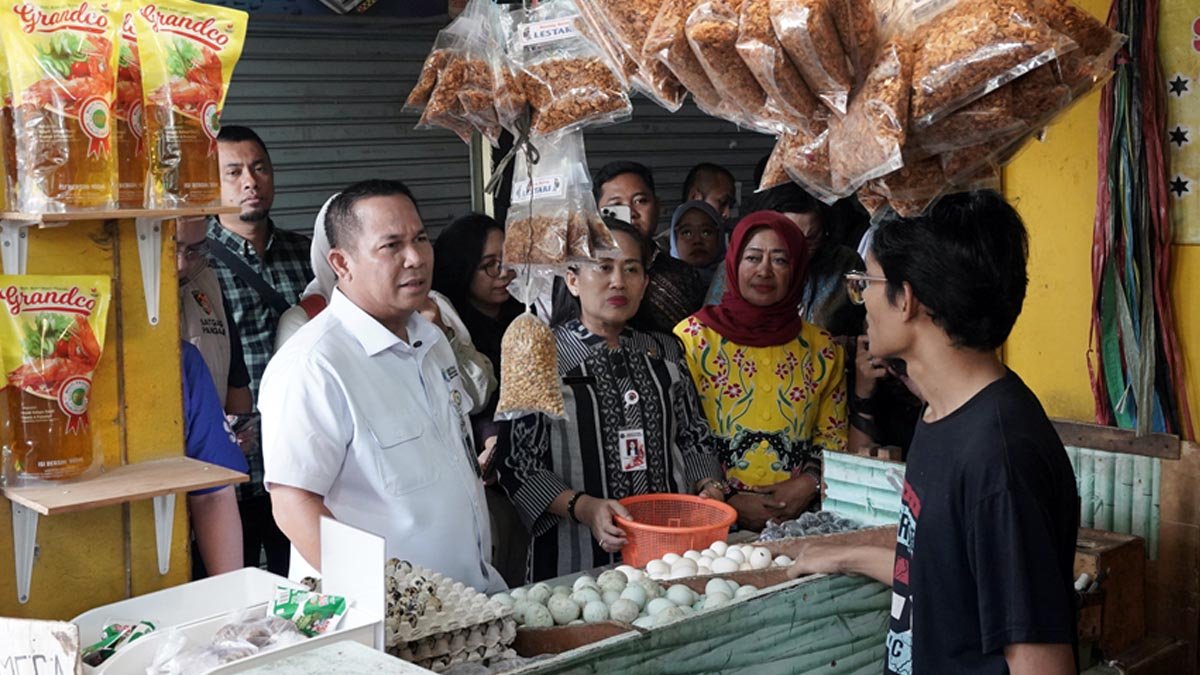
The intensified supervision follows field inspections conducted at Palmerah Market in Jakarta on Thursday, involving officials from the Directorate General of Consumer Protection and Trade Compliance (PKTN), the National Food Task Force, the Jakarta Provincial Trade Office, and state logistics agency Bulog.
Director General of Consumer Protection and Trade Compliance Moga Simatupang said inspectors found no evidence of MINYAKITA being sold at IDR 20,000–22,000 per liter, as previously reported by several media outlets.
Also Read: KPBN CPO Tender Ends in Withdrawal Again as Malaysian Palm Oil Futures Extend Gains
“Based on inspections at several shops in Palmerah Market, MINYAKITA was sold in accordance with the government’s retail price ceiling of IDR 15,700 per liter to end consumers,” Moga said, as quoted by Palmoilmagazine.com from the Trade Ministry on Sunday.
He emphasized that all businesses must comply with established pricing and labeling regulations. Under Indonesia’s Consumer Protection Law No. 8 of 1999, businesses are prohibited from trading or distributing products that do not conform to the information stated on labels or to applicable regulations.
Moga also encouraged media organizations and the public to provide more detailed information when reporting suspected pricing violations. Specific information regarding store names and locations, he said, would help authorities verify complaints and take appropriate enforcement measures.
Also Read: Dialogue through Mediation: Getting to know RSPO’s Dispute Settlement Facility (DSF)
The government regulates MINYAKITA’s distribution system through Trade Minister Regulation No. 2396 of 2025 concerning the Domestic Price Obligation (DPO). Under the scheme, producers sell to first-tier distributors at IDR 13,500 per liter, first-tier distributors sell to second-tier distributors at IDR 14,000 per liter, second-tier distributors sell to retailers at IDR 14,500 per liter, while the maximum retail price for consumers is set at IDR 15,700 per liter.
According to Moga, the government will not hesitate to impose sanctions on businesses found violating the pricing regulations.
“Violations of the DPO and retail price ceiling provisions will be subject to legal action. Offenders may face imprisonment of up to five years or fines of up to IDR 2 billion,” he said.
Also Read: Amran Says 90% of Palm Oil Companies Have Raised Fresh Fruit Bunch Prices for Farmers
To maintain price stability at the consumer level, the Trade Ministry has instructed regional trade offices and the Food Task Force to conduct regular inspections of retailers and traditional market vendors. Any violations discovered are expected to be investigated promptly by law enforcement agencies and civil servant investigators.
As part of broader enforcement efforts, the Directorate General of Consumer Protection previously issued a directive to provincial trade offices nationwide, instructing them to strengthen supervision of MINYAKITA distribution, particularly in traditional markets.
The government is also encouraging local authorities to educate traders regarding several key requirements, including obtaining a Business Identification Number (NIB), complying with the retail price ceiling, reporting distribution through the SIMIRAH system, and limiting purchases to a maximum of 12 liters, or one carton, per consumer per day.
Also Read: Indonesia Keeps MINYAKITA Price Cap Unchanged, Expands Supply Through Traditional Markets
On the distribution side, the Trade Ministry has urged producers and primary distributors to prioritize deliveries to traditional market retailers at official DPO prices. Authorities believe equitable distribution is essential to prevent resale activities among retailers that could lengthen supply chains and drive prices higher.
Meanwhile, state logistics agency Bulog currently holds approximately 20,000 tons of MINYAKITA reserves. In Jakarta alone, Bulog has allocated 93 tons for immediate distribution to traditional markets to help maintain adequate supplies.
The government estimates national cooking oil demand at approximately 254,000 tons per month, which is supplied through both MINYAKITA and various commercial cooking oil brands available in the market.
Also Read: Government Strengthens Oversight to Ensure Fair Palm Oil Pricing for Farmers
Moga stressed that MINYAKITA is primarily intended for lower- and middle-income households as part of the government’s efforts to maintain affordable food prices.
“The government guarantees that national cooking oil supplies remain secure and sufficient. MINYAKITA is designed to protect consumers’ purchasing power, while broader market demand can be met through various commercial cooking oil brands,” he concluded. (P3)