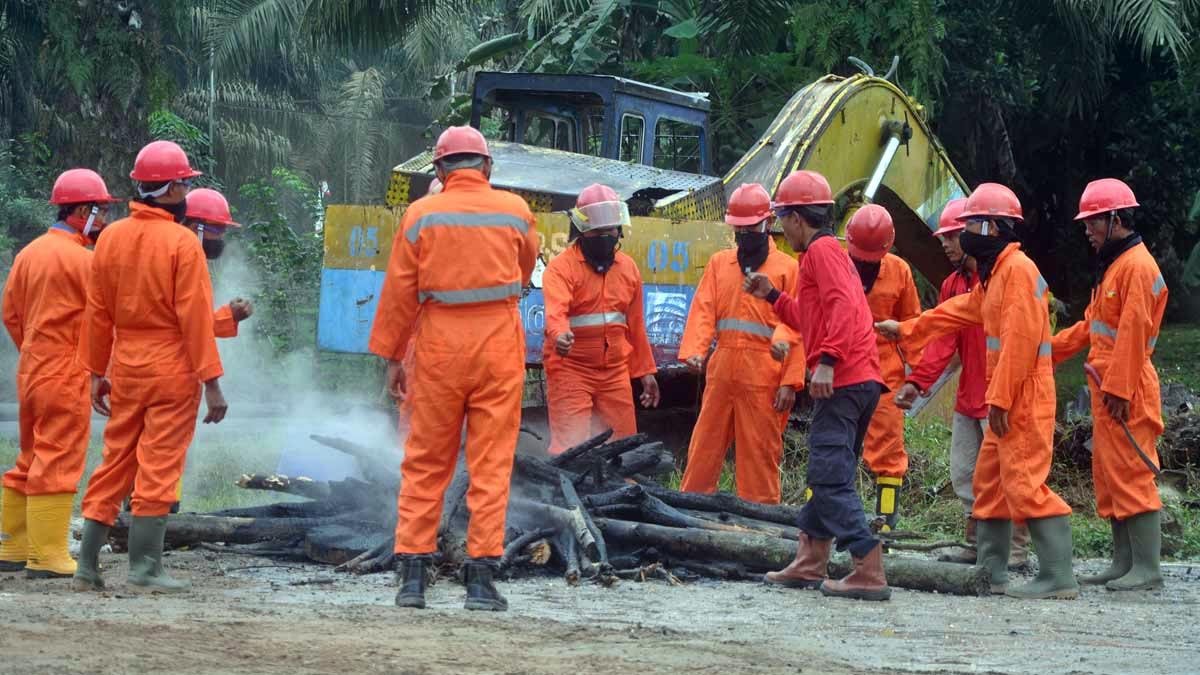
Palm oil companies in Indonesia are strengthening fire prevention and response systems ahead of the 2026 dry season, with measures ranging from firefighting readiness and hotspot monitoring to community-based prevention.
PALMOILMAGAZINE, JAKARTA — The risk of forest and land fires during Indonesia’s 2026 dry season is prompting palm oil companies to strengthen preventive measures ahead of the peak dry period.
Preparedness efforts include upgrading firefighting equipment and infrastructure, monitoring hotspots, conducting field patrols, strengthening emergency response teams, and working with local governments and communities around plantation areas.
The approach reflects a shift toward early prevention rather than relying primarily on firefighting after incidents occur. Companies have begun increasing their level of preparedness before weather conditions become significantly drier, particularly in areas with historically high fire risks.
Also Read: GAPKI Urges Palm Oil Companies to Strengthen Gender Committees to Prevent Sexual Violence
BGA Strengthens Fire Prevention in Central Kalimantan
One company strengthening its preparedness is Bumitama Gunajaya Agro (BGA Group), which operates in Central Kalimantan.
Ahead of the 2026 dry season, BGA has increased coordination and fire-response preparedness across its operational areas, involving local governments, security agencies and surrounding communities.
The company’s preparedness efforts cover three main operational areas—Pundu, Kotawaringin and Mentaya. Coordination involves the local district leadership forum (Forkopimcam), the Regional Disaster Management Agency (BPBD), the Indonesian Military and National Police (TNI-Polri), Manggala Agni, and BGA’s internal firefighting teams.
Also Read: Indonesia Raises September CPO Reference Price 1.10% to US$1,007.51/MT
With an operational area of approximately 184,000 hectares, comprising 66% nucleus estates and 34% plasma smallholder plantations, strengthening fire prevention systems is an important part of plantation management.
The measures are intended not only to protect plantation areas and the surrounding environment but also to help ensure that economic activities in nearby communities can continue.
According to Tabengan Online, as quoted by PalmOilMagazine on June 4, 2026, BGA’s measures include inspections of firefighting facilities and infrastructure, human-resource capacity building, fire-response simulations, and stronger field coordination.
Also Read: KPBN Inacom CPO Price Rises to IDR 16,018/Kg on September 1
The objective is to ensure that any early indication of fire can be detected and addressed as quickly as possible.
BGA is also strengthening prevention efforts among communities around its operational areas. The company runs a Fire-Free Village program and supports Community Fire Awareness groups, known locally as Masyarakat Peduli Api (MPA), as part of its community-based monitoring system.
Through this approach, communities are encouraged to remain alert to potential fire hotspots and understand the risks associated with land clearing by burning.
Community involvement is considered important because local residents are closest to fire-prone areas and can play an early-warning role in detecting potential fires.
In 2026, BGA is working with 12 villages surrounding its Central Kalimantan operations to strengthen community-based fire prevention. The collaboration is expected to improve response times while enhancing the resilience of both villages and plantation areas during the dry season.
Also Read: Agrinas Palma: Indonesian Oil Palm Smallholders Still Lag Corporations in Productivity
Astra Agro Strengthens Fire Prevention in Riau
Similar preparedness measures are being implemented by PT Astra Agro Lestari Tbk (AALI) through its operating units in Riau Province.
The company has reaffirmed its commitment to preventing forest and land fires by applying a no-burning principle across its operations.
The commitment was reinforced through the company’s participation in the Forest and Land Fire Prevention Preparedness Roll Call in Pekanbaru on April 25, 2026. The event formed part of broader multi-stakeholder coordination efforts ahead of the anticipated increase in fire risks during the dry season.
Also Read: SPKS Warns Indonesia’s Palm Oil Export Margin Fee Could Cut Smallholder FFB Prices
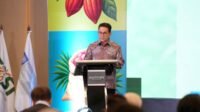
At the event, Environment Minister Hanif Faisol Nurofiq warned that the risk of forest and land fires in 2026 required serious anticipation.
Declining rainfall and the possibility of a longer dry season could increase fire risks, particularly in Riau, which has extensive peatland areas.
For plantation companies, these conditions make prevention increasingly important rather than relying solely on firefighting once fires have started. Peatland water management, land-condition monitoring, and the readiness of personnel and equipment are therefore key elements of fire-risk mitigation.
Also Read: Beyond Certification: The Next Chapter of Indonesia’s Sustainable Palm Oil
Astra Agro Vice President of Corporate Communication Mochamad Husni said the company has not opened new land since 2015, whether on peatland or mineral soils.
Land management is supported by technical monitoring, including groundwater level measurements, rainfall monitoring and subsidence monitoring in accordance with applicable regulations.
Astra Agro is also strengthening operational preparedness by inspecting firefighting facilities and equipment, optimizing fire lookout towers, developing water reservoirs, conducting integrated patrols, and monitoring hotspots through technology.
Also Read: Super El Niño Threatens Malaysia Palm Oil Output in 2027, MPOC Sees Monsoon as Cushion
The company has increased the capacity of its fire brigades through training and fire-response simulations. The measures are designed to ensure that field teams are equipped not only with the necessary tools but also with the skills to respond quickly when potential fires are identified.
Astra Agro has also conducted in-depth assessments of six districts categorized as fire-prone. The assessments consider landscape characteristics, community conditions and historical hotspot patterns.
Collaboration with communities and other stakeholders has been strengthened through integrated patrols, support for MPA groups and participation in various government fire-prevention programs in Riau.
Also Read: Breaking the vicious cycle of forest fires and haze
Early Preparedness Becomes Critical
The measures implemented by BGA and Astra Agro highlight the growing importance of fire preparedness in palm oil plantation operations, particularly in areas with elevated fire risks.
Prevention increasingly relies on a multilayered approach, including weather and hotspot monitoring, firefighting infrastructure readiness, human-resource training, field patrols, peatland water management and community participation.
Also Read: Fair and Proportional Law Enforcement Is Essential in Tackling Forest and Land Fires
The strategy also reflects the importance of preparing before the peak of the dry season rather than waiting until fire incidents occur.
Early preparedness can allow potential fires around plantation areas to be detected and addressed before they develop into larger and more difficult-to-control incidents.
For the palm oil industry, effective fire prevention is not only a matter of protecting plantation areas. It is also closely linked to environmental protection, community safety and the continuity of economic activities in surrounding areas.
As a result, cooperation among plantation companies, government agencies, security forces and local communities remains critical to building an effective fire-prevention and early-response system.
Strengthening preparedness from the beginning of the dry season will be essential to keeping fire risks under control as Indonesia enters the more vulnerable period of 2026.
For palm oil companies, the message is increasingly clear: fire preparedness must be maintained consistently and year-round, rather than intensified only after flames appear in the field. (P2)