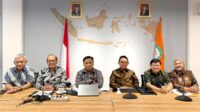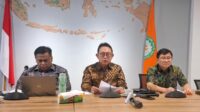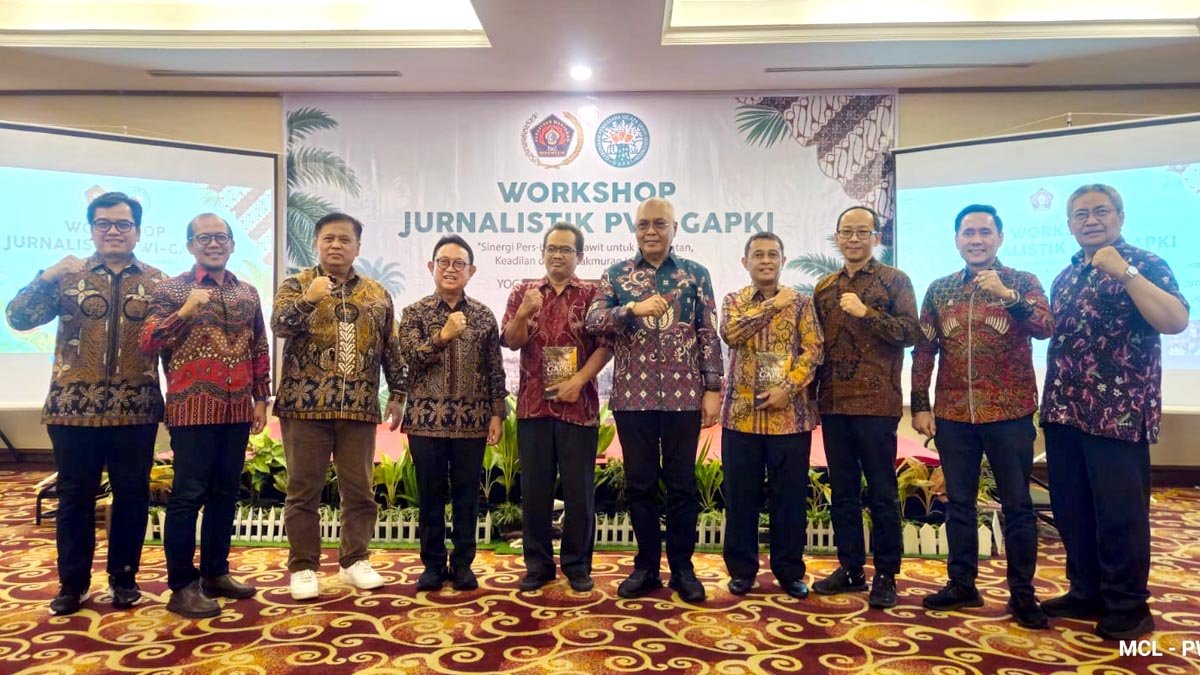
The two organizations held a journalism workshop in Yogyakarta, highlighting sustainable palm oil governance, media responsibility, regulatory challenges, and the strategic role of palm oil in Indonesia’s economy and energy security.
PALMOILMAGAZINE, YOGYAKARTA — The Indonesian Palm Oil Association (GAPKI) and the Indonesian Journalists Association (PWI) have strengthened their cooperation through a journalism workshop in Yogyakarta, aimed at improving public understanding of Indonesia’s palm oil industry and its role in the national economy.
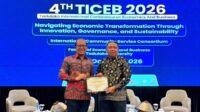
The GAPKI-PWI Journalism Workshop brought together industry stakeholders and media representatives to discuss sustainable, environmentally responsible palm oil governance and the commodity’s contribution to Indonesia’s economic development.
Also Read: GAPKI and Forwatan Strengthen Media Synergy for Better Palm Oil Communication
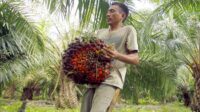
GAPKI Chairman Eddy Martono said the decision to hold the event in Yogyakarta, a province without large-scale oil palm plantations, was deliberate. The location provided an opportunity to introduce the broader public to the importance of palm oil in everyday life, including its use in local batik production and various consumer and industrial products.
However, Eddy also highlighted regulatory challenges facing the industry, particularly those related to forest and land fires, or karhutla. He said GAPKI has proactively supported firefighting efforts even outside plantation concession areas, including in West Kalimantan, Central Kalimantan, and Riau.
Despite these efforts, palm oil companies remain exposed to the strict liability provisions under Article 88 of Law No. 32/2009.
Also Read: GAPKI Strengthens Fire Prevention Efforts as Indonesia Faces 2026 Dry Season
“If a fire occurs—even when it is proven that the fire originated outside the concession and then entered the concession—the company is automatically considered negligent. It is impossible for companies or communities to deliberately burn their own assets,” Eddy said in an official statement received by PalmOilMagazine on Saturday (Aug. 29).
He called for an addendum or exemption clause in the regulations, particularly for situations involving extreme weather conditions.
Also Read: GAPKI Accelerates ISPO Certification in West Kalimantan, Targets 100% Certified Members
PWI Calls for Data-Based Journalism
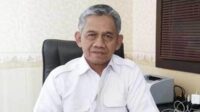
PWI Central Executive Chairman Akhmad Munir emphasized the importance of the media in presenting facts amid what he described as global black campaigns targeting Indonesia’s palm oil industry.
He said international business competition often uses environmental and labor issues to undermine the reputation of Indonesia’s palm oil governance.
Also Read: GAPKI Urges Industry-Driven Research to Strengthen Sustainable Palm Oil Innovation
“The main challenge for the palm oil industry is to demonstrate governance that benefits society. The world needs palm oil because it is the most productive vegetable oil,” Akhmad said.
He stressed that data-driven and evidence-based journalism is essential. Journalists, he said, should report environmentally responsible practices in the palm oil sector while maintaining a critical stance and encouraging improvements in good corporate governance.
“The press must prioritize national interests by supporting a palm oil industry that is environmentally responsible, healthy for workers, and sustainable. This is an important task that we need to carry out together,” he said.
Also Read: GAPKI: Indonesia’s Palm Oil Output Slips in May 2026, but CPO Stocks Rise to 3.04 Million Tons
Palm Oil Seen as Strategic National Asset
During the workshop, Prof. Dr. Ermanto Fahamsyah, a professor at the University of Jember, described palm oil as a major asset for Indonesia.
“Palm oil is a blessing. We should be grateful because this commodity makes a major contribution to foreign exchange earnings, employment, as well as national food and energy security,” he said.
Also Read: Indonesia’s Palm Oil Exports Jump 64% in June 2026 to US$3.92 Billion
He added that the responsibility of all stakeholders is to ensure that the resource is managed through sound governance so its benefits can be distributed more broadly across society.
Senior INDEF economist and President of ASAE Prof. Dr. Bustanul Arifin similarly called for greater attention to smallholder plantations and stronger international diplomacy as domestic energy demand rises and global trade regulations become more stringent.
“Sustainable palm oil is a national necessity, not merely a response to external pressure,” Bustanul said.
He identified smallholder replanting as one of the keys to improving Indonesia’s competitiveness by reducing the yield gap. He also highlighted the need to accelerate ISPO and RSPO certification and strengthen fair partnerships between smallholders, state-owned enterprises and private companies.
Also Read: CPO Prices Rise: KPBN Inacom Sets IDR 15,800/Kg as Malaysia Futures Gain 0.89%
Media Urged to Balance Criticism and National Interests
Agus Sudibyo, head of education at PWI Central Executive Board and a former member of the Press Council, also addressed the relationship between press freedom and national interests.
He said press freedom must be exercised alongside an awareness of broader national economic interests.
Also Read: Fair and Proportional Law Enforcement Is Essential in Tackling Forest and Land Fires
“Press freedom is universal. But national prosperity has a higher value,” Agus said, arguing that countries often protect their domestic products as part of broader national strategies.
He stressed that the media should report on Indonesia’s palm oil industry critically and independently, without becoming an extension of the industry. At the same time, journalists should recognize the commodity’s strategic contribution to the country.
According to Agus, palm oil plays at least five major roles in Indonesia:
- A major contributor to non-oil and gas foreign exchange earnings.
- A significant source of employment.
- A key pillar of regional economies.
- A contributor to energy security and self-sufficiency through biodiesel development.
- A major source of vegetable oil and raw materials for the food industry.
Also Read: GAPKI Urges Palm Oil Companies to Strengthen Gender Committees to Prevent Sexual Violence
He said environmental concerns and other challenges surrounding palm oil should receive serious attention, but coverage should be balanced with recognition of the commodity’s contribution to the national economy.
“Our attention to environmental issues and other problems related to palm oil should at least be balanced with appreciation, advocacy and recognition that palm oil is a pillar of the national economy,” Agus said.
He added that in several other countries, domestic palm oil and vegetable oil industries often receive stronger political and public support, while criticism is comparatively limited.
“Press freedom, media professionalism and a critical attitude toward the palm oil industry must not disappear when there are genuine problems. But we must also become increasingly aware of our national interests in the global vegetable oil discourse,” Agus said.
Through the workshop, PWI and GAPKI said they hope journalists will gain a more comprehensive understanding of Indonesia’s palm oil sector and its complex dynamics. The organizations expect the stronger understanding to contribute to journalism that is clear, objective, fact-based and capable of educating the public. (P3)