The Indonesian Palm Oil Association is stepping up efforts to accelerate ISPO implementation, with the goal of ensuring all GAPKI member companies obtain certification.
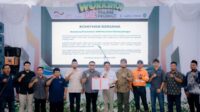
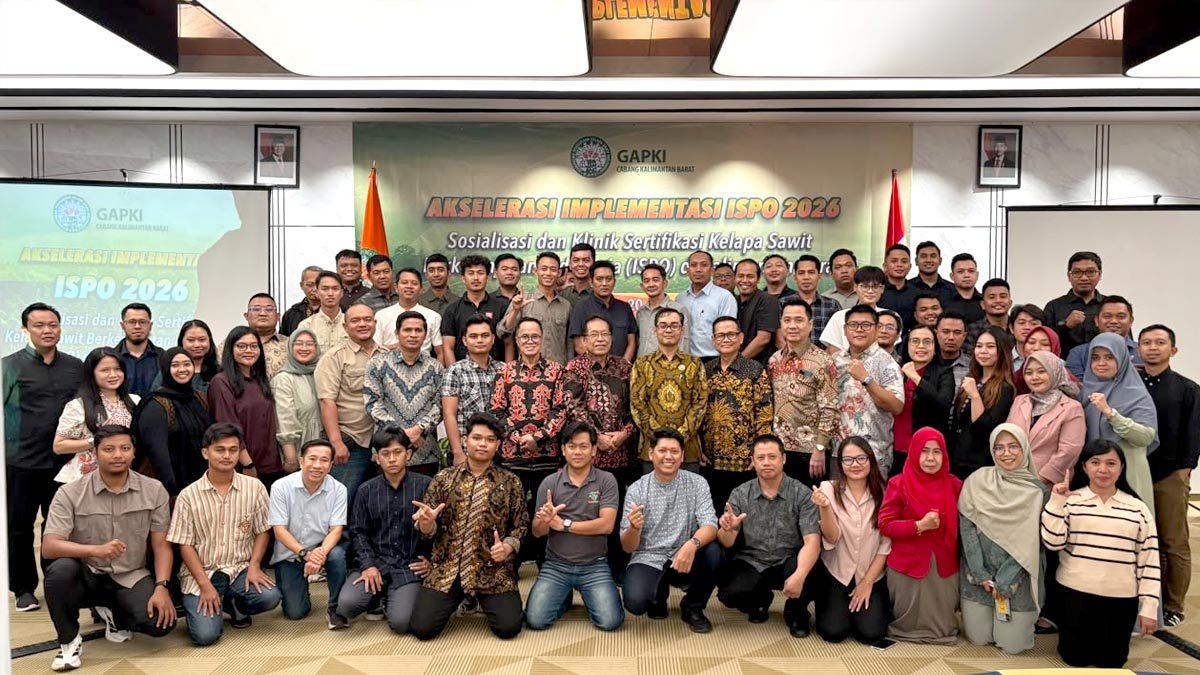
PALMOILMAGAZINE, PONTIANAK — The Indonesian Palm Oil Association (GAPKI) is accelerating the implementation of Indonesian Sustainable Palm Oil (ISPO) certification, holding a two-day ISPO Socialization and Certification Clinic in Pontianak, West Kalimantan, on August 19–20, 2026.
The event, part of GAPKI’s 2026 ISPO Implementation Acceleration program, was attended by 110 participants representing GAPKI member companies, ISPO internal auditors, sustainability and legal teams, occupational health and safety personnel, relevant stakeholders, and representatives of non-member companies.
Also Read: 9th Borneo Forum 2026: GAPKI Highlights Innovation and Productivity as Keys to Future Growth
The program featured speakers from the ISPO team at the Directorate General of Plantations and representatives of certification bodies.
The event was opened by Acting Head of the West Kalimantan Plantation and Livestock Agency, Rino Anteno Tengo, who highlighted the importance of the ISPO Socialization and Certification Clinic in accelerating certification and strengthening sustainable palm oil development in the province.
West Kalimantan is among Indonesia’s largest palm oil-producing provinces. In 2025, the province had an oil palm planted area of 2,305,536.57 hectares, with combined crude palm oil (CPO) and palm kernel (PK) production reaching 7,989,462.31 tons.
Also Read: GAPKI Urges Industry-Driven Research to Strengthen Sustainable Palm Oil Innovation
Rino said the province’s vast palm oil potential must be supported by stronger governance and the wider adoption of sustainability principles to ensure West Kalimantan’s palm oil products remain competitive amid growing global market demands.
The government has strengthened the ISPO certification framework through Presidential Regulation No. 16 of 2025 on the Indonesian Sustainable Palm Oil Certification System and Minister of Agriculture Regulation No. 33 of 2025 on the implementation of sustainable palm oil plantation certification.
The new regulations expand the scope of ISPO beyond plantation operations to include downstream palm oil industries and palm oil-based bioenergy businesses.
Also Read: GAPKI and Forwatan Strengthen Media Synergy for Better Palm Oil Communication
The West Kalimantan Provincial Government expects the program to improve understanding among companies and smallholders of the latest ISPO regulations and encourage stronger implementation of ISPO principles and criteria across their operations.
As of June 2026, a total of 119 plantation companies in West Kalimantan had obtained ISPO certificates. Meanwhile, two farmer organizations in Sekadau Regency had also secured ISPO certification.
West Kalimantan GAPKI Chairman Aris Supratman said ISPO should not be viewed merely as an administrative obligation or a requirement to be addressed only when companies face an audit.
Also Read: KPBN Inacom CPO Price Falls to IDR 15,888/kg on August 21, 2026, as Malaysia Futures Rally
Instead, he said, ISPO should become a practical instrument for improving corporate governance, strengthening management systems, enhancing compliance, reducing operational risks, and increasing the competitiveness of Indonesia’s palm oil industry.
“We do not want this activity to end with socialization alone. We want it to become a forum for learning, consultation, and problem-solving,” Aris said in a statement received by PalmOilMagazine on Friday (August 21, 2026).
Participants were encouraged to openly identify the challenges and compliance gaps still facing their companies in meeting ISPO requirements, allowing potential solutions to be discussed collectively.
The level of preparedness varies among companies, ranging from those that have obtained certification and are undergoing surveillance audits to those still in the certification process or continuing to improve their operations.
During the program, participants received updates on ISPO policies, deeper discussions on ISPO principles and criteria, explanations on the regulatory transition period, audit and surveillance procedures, mock audits, discussions on implementation challenges, and experience-sharing sessions from companies that have successfully obtained ISPO certification.
Also Read: Government Prioritizes BPDP Support for ISPO-Certified Palm Oil Smallholders
GAPKI Pursues 100% ISPO Certification
At the national level, GAPKI has maintained its commitment since 2019 to ensure that all of its member companies obtain ISPO certification.
In remarks delivered by GAPKI Head of Plantation Affairs Azis Hidayat on behalf of GAPKI Chairman General, the association said that as of July 2025, 587 member companies had obtained ISPO certificates, representing around 79% of GAPKI’s total 743 members.
Also Read: BPDP Partners with INSTIPER and AKPY to Develop 1,010 Skilled Plantation Professionals
The figures underline the need to further accelerate certification among the association’s remaining members.
The expanded ISPO framework under Presidential Regulation No. 16 of 2025, which now covers upstream plantations, downstream industries, and bioenergy businesses, also requires companies to continue adapting to regulatory developments and strengthening compliance with sustainable palm oil principles.
GAPKI expects the ISPO Socialization and Certification Clinic in West Kalimantan to produce concrete follow-up actions at the company level.
Also Read: Indonesia Prepares I-EU CEPA Implementation to Expand Market Access in Europe
Participants are expected to leave the program not only with a better understanding of the regulations but also with clear action plans outlining the compliance gaps that need to be addressed, the parties responsible, and targeted timelines for completion.
Collaboration between the government, GAPKI, certification bodies, companies, academics, and other stakeholders will be crucial to accelerating ISPO certification and strengthening a palm oil industry in West Kalimantan that is more productive, competitive, responsible, and sustainable. (P3)