GAPKI believes Indonesia’s palm oil industry can strengthen its global competitiveness by accelerating replanting, downstream investment, and sustainability initiatives.
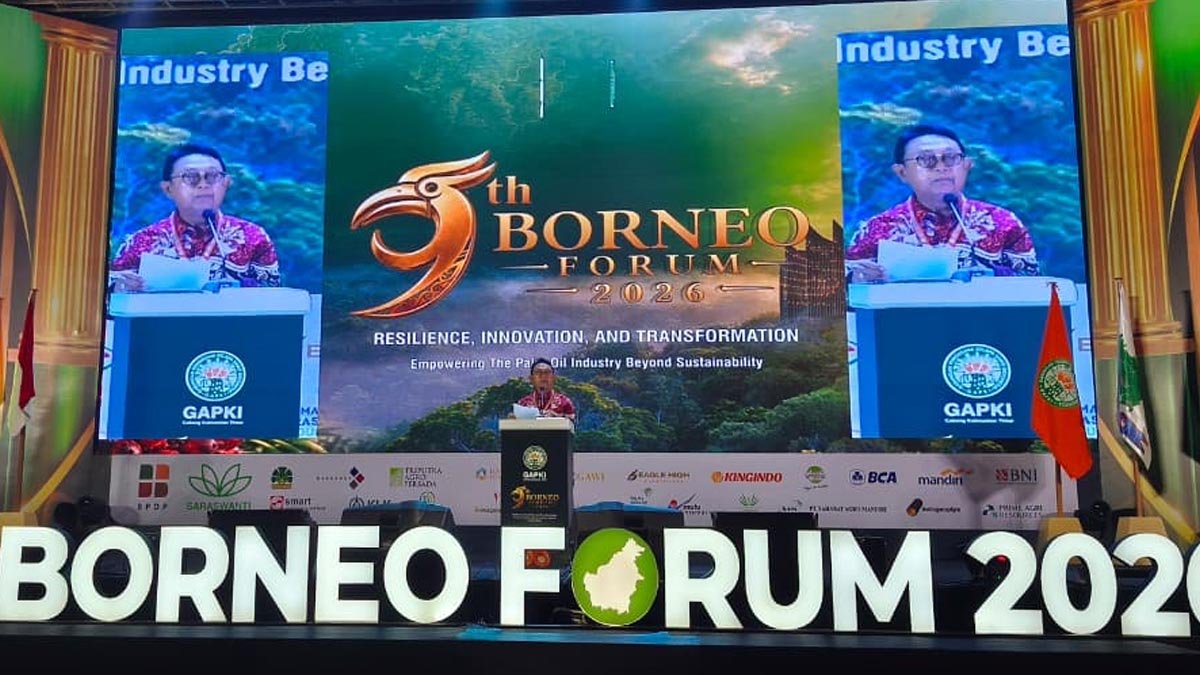
PALMOILMAGAZINE, BALIKPAPAN — Indonesia’s palm oil industry has the resilience and growth potential to strengthen its global leadership through innovation, higher productivity, downstream development, and closer collaboration among stakeholders, the Indonesian Palm Oil Association (GAPKI) said at the 9th Borneo Forum 2026 on Thursday (Aug. 6).
Held under the theme “Resilience, Innovation, and Transformation: Empowering the Palm Oil Industry Beyond Sustainability,” the annual forum, organized by GAPKI East Kalimantan, brought together industry leaders, government officials, and stakeholders to discuss the sector’s long-term competitiveness amid evolving global challenges.
Also Read: GAPKI Strengthens Indonesia–Russia Vegetable Oil Cooperation Through Strategic Agreement
GAPKI Chairman Eddy Martono said Indonesia’s palm oil industry has repeatedly demonstrated its resilience through major economic disruptions, including the 1998 Asian financial crisis, the 2008–2009 global financial crisis, and the COVID-19 pandemic.
“During the pandemic, Indonesia’s palm oil industry generated around USD 39.2 billion in foreign exchange earnings. Even as many industries reduced their workforce, the palm oil sector continued creating employment opportunities,” Eddy said in an official statement received by PalmOilMagazine on Friday (Aug. 7).
He noted that the industry remains one of Indonesia’s strategic economic pillars, supporting millions of jobs, stimulating regional economies, and contributing significantly to national export revenues.
Also Read: Palm Oil Exports Remain a Key Driver of Indonesia’s Trade Performance
Productivity Remains the Biggest Opportunity
Looking ahead, Eddy said Indonesia still has substantial room to improve national palm oil productivity, particularly among smallholders, who manage around 41% of the country’s oil palm planted area.
Improving yields from both plasma and independent smallholder plantations, he said, will be critical to meeting rising domestic demand while maintaining Indonesia’s position as the world’s leading palm oil producer.
One of the key initiatives supporting this goal is the Smallholder Palm Oil Replanting Program (PSR), backed by the Plantation Fund Management Agency (BPDP). The program aims to increase productivity through the use of certified high-yield planting materials, wider adoption of modern technologies, and continuous technical assistance for farmers.
Also Read: GAPKI Strengthens Indonesia–Russia Vegetable Oil Cooperation Through Strategic Agreement
Innovation and Downstream Development
Eddy emphasized that the future of Indonesia’s palm oil industry will depend on continuous innovation, technological transformation, mechanization, digitalization, stronger research capabilities, and accelerated downstream processing to create greater added value.
He also reaffirmed GAPKI’s support for the development of well-planned palm oil mills that align with regional production capacity, helping create a healthier, more efficient, and sustainable industry.
On the energy front, Eddy highlighted Indonesia’s biodiesel mandate as a clear demonstration of palm oil’s strategic contribution to national energy security.
“Indonesia is not only the world’s largest producer of palm oil, but also its largest consumer. Therefore, maintaining a balance between domestic demand and exports remains essential,” he said.
Also Read: GAPKI: Indonesia’s Palm Oil Output Slips in May 2026, but CPO Stocks Rise to 3.04 Million Tons
Sustainability and Collaboration
Eddy also underscored the importance of strengthening sustainability through the implementation of the Indonesian Sustainable Palm Oil (ISPO) certification system alongside internationally recognized sustainability standards to enhance the global competitiveness of Indonesian palm oil.
He expressed appreciation for the government’s continued engagement with industry stakeholders, noting that cooperation between the central and regional governments, BPDP, companies, and smallholders will be essential to building a more modern, productive, and sustainable palm oil sector.
Also Read: Indonesia Expands Funding Support for Smallholders Pursuing ISPO Certification
Eddy also praised the East Kalimantan provincial government and local administrations for consistently supporting the development of the palm oil sector as a key driver of regional economic growth.
Closing his remarks, Eddy said he remains confident that Indonesia will continue to lead the global palm oil industry as long as all stakeholders remain committed to strengthening innovation, improving productivity, and advancing sustainability.
“As long as global demand for vegetable oils continues to grow, palm oil will remain a strategic commodity. Through stronger innovation, transformation, and collaboration, I am confident Indonesia’s palm oil industry will become even more resilient, sustainable, and continue delivering significant benefits to the national economy and public welfare,” he concluded. (P3)