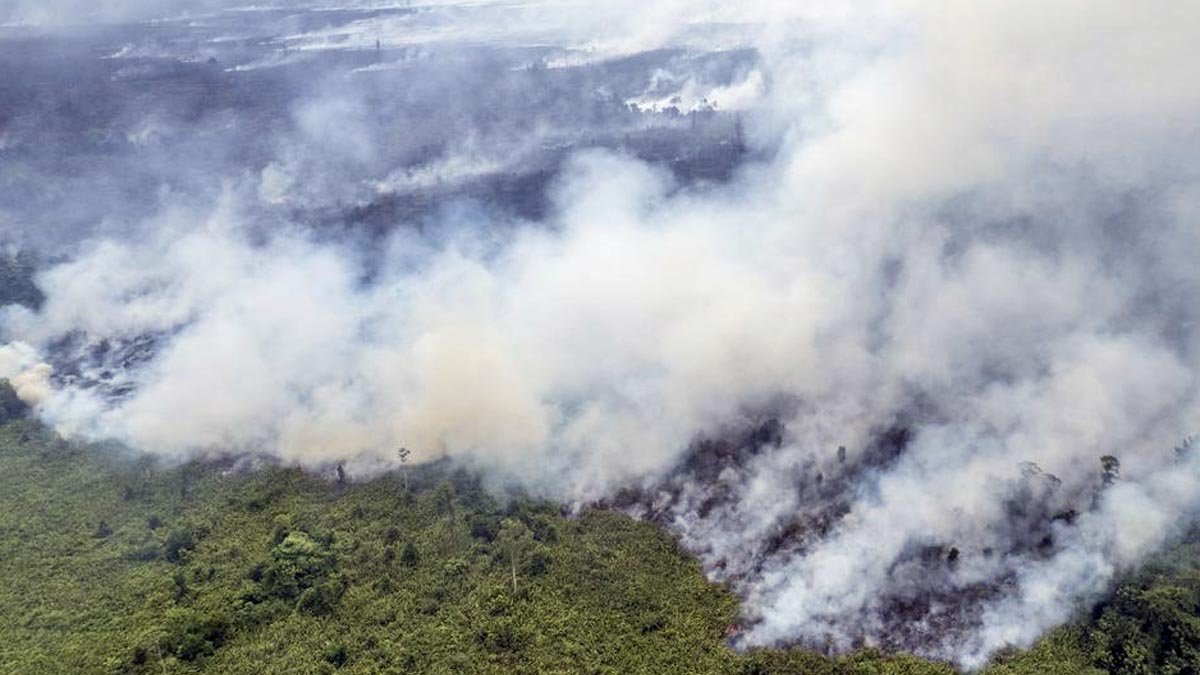
September is forecast to be the highest-risk month for hotspots across Indonesia, with Jambi and several provinces in Sumatra, Kalimantan, Sulawesi and Nusa Tenggara requiring heightened vigilance.
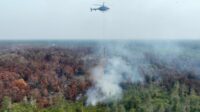
PALMOILMAGAZINE, JAKARTA — Indonesia’s palm oil plantations and other land-based industries are being urged to strengthen fire prevention measures as the country enters September 2026. The Meteorology, Climatology, and Geophysical Agency (BMKG) forecasts that the risk of forest and land fires (karhutla) and associated hotspots will increase across several regions, with September expected to have the widest risk coverage compared with October and November.
According to BMKG’s Plantation Climate Information Bulletin for Oil Palm Commodities, rainfall across most parts of Indonesia during September-November 2026 is forecast to remain in the low-to-moderate range. In September, around 75.05% of Indonesia’s territory is expected to receive low rainfall, while only 1.81% is forecast to experience high to very high rainfall.
Rainfall conditions are also expected to be drier than normal. BMKG projects that approximately 87.19% of Indonesia will experience below-normal rainfall in September 2026. The proportion is expected to remain high at 81.60% in October before declining to 62.30% in November.
Also Read: GAPKI Strengthens Fire Prevention Efforts as Indonesia Faces 2026 Dry Season
September Seen as Peak Fire-Risk Period
BMKG’s climate suitability index for hotspot occurrences identifies September 2026 as the month with the broadest fire-risk coverage during the September-November period.
Moderate- and high-risk areas in September are forecast across southern Sumatra, Kalimantan, Nusa Tenggara, Sulawesi and southern Papua. Jambi is among the provinces requiring particular attention, with moderate-risk conditions projected to cover approximately 78% of the province.
Also Read: APHI-GAPKI Urge Joint Protocol to Speed Up Forest and Land Fire Response
Moderate fire risk is also forecast across around 45% of West Kalimantan, 42% of West Nusa Tenggara, 39% of West Sulawesi, 35% of South Sulawesi and 32% of Gorontalo.
High-risk conditions are expected to be particularly widespread in South Kalimantan, covering approximately 96% of the province. Central Kalimantan follows at around 84%, South Sumatra at 76%, and the Bangka Belitung Islands at approximately 73%.
High fire risk is also projected across substantial areas of East Nusa Tenggara, East Kalimantan, Lampung, Gorontalo and West Nusa Tenggara.
BMKG said the outlook should be addressed by strengthening preparedness, increasing hotspot monitoring and controlling activities that could potentially trigger fires.
Also Read: BMKG Warns El Niño to Keep Indonesia’s Palm Oil Regions Drier Until October 2026
Crop Water Availability Also Raises Concern
In addition to hotspot risks, crop water availability is another concern for plantation areas. BMKG forecasts that a large portion of Indonesia will experience insufficient crop water availability during September-November 2026.
In September, adequate water availability is still expected across much of Aceh, North Sumatra, Riau, West Sumatra and parts of Papua. Most other areas, however, are projected to fall into the insufficient category.
In Sumatra, some areas are expected to maintain adequate water availability in September and October, before the coverage of areas with adequate conditions increases in November.
Several districts and municipalities in Jambi are nevertheless projected to experience insufficient crop water availability in September. They include Tebo, West Tanjung Jabung, East Tanjung Jabung, Muaro Jambi, Batanghari and Jambi City.
The conditions highlight the need for plantation operators to strengthen water management, monitor soil moisture and prepare for potential dry conditions.
Also Read: CPO Prices Under Pressure as KPBN Tender Withdraws, Malaysia Futures Fall
Fire Risk Expected to Ease in October and November
The coverage of moderate- and high-risk hotspot areas is forecast to decline in October 2026. However, several regions will continue to require close monitoring.
Also Read: CPO Prices Expected to Rise in H2 2026 as El Niño Raises Supply Risks
Jambi is projected to have moderate-risk conditions across around 33% of its territory. High-risk conditions are expected to remain concentrated in South Kalimantan at approximately 85%, followed by Southeast Sulawesi at 57%, East Nusa Tenggara at 54%, Central Kalimantan at 47% and South Sumatra at 44%.
By November, the risk of forest and land fires is forecast to decline further, with low-risk conditions dominating most of Indonesia. Moderate and high risks are expected to become more localized, particularly in parts of Nusa Tenggara, Sulawesi, southern Papua, Lampung, southern Kalimantan and the southern coast of Java.
BMKG projects that the widest high-risk coverage in November will be in Southeast Sulawesi at around 29%, followed by South Papua at 18% and East Nusa Tenggara at 15%. No province is expected to experience the widespread high-risk conditions projected for September and October.
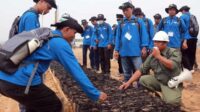
For the palm oil industry, the forecast serves as an early warning to strengthen preventive measures before fire incidents occur. Personnel readiness, routine patrols, hotspot monitoring, water management and coordination with local communities and regional authorities will be critical to preventing fires from developing into larger incidents.
With September projected to have the broadest forest and land fire risk over the next three months, heightened vigilance in vulnerable areas will be essential to ensure fires are detected and contained at an early stage. (P2)