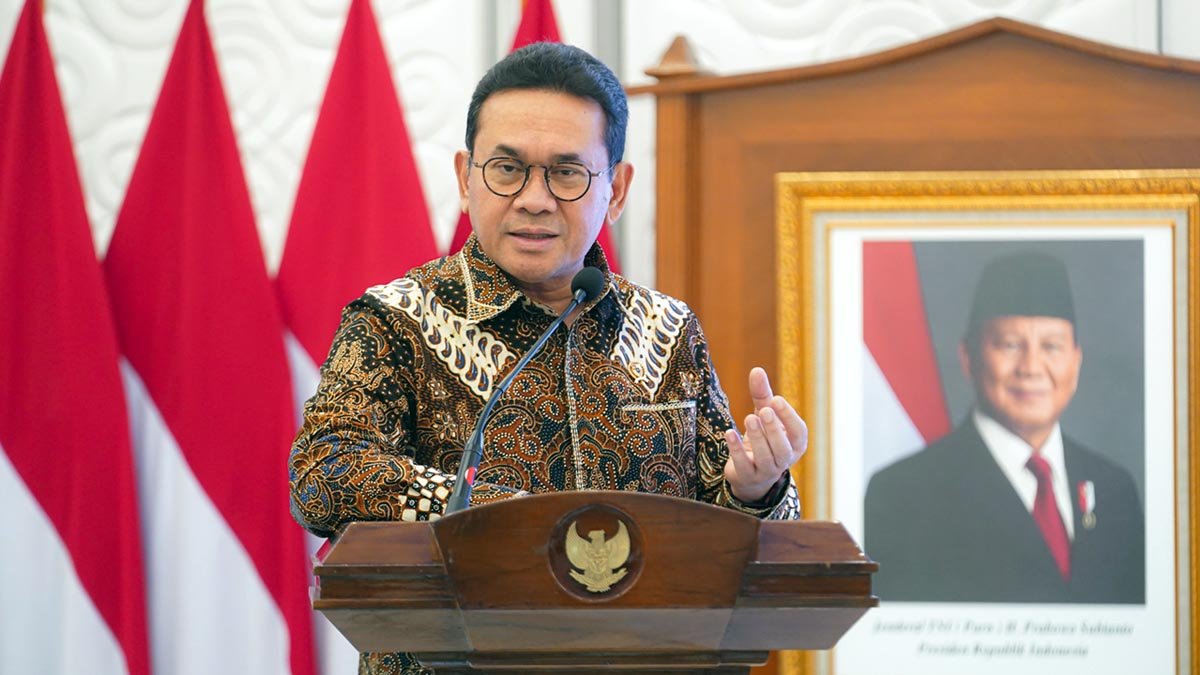
In accordance with Government Regulation No. 24 of 2026, the Ministry of Trade has issued three regulations regarding the management of exports of strategic natural resources
Indonesia’s Ministry of Trade Issues Three Regulations to Strengthen the Management of Strategic Commodity Exports
PALMOILMAGAZINE, JAKARTA – Indonesia’s Ministry of Trade has introduced three new ministerial regulations governing the export of strategic natural resource commodities, including coal, palm oil, and ferroalloys. The regulations are aimed at strengthening export governance, optimizing the economic value of national resources, and supporting the country’s downstream industrialization agenda.
The new regulations came into effect on June 1, 2026, and consist of Minister of Trade Regulation (Permendag) No. 15/2026 on Strategic Coal Export Policies, Permendag No. 16/2026 on Strategic Palm Oil Export Policies, and Permendag No. 17/2026 on Strategic Ferroalloy Export Policies.
Trade Minister Budi Santoso said the regulations were designed to improve oversight and management of strategic commodity exports, ensuring that Indonesia derives greater economic benefits from its natural resources.
Also Read: Minister Amran Warns Up to 300 Palm Oil Firms Over Depressed FFB Prices Despite Rising CPO Market
According to Budi, the Ministry of Trade has introduced a series of export control instruments to ensure that exports of strategic natural resource commodities are carried out in an orderly, transparent, accountable, and legally compliant manner through a designated State-Owned Export Enterprise (BUMN Export).
The three regulations serve as implementing measures for Government Regulation (PP) No. 24/2026 on the Governance of Strategic Natural Resource Commodity Exports. The regulation establishes a framework under which exports of selected strategic commodities will ultimately be managed through a state-owned export entity.
Director General of Foreign Trade Tommy Andana said the policy was developed to ensure that Indonesia’s natural resources generate greater value for the national economy while balancing export interests with domestic supply requirements.
“Through this policy, the government aims to strengthen export governance, optimize economic benefits for the country, ensure domestic needs remain fulfilled, and support downstream industrial development as well as national economic stability,” Tommy said, in a statement received by Palmoilmagazine.com on Wednesday, June 10, 2026..
Gradual Implementation Through 2027
The government will implement the new export governance framework in stages to ensure a smooth transition for businesses and other stakeholders.
During Phase I, which runs from June 1 through December 31, 2026, companies may continue exporting under existing permits and licenses. However, exporters will be required to submit export reports and supporting documents to the designated state-owned export entity.
Also Read: Indonesia’s CPO Price Slips as Malaysian Palm Oil Futures Decline Ahead of MPOB Report
The government will also conduct an evaluation within three months of the regulation’s implementation to assess readiness and address any operational issues that arise during the transition period.
Full implementation is scheduled to begin no later than January 1, 2027. At that stage, exports of strategic natural resource commodities will be conducted exclusively through the state-owned export entity. All export procedures, including pre-clearance, customs clearance, and post-clearance processes, will follow mechanisms established under the new regulatory framework.
Palm Oil Exports Linked to Domestic Supply Obligations
For the palm oil sector, the scope of regulated products remains largely unchanged from the provisions previously outlined under Permendag No. 26/2024 and its amendment, Permendag No. 2/2025.
The regulation covers crude palm oil (CPO), refined bleached deodorized palm oil (RBDPO), refined bleached deodorized palm olein (RBDPL), used cooking oil (UCO), and palm oil residues such as POME oil, HAPOR, and EFB oil.
Also Read: Malaysian Palm Oil Futures Slip on Weak Export Demand Ahead of MPOB Data
Export approvals will continue to be linked to compliance with Indonesia’s Domestic Market Obligation (DMO) program for Minyakita cooking oil. Companies are required to fulfill domestic distribution obligations, including supplying distributors and allocating volumes to state-owned food enterprises in accordance with existing regulations.
Coal and Ferroalloy Exports Also Regulated
For coal, the regulations cover anthracite, thermal coal, lignite, and peat products classified under HS codes 2701 through 2703. During the transition period, exporters may continue operating under existing Registered Exporter (ET) permits and Surveyor Reports (LS), which remain valid until December 31, 2026.
Meanwhile, the ferroalloy regulation covers 15 eight-digit tariff lines under HS 7202. The products are categorized into three groups: items prohibited from export, products requiring Surveyor Reports, and products that may be exported without such certification.
Also Read: Indonesia and EU Fast-Track IEU-CEPA Ratification, Target Early 2027 Implementation
With the enactment of the new regulations, several previous export provisions have been revoked. These include coal and ferroalloy export rules under Permendag No. 23/2023 and its subsequent amendments, as well as palm oil export provisions under Permendag No. 26/2024 and Permendag No. 2/2025.
Tommy emphasized that strengthening governance of strategic commodity exports forms part of the government’s broader effort to ensure Indonesia’s natural resources contribute to long-term national development.
“The government wants export management to go beyond increasing shipment volumes. It should also promote downstream industries, safeguard domestic supply, enhance value creation, and strengthen Indonesia’s economic resilience,” he said. (P3)