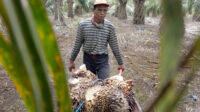
PALMOILMAGAZINE, JAKARTA – Bungaran Saragih, who served as the Minister of Agriculture from 2000 to 2004 and held the position of Chairman of the Board of Supervisors at the Palm Oil Agribusiness Strategic Policy Institute (PASPI), highlighted that Indonesia’s prominent role as the largest global producer of palm oil since 2006 has significantly contributed to the palm oil industry’s worldwide impact on the vegetable oil trade.
In the aftermath of the pandemic, palm oil industries emerged as a crucial economic pillar, generating a substantial revenue of $50 billion in 2022. However, this economic progress has been accompanied by persistent challenges associated with palm oil development, particularly concerning sustainability.
As we move forward, these challenges are likely to persist, necessitating a focus on addressing issues such as sustainability in the palm oil sector.
Also Read : Governor of East Kalimantan Addresses EU Palm Oil Critics as Part of Vegetable Oil Competition
Though from price competition, crude palm oil (CPO) is more economical, but non-price competition (NPC) will be more stringent. NPC issue would fight sustainability issues both from social, economic, and environment.
“We do agree that this country is committed to implement sustainability practices,” Saragih said.
Saragih also mentioned, there are many stakeholders having Indonesian Sustainable Palm Oil (ISPO) certificates. That is why, he also encouraged the others to adopt sustainability concepts in their operational.
It is undoubtable that palm oil delivered economic impacts for this nation. The revenue reached US$ 50 billion. From local palm oil the export reached US$ 39 billion, revenue saving from biodiesel mandatory program reached about US$ 10,3 billion.
“In total calculation, palm oil industries could contribute to the revenue almost US$ 50 billion. There is no commodity that contributed like it,” Saragih said.
From the work employment, palm oil industries hired 16,5 million workers that covered 2,5 million smallholders’ families. He thought, 70 million people of Indonesia have something to do with these industries. (T2)