

PALMOILMAGAZINE, TANAH BUMBU – The Indonesian government is encouraging the development of integrated palm oil plantation and cattle farming systems as a strategic approach to increase domestic beef production and reduce dependence on imported meat.
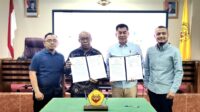
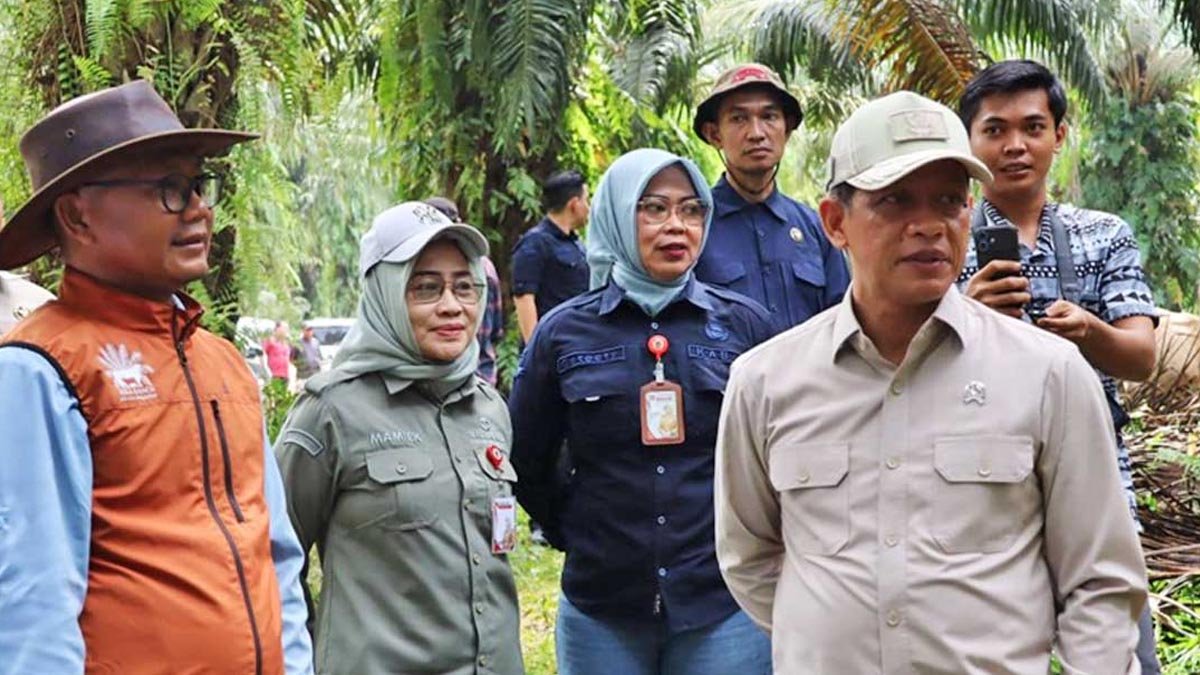
This initiative was highlighted by the Vice Minister for Food Coordination, Hanif Faisol Nurofiq, during a visit to the SISKA KU INTIP (Palm Oil–Cattle Integration System based on Core-Plasma Livestock Partnership) program managed by PT Buana Karya Bhakti in Satui District, Tanah Bumbu Regency, South Kalimantan, on Tuesday.
During the visit, Hanif noted that the integration model implemented by the company has already shown tangible results. Starting with around 300 cattle in 2016, the population has grown to nearly 1,500 head through a natural breeding system.
Also Read: Amran Says 90% of Palm Oil Companies Have Raised Fresh Fruit Bunch Prices for Farmers
He said the achievement demonstrates that combining plantation and livestock sectors holds strong potential to support national animal protein security.
“This model may look simple, but it has significant potential to increase domestic cattle availability. The natural breeding system applied has also proven effective in boosting livestock population,” Hanif said in an official statement cited by Palmoilmagazine.com from the South Kalimantan Provincial Government, Sunday (June 21, 2026).
Also Read: Indonesia Tightens MINYAKITA Market Oversight to Keep Cooking Oil Prices Under Control
Strong Potential in South Kalimantan
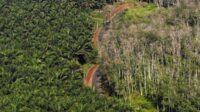
Hanif added that South Kalimantan has substantial opportunities to expand palm oil–cattle integration. Of the province’s total 480,000 hectares of oil palm plantations, around 250,000 hectares are considered suitable for integrated livestock development.
If optimized, this could support at least 20,000 cattle within plantation areas—enough to close the region’s current livestock deficit of around the same number.
Also Read: Indonesian CPO Prices Strengthen Despite Weakness in Malaysian Futures and Global Markets
More broadly, Hanif believes the model can be scaled across Indonesia’s major palm oil regions. With more than 17 million hectares of oil palm plantations nationwide, the integration system could potentially support up to 1.3 million cattle.
“If implemented on a wider scale, this program could significantly contribute to national meat supply,” he said.
Also Read: KPBN CPO Tender Ends in Withdrawal Again as Malaysian Palm Oil Futures Extend Gains
Addressing National Beef Supply Gaps
Indonesia’s annual beef demand is estimated at around 800,000 tons, while domestic production currently meets only about half of that requirement. The remaining gap is covered through imports from several supplying countries.
Hanif emphasized that palm oil–cattle integration could serve as a strategic instrument to strengthen national food independence, particularly in animal protein supply.
Also Read: Dialogue through Mediation: Getting to know RSPO’s Dispute Settlement Facility (DSF)
He also stressed that cattle development in Indonesia should be adapted to tropical conditions rather than replicating grazing-based systems from countries such as Australia or Brazil.
“Indonesia has a unique advantage through its vast palm oil plantations. Palm oil–cattle integration is a solution suited to our national conditions and can become a competitive advantage,” he explained.
Also Read: West Kalimantan FFB Prices Climb Above IDR 3,400/kg in Late June 2026
Improving Plantation Efficiency
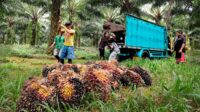
Beyond livestock production, the integration system also provides direct benefits for plantation management. Cattle help naturally control weeds in plantations, potentially reducing maintenance costs by 50–70%.
In addition, livestock manure can be processed into organic fertilizer, improving soil fertility and supporting higher oil palm productivity.
PT Buana Karya Bhakti Ranch Manager, Wahyu Darsono, said the company started the program in 2016 with an initial investment of around IDR 6 billion for 300 cattle and supporting facilities.
“Today, our cattle population has reached around 1,500 head. Male cattle are partially marketed each year, especially ahead of Eid al-Adha, while female cattle are retained for breeding to sustain population growth,” he explained.
Also Read: UNJA Secures BPDP Scholarship Program Again, Offers 30 Palm Oil Human Capital Scholarships for 2026
A National Role Model
Meanwhile, Head of the South Kalimantan Plantation and Livestock Office, Suparmi, said the integration program implemented by PT Buana Karya Bhakti has been designated by the Directorate General of Livestock and Animal Health under the Ministry of Agriculture as a national pilot model.
She added that the program’s success could serve as a reference for expanding integrated plantation-livestock systems across Indonesia.
Also Read: Agrinas Palma Nusantara Explores Green Energy Development Partnership with Korean Consortium
Suparmi also expressed hope for stronger central government support and collaboration between plantation companies, local governments, forestry and mining sectors, and other stakeholders to accelerate wider adoption.
“Palm oil–cattle integration not only improves plantation business efficiency but also supports national animal protein self-sufficiency and strengthens food security,” she concluded. (P2)