
Indonesia’s state-owned palm oil company plans to raise its CPO export share to 25% in 2027 from 10% through September 2026, while expanding direct access to international buyers and strengthening traceability ahead of the EU deforestation rules.
PALMOILMAGAZINE, JAKARTA, INDONESIA — PT Perkebunan Nusantara IV (PTPN IV) PalmCo is partnering with Indonesia’s Ministry of Trade to expand export markets for crude palm oil (CPO) and other plantation commodities, as the company seeks to increase direct exports and strengthen its competitiveness amid changing global sustainability requirements.
The partnership is also intended to open new markets ahead of the implementation of the European Union Deforestation Regulation (EUDR) in 2027, while accelerating PalmCo’s transformation from a domestic commodity supplier into a direct exporter serving international buyers.
Also Read: BPDP Boosts Global Market Access for Indonesia’s Palm Oil, Coconut and Cocoa at TEI 2026
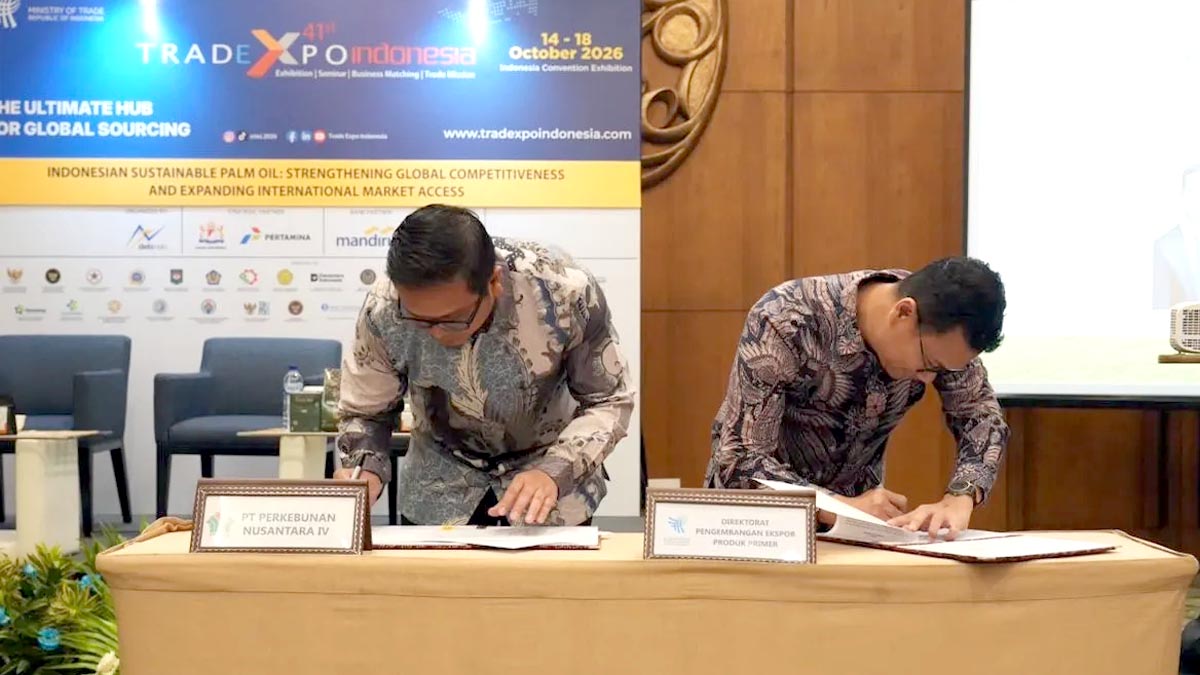
According to Antara, PTPN IV PalmCo and the Ministry of Trade’s Directorate of Primary Product Export Development signed a strategic cooperation agreement to expand international market access for Indonesian plantation commodities on Sunday (Oct. 25).
PTPN IV PalmCo President Director Jatmiko K. Santosa said the partnership forms part of the company’s strategy to strengthen its position in global markets, particularly as buyers increasingly demand sustainability, legality and product traceability.
The cooperation is not solely focused on securing market access amid tighter requirements in Europe, he said, but also on building direct relationships with global buyers and increasing the economic value of Indonesia’s plantation products.
Also Read: TEI 2026 Targets USD17.5 Billion in Trade as Indonesia Expands Global Export Markets
Jatmiko said Environmental, Social and Governance (ESG) principles have become an integral part of the company’s business strategy.
“ESG performance is not only about complying with regulations, but also about ensuring long-term market access and delivering higher economic value for the national plantation industry,” Jatmiko said.
CPO Export Share to Reach 25%
PTPN IV Director of Marketing and Management Systems Rury C. Baskoro said increased production capacity needs to be accompanied by stronger capabilities to establish direct relationships with international buyers, including refiners, traders and end-users.
The strategy is already reflected in the company’s growing CPO export share.
PTPN IV PalmCo’s CPO exports accounted for around 1% of its total volume in 2024, rising to 10% through September 2026.
The company aims to increase the export share to 25% in 2027, equivalent to approximately 759,000 tons of CPO.
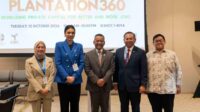
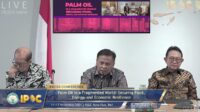
“God willing, next year we are targeting an export share of 25%, or approximately 759,000 tons,” Rury said during a talk show titled Indonesian Sustainable Palm Oil: Global Competitiveness and Expanding International Market at the Indonesia Convention Exhibition (ICE) BSD.
Rury said the increase reflects a shift in the company’s marketing strategy as PalmCo expands its international buyer network. At the same time, the company will continue to prioritize meeting domestic demand.
Also Read: Indonesia Sets October 2026 Biodiesel HIP at IDR 15,072/Liter, Excluding Transport Costs
EUDR and Palm Oil Traceability
The EUDR remains a key consideration for palm oil companies seeking access to the European market. The regulation establishes requirements for commodities including palm oil to demonstrate that products are deforestation-free and comply with applicable legal requirements.
Rury said PTPN IV PalmCo’s plantation profile provides a strong foundation for meeting such requirements.
Also Read: PTPN IV PalmCo Profit Jumps 54% to IDR 3.23 Trillion in H1 2026 on Higher CPO Prices
He said many of the company’s plantations date back to the colonial period, meaning that the development of these established estates did not involve recent forest clearing.
“Our plantations are inherited from the Dutch colonial period. So, it can be ensured that there has been no new deforestation, no occupation of community land and no conversion of forest land,” Rury said.
The company also holds national and international sustainability certifications, including Indonesian Sustainable Palm Oil (ISPO) and Roundtable on Sustainable Palm Oil (RSPO) certifications, which support sustainable plantation practices and strengthen product traceability.
Also Read: RSPO Calls for Coordinated Response to Indonesia Fires to Protect Communities and Wildlife
Eyes Alternative Asian Markets
The cooperation between PTPN IV PalmCo and the Ministry of Trade covers five major plantation commodities: palm oil, rubber, coffee, tea and gambir.
The partnership is designed to strengthen export development from upstream production to downstream markets while expanding international demand for Indonesian plantation commodities.
Also Read: Indonesia Promotes Palm Oil Waste as Alternative Livestock Feed to Cut Costs
Miftah Farid, Director of Primary Product Export Development at the Ministry of Trade, said Indonesia needs to become more proactive in pursuing alternative markets amid growing trade challenges in Europe.
Based on the ITC Export Potential Map, Indonesian palm oil still has significant potential to expand its international market penetration, Miftah said.
Indonesia will continue strengthening established markets through government-to-government (G-to-G) approaches, including China and India, while also exploring opportunities in Pakistan and the Philippines.
Also Read: Indonesia Domestic Palm Oil Consumption Seen Surpassing Exports in 2026
The Ministry of Trade is also encouraging PTPN IV PalmCo to participate in the government’s priority “Desa Bisa Ekspor” program, which is intended to broaden participation by businesses and communities in export activities and create more inclusive economic opportunities.
Through the partnership, PTPN IV PalmCo and the Ministry of Trade aim to expand market access, increase direct exports and strengthen the competitiveness of Indonesian plantation commodities as global trade standards continue to evolve. (P3)