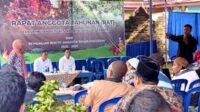



The cooperative has strengthened village-level fire prevention, trained farmer groups and provided alternatives to land clearing by fire as Indonesia enters the dry season.
PALMOILMAGAZINE, JAKARTA, INDONESIA — Independent oil palm smallholders are often among those most affected by forest and land fires, yet they can also play a critical role in preventing and responding to fires in their communities.
Jamaluddin, chairman of the Belayan Sejahtera Plantation Cooperative, said independent smallholders are frequently blamed when forest and land fires occur, despite the reality that many farmers are also directly involved in preventing fires from spreading and helping to extinguish them.
Also Read: RSPO Upholds Accountability while Addressing Indonesia’s Fire Crisis at RT2026
He said the fire issue needs to be viewed more comprehensively, particularly in terms of land management and community preparedness during the dry season.
“Independent oil palm farmers are often immediately associated with forest and land fires. But conditions on the ground are not that simple. Farmers also struggle to deal with fires and work to prevent them from spreading,” Jamaluddin said during a press conference on the sidelines of the RSPO Roundtable 2026 (RT2026) on Tuesday (Nov. 3, 2026).
Fire Preparedness Begins in August
The Belayan Sejahtera Cooperative began strengthening fire prevention measures in August 2026 in anticipation of increased fire risks during the dry season.
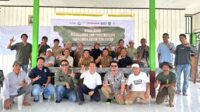
Training and awareness programmes were conducted from village to village across Kembang Janggut Subdistrict in Kutai Kartanegara, East Kalimantan. The area covers 11 villages, with outreach targeting not only cooperative members but also the wider community, including farmers who are not members of certified farmer groups.
Also Read: RSPO Says Most Indonesia Land Fires in 2026 Occurred Outside Palm Oil Concessions
Jamaluddin said the cooperative intensified its preparedness efforts after residents began observing signs of drier conditions, including declining rainfall and the drying of several springs.
The programme included education on fire risks and the prohibition of land clearing by burning, in line with sustainability certification requirements.
The cooperative also introduced portable stoves as an alternative to open fires during farmers’ activities in plantations, helping to reduce the risk associated with uncontrolled use of fire.
Also Read: Indonesian Smallholders Step Up Fire Patrols as Land Fires Spread
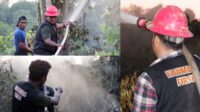
In addition, farmer fire-awareness groups received basic training on fire prevention and initial response. The training was designed to improve community preparedness, from identifying potential fire risks to taking early action when a fire breaks out.
Smallholders Join Firefighting Efforts
The community’s preparedness was put to the test in September 2026 when a fire broke out behind the cooperative’s office.
According to Jamaluddin, the fire started from the burning of household waste before spreading to a pile of wood in the surrounding area.
Cooperative members responded collectively and applied the skills they had gained through the training, eventually bringing the fire under control.
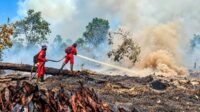
Members have also assisted with firefighting operations in areas surrounding farmers’ plantations on several occasions. Jamaluddin said the group participated in approximately three to four firefighting efforts in a single month.
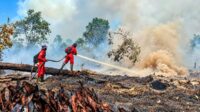
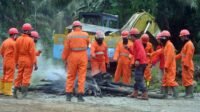
One incident continued from the afternoon into the night, involving around 20 people, including cooperative and farmer-group officials as well as workers involved in transporting harvested fresh fruit bunches (FFB).
Also Read: Indonesia Cuts November 2026 CPO Reference Price 6.07% to US$978.90/MT, Sets Export Duty at US$124
Using their own portable fire extinguishers, they worked to contain the flames. The operation was complicated by the distance to the nearest water source, which was approximately two kilometres away and accessible only via a footpath.
The firefighting effort continued until around 2 a.m.
For the cooperative, the experience demonstrated that independent smallholders can serve as an important first line of defence against fires in plantation communities.
Finding Alternatives to Land Clearing by Fire
Jamaluddin acknowledged that some communities still use fire to clear agricultural land, particularly for rice cultivation.
He said the practice is also linked to rural livelihoods and the financial limitations faced by farmers seeking affordable ways to prepare land for cultivation.
To address the issue, the cooperative is seeking to provide practical alternatives that allow farmers to clear land without using fire.
One approach is to facilitate access to heavy equipment under an instalment-payment arrangement, allowing farmers to spread the cost of mechanical land preparation over time.
The cost of using heavy equipment to clear land is estimated at around IDR 7 million to IDR 13 million per hectare.
Also Read: Zero Tolerance For Fires: RSPO Reinforces Strict Zero-Burning Standards
Although the cost can still be significant for rural communities, Jamaluddin said mechanical land clearing is a safer option than burning, which can trigger uncontrolled fires and expose communities to legal consequences and social conflict.
Peatland areas remain among the most vulnerable locations around the cooperative’s operational area. In addition to their higher fire risk, their difficult accessibility can make firefighting operations more challenging and time-consuming.
Community Participation Key to Fire Prevention
For the Belayan Sejahtera Cooperative, preventing forest and land fires requires more than regulations and awareness campaigns.
The cooperative believes effective prevention depends on active community participation, stronger farmer-group capacity and affordable alternatives to land clearing by fire.
The experience of the cooperative also highlights the potential role of independent smallholders in protecting their surrounding environment. By strengthening preparedness and cooperation at the village level, farmers can become an important part of efforts to reduce fire risks in and around oil palm-growing areas.
The approach also reflects a broader challenge for Indonesia’s palm oil sector: ensuring that sustainability requirements are accompanied by practical solutions that rural communities can realistically implement. (P3)