PALMOILMAGAZINE, YOGYAKARTA – Palm oil downstreaming is no longer limited to biodiesel, food, or oleochemicals. Increasingly, this strategic commodity is entering new value-added sectors, including Indonesia’s creative batik industry.
One concrete example comes from Smart Batik Indonesia, which has successfully developed batik wax (malam) derived from palm oil. The innovation was achieved with support and mentoring from the Palm Oil Plantation Fund Management Agency (BPDP) through its empowerment programs for micro, small, and cooperative enterprises (MSMEs).
CEO and Founder of Smart Batik Indonesia, Miftahudin Nur Ihsan, said his early understanding of palm oil was limited to cooking oil. However, his interaction with BPDP during a national MSME exhibition in 2023 changed his perspective on the broader potential of palm oil derivatives.
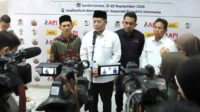
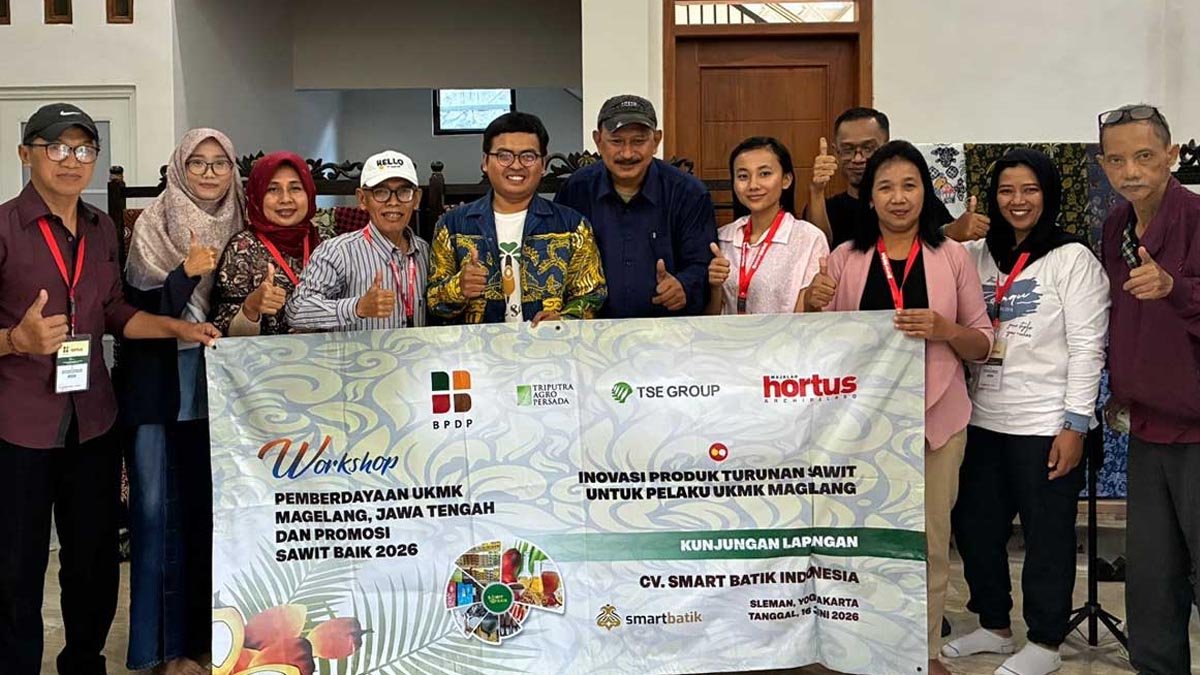
“I only knew palm oil as cooking oil. After engaging with BPDP, I learned that palm oil actually has many derivative products that can be used across different industries,” he said during a visit by participants of the Magelang MSME Empowerment Workshop and Palm Oil Promotion Program 2026 in Yogyakarta, Tuesday.
Following that introduction, BPDP highlighted palm-based wax developed through research collaboration between the National Research and Innovation Agency (BRIN) and the Center for Crafts and Batik. This prompted Smart Batik Indonesia to conduct a series of trials to test its effectiveness in batik production.
The results were promising. The product received positive feedback, encouraging the company to continue independent research to refine the most suitable formulation for its production needs.
Also Read: Indonesia Strengthens Global Seed Leadership with 10,500 Oil Palm Germplasm Exports to Colombia
“We further developed it internally until we finally found a palm-based wax formulation that works optimally in the batik-making process,” Ihsan said, as quoted by Palmoilmagazine.com, Thursday (June 18, 2026).
According to him, palm-based wax offers several advantages over conventional wax commonly used by batik artisans. It produces a lighter, less pungent odor and has a more flexible texture, reducing the risk of cracking patterns during the dyeing process.
These characteristics make the working environment more comfortable for artisans while also improving the overall quality of batik products.
Also Read: West Sumatra Palm Oil FFB Prices Rise to IDR 3,789/kg in Third June Period
“Artisans feel more comfortable because it does not cause discomfort from strong odors. It is also more flexible, resulting in better batik quality,” he explained.
Beyond wax development, Smart Batik Indonesia is also exploring the utilization of batik wax waste by blending it with other palm-derived materials such as stearin and stearic acid. This initiative aims to create a more efficient and environmentally friendly production process.
Ihsan acknowledged that BPDP’s support extends beyond product development, also playing a key role in expanding promotion and market access. Through exhibitions, expos, and MSME promotion programs facilitated by BPDP, Smart Batik products have gained wider recognition both domestically and internationally.
Also Read: North Sumatra Palm Oil FFB Prices Rise by IDR 159.30/kg for June 17–23 Period
The company’s batik products have even been introduced in several countries, including Japan, China, and Pakistan, as part of Indonesia’s palm-based product promotion efforts.
“BPDP has supported us greatly, both in product development and promotion. That support continues until today,” he said.
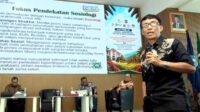
Meanwhile, Editor-in-Chief of Hortus Archipelago Magazine, Suharno, said the visit to Smart Batik was part of the Magelang MSME Empowerment Workshop and Palm Oil Promotion Program 2026. The activity aimed to provide inspiration and demonstrate how innovation can generate added value from palm oil derivatives.
Also Read: Indonesia Tightens MINYAKITA Market Oversight to Keep Cooking Oil Prices Under Control
According to him, Smart Batik’s experience shows that palm oil has far broader potential than commonly perceived.
“Participants and journalists can learn how an MSME builds its business through innovation, partnerships, and the utilization of high-value palm oil derivatives,” he said.
Through business incubation programs, training, innovation workshops, and promotional facilitation, BPDP continues to strengthen the MSME ecosystem based on palm oil. These efforts are expected to generate more innovative value-added products and expand palm oil utilization into non-traditional sectors with strong market potential.
Also Read: Dialogue through Mediation: Getting to know RSPO’s Dispute Settlement Facility (DSF)
With innovations such as palm-based batik wax, palm oil downstreaming is not only driving economic value creation but also opening new opportunities for Indonesia’s creative industries built on domestic resources. (P2)