PALMOILMAGAZINE, JAKARTA – Indonesian House of Representatives (DPR RI) Commission IV member Endang Setyawati has reaffirmed support for the government’s B50 biodiesel mandate, describing it as a strategic policy that will strengthen national energy security while accelerating downstream development in Indonesia’s palm oil industry.
According to Endang, the mandatory B50 program—powered by crude palm oil (CPO)—demonstrates that palm oil is no longer merely an export commodity but has become a key pillar in Indonesia’s renewable energy transition. However, she stressed that expanding domestic biodiesel production must be accompanied by measures to safeguard national CPO availability.
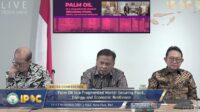
“We fully support the mandatory B50 policy based on palm oil (CPO). At the same time, the Ministry of Agriculture must ensure that Indonesia’s domestic CPO supply remains sufficient,” Endang said during a Commission IV hearing with the Minister of Agriculture and the Head of the National Food Agency at the Parliament Complex in Senayan, Jakarta.
The Gerindra Party lawmaker emphasized that the success of the B50 program will depend on careful long-term planning for feedstock supply, as biodiesel production is expected to significantly increase domestic demand for CPO.
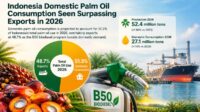
Government projections indicate that the B50 mandate could raise the value added generated by Indonesia’s crude palm oil industry from approximately IDR 20.92 trillion to IDR 23.49 trillion. Domestic CPO consumption is also forecast to increase by 1–2 million metric tons annually, tightening export availability while providing stronger support for global CPO prices.
Despite the positive outlook, Endang urged the government to anticipate several challenges, including long-term CPO demand projections, the readiness of Indonesia’s biodiesel distribution infrastructure, and the potential impact of higher CPO consumption on food prices.
Also Read: GAPKI Urges Industry-Driven Research to Strengthen Sustainable Palm Oil Innovation
“Future CPO demand projections must be carefully considered. Infrastructure readiness and nationwide distribution capacity are equally important. We must also ensure that increased CPO use for B50 does not lead to higher domestic food prices, particularly cooking oil,” she said.
The B50 biodiesel program is widely regarded as one of the most significant structural drivers for Indonesia’s palm oil sector in recent years. By expanding domestic consumption, the policy is expected to accelerate downstream industrialization, reduce oversupply risks, and improve the long-term stability of CPO prices.
With a larger share of palm oil being absorbed domestically, national inventories are expected to remain better balanced, providing a stronger foundation for both Indonesia’s energy security and the continued growth of its palm oil industry. (P2)