

PALMOILMAGAZINE, YOGYAKARTA, INDONESIA — Indonesia’s rapidly evolving palm oil industry needs more adaptive partnership models to address changes in technology, social expectations and business practices. Existing cooperation arrangements between plantation companies, smallholders, government and local communities must be continuously evaluated to ensure they remain relevant to the industry’s changing landscape.
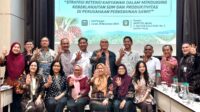
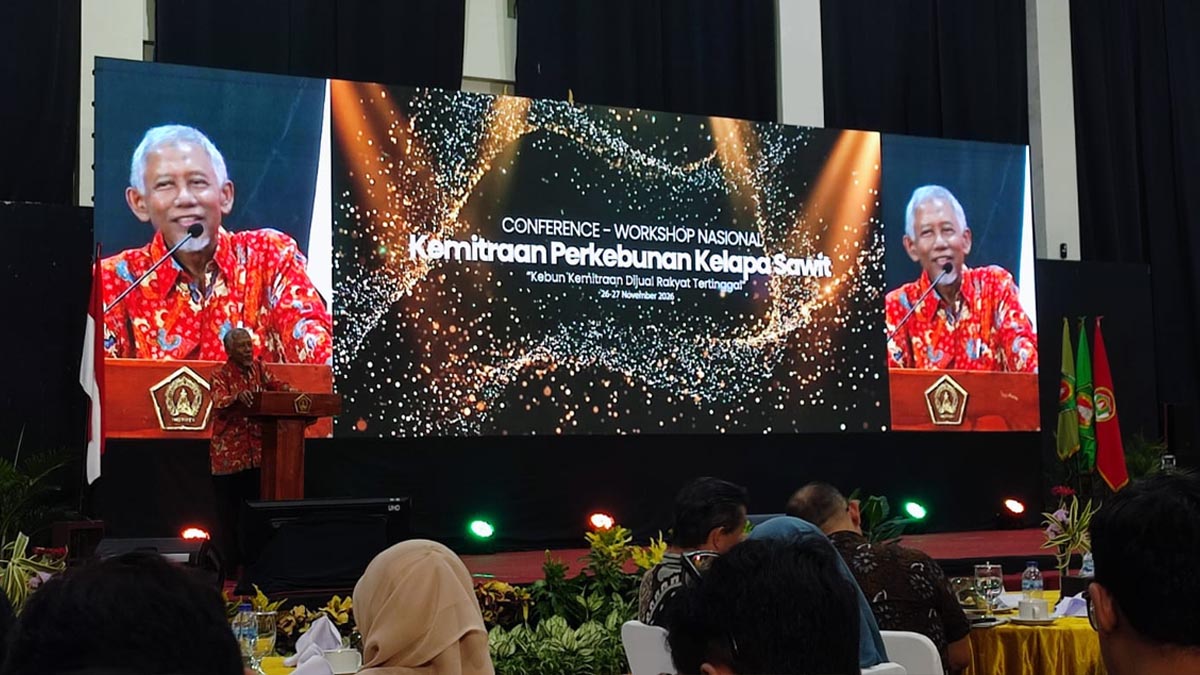
The call was made by Dr. Harsawardana, Rector of the Stiper Agricultural Institute (Instiper) Yogyakarta, during the National Workshop and Conference on Palm Oil Plantation Partnerships, themed “Kebun Kemitraan Dijual Rakyat Tertinggal” (When Partnership Plantations Are Sold, Communities Are Left Behind), held in Yogyakarta on Thursday (Nov. 26, 2026).
According to Harsawardana, plantation partnerships should be viewed not merely as business arrangements between companies and smallholders, but also as an important instrument of social contribution and sustainable industry development.
Also Read: Palm Oil Partnerships Must Deliver Real Benefits to Communities, KAINSTIPER Chairman Says
He emphasized that partnership schemes must ensure local communities receive proper recognition and tangible benefits from the growth of the plantation industry.
He also highlighted the need to examine the government’s role in promoting plantation partnerships, including policies requiring companies to establish partnerships and fulfil their corporate social responsibility (CSR) commitments.
In this context, he said, stakeholders need a more comprehensive understanding of the appropriate partnership structures and mechanisms to ensure that the interests of all parties are accommodated.
“The palm oil industry is currently developing very rapidly. These changes are taking place not only in production and markets, but also in technology and the way we approach partnership arrangements within the plantation industry,” Harsawardana said at the event, which was attended by PalmOilMagazine.
Rethinking Partnership and Business Models
Harsawardana stressed that existing partnership approaches need to evolve in line with future challenges and industry requirements. Models that were previously considered relevant may no longer be sufficient to address changing business conditions or the evolving interests of both smallholders and plantation companies.
“The question is, what kind of partnership and business model is actually appropriate? This requires joint discussions among all stakeholders to formulate a partnership business model that is relevant for the future,” he said.
Also Read: INSTIPER Introduces 825 New Students to Plantation, Forestry Industries Through OKKABUN 2026
He expressed hope that the national workshop and conference would serve as a platform for exchanging ideas and bringing together perspectives from government representatives, plantation companies, smallholders, academics and other industry stakeholders.
Through constructive discussions, participants are expected to identify challenges in implementing existing partnership arrangements while developing cooperation models that are more responsive to the changing dynamics of Indonesia’s palm oil industry.
Harsawardana also emphasized that the event should go beyond exchanging views and generate concrete recommendations that can contribute to future policy development and improvements in plantation partnership practices.
“Hopefully, this event will produce recommendations that can support the continued development of Indonesia’s national palm oil industry,” he concluded. (P3)