PALMOILMAGAZINE, JAKARTA – As global debates intensify over sustainability, deforestation, and the implementation of regulations such as the European Union Deforestation Regulation (EUDR), Indonesia faces a fundamental challenge in defending the position of its palm oil industry: a shortage of scientific research and publications that accurately reflect the realities of the sector on the ground.
According to data from Indonesia’s Ministry of Agriculture and Statistics Indonesia (BPS), the country remains the world’s largest producer of palm oil, with approximately 16.38 million hectares of oil palm plantations. Around 40% of this area is managed by smallholder farmers. The industry is also one of Indonesia’s largest foreign exchange earners and supports millions of jobs across the archipelago.
However, according to Bandung Sahari, Head of Communications at the Indonesian Palm Oil Association (GAPKI), this significant contribution is not matched by sufficient research and data.
“We are the world’s largest producer of palm oil. Yet when it comes to research and scientific publications, we still lag behind. As a result, we often have to rely on research conducted by foreign researchers to explain our own industry,” Bandung said in an interview with Palmoilmagazine.com on Wednesday (June 17).
He noted that this situation frequently places Indonesia in a defensive position when responding to criticism of its palm oil sector in international forums. Whenever issues such as deforestation, sustainability, or the social impacts of palm oil are debated, Indonesia is often expected to provide robust scientific evidence and reliable data.
At the same time, research specifically measuring the economic and social contributions of the palm oil industry remains relatively limited.
Also Read: GAPKI Marks 45 Years, Reaffirms Strategic Role in Indonesia’s Palm Oil Industry
According to Bandung, one of the industry’s greatest strengths lies precisely in its role in regional development and community welfare at the grassroots level.
Palm Oil and Its Economic Multiplier Effect
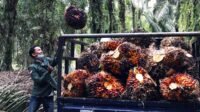
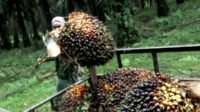
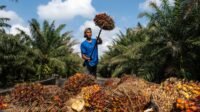
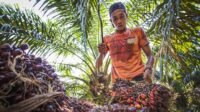
Bandung emphasized that the palm oil industry is far more than plantations and processing mills. It encompasses a vast economic network involving independent smallholders, harvest workers, fertilizer suppliers, transport operators, collectors, local traders, and numerous small businesses that emerge around plantation areas.
According to him, the presence of palm oil companies generates economic activity and supports the livelihoods of thousands of people.
Also Read: GAPKI and the Government Strengthen National Preparedness to Mitigate Forest Fire Risks
“We often talk about CSR programs and corporate initiatives. But how many people actually earn a living from the palm oil supply chain? How many families rely on this industry for their livelihoods? How much economic activity does a single palm oil mill generate for local communities? These are questions that have rarely been studied,” he said.
He explained that the large processing capacities of palm oil mills make it impossible for companies to rely solely on fruit sourced from their own estates. To maintain efficient operations, mills must purchase fresh fruit bunches (FFB) from smallholders and local suppliers.
This process creates an extensive economic value chain and serves as a major source of income for surrounding communities.
Also Read: GAPKI Pushes for Palm Oil Industry Synergy Through the 6th Andalas Forum
“From farmers and harvest workers to transport providers, collectors, and even small shops serving plantation communities, everyone benefits. Yet these economic impacts are rarely measured comprehensively,” Bandung added.
He stressed that the palm oil industry’s multiplier effect is particularly significant because most plantations are located in rural and remote areas across Sumatra, Kalimantan, Sulawesi, and Papua.
In many regions, palm oil has become a key driver of local economic growth, creating jobs, improving infrastructure, and generating new market opportunities for communities.
Also Read: GAPKI Ensures Palm Oil Remains Strategic Amid a Changing World
Limited Research, Abundant Perceptions
Despite its strategic role, Bandung believes research on Indonesia’s palm oil sector remains far from robust.
He said that he has repeatedly invited university students and academics to conduct research in plantation areas in collaboration with GAPKI, focusing on supply chains, community welfare, poverty reduction, and rural development.
However, interest in palm oil research remains relatively low.
One reason, he explained, is that most plantations are located outside Java, while many universities and research institutions are concentrated in Java.
As a result, discussions about palm oil often rely more heavily on international references than on research conducted by Indonesian scholars.
“People often ask where the data is. In reality, there is a wealth of information available in the field. The problem is that not enough researchers are studying and publishing it in scientific journals,” he said.
Also Read: Indonesia Cuts July 2026 CPO Reference Price to USD 1,000.90 per Ton Amid Weak Global Demand
According to Bandung, this situation allows negative perceptions to spread more easily than verified facts.
He pointed to the issue of deforestation, which is frequently associated with the palm oil industry without a comprehensive understanding of regional development history, land-use dynamics, and the economic benefits generated by the sector.
“Negative narratives often spread faster than data. When information is not supported by strong research, perceptions become easier to shape than facts,” he said.
Also Read: Palm Oil as a Renewable Natural Resource
Communication Must Go Beyond Reporting Activities
In addition to strengthening research, Bandung believes the palm oil industry must also change its communication approach.
He argued that communication should not be limited to reporting company activities or ceremonial events but should clearly explain the tangible benefits delivered to communities.
Also Read: Indonesia’s Palm Oil Exports Surge in April as Demand Reduces Stocks
He cited examples such as the construction of roads, bridges, schools, and public facilities by companies.
According to him, communication should not stop at announcing these projects but should demonstrate how such infrastructure improves access, facilitates the distribution of agricultural produce, and stimulates local economic growth.
“What matters is not only what companies do, but also the message they want to convey and the benefits communities receive from those activities,” he said.
Bandung added that the media plays a crucial role in ensuring accurate and balanced information reaches both domestic and international audiences.
Therefore, collaboration among industry players, government institutions, academia, media organizations, and research institutions has become increasingly important as digital information spreads rapidly, often without adequate verification.
Palm Oil and Indonesia’s Future
For Bandung, palm oil should not be viewed merely as an export commodity or a plantation crop.
Rather, it has become an integral part of Indonesia’s economic development for more than a century, contributing to the growth of regions that were once isolated and underdeveloped.
Also Read: Indonesia’s KPBN CPO Auction Ends in Withdrawal as Malaysian Palm Oil Futures Decline
He therefore believes that strengthening research, data collection, and public communication is not simply about defending the industry, but about ensuring that society gains a comprehensive understanding of palm oil’s role in national development.
“Do not see palm oil merely as a collection of trees. Palm oil is a development instrument that helps reduce poverty, improve livelihoods, and drive regional economies. That is the story we must continue to communicate to the public with strong data and credible evidence,” Bandung concluded. (P3)