PALMOILMAGAZINE, JAKARTA – Indonesia’s plan to strengthen governance of strategic natural resource exports, recently announced by President Prabowo Subianto, has triggered mixed reactions from business players and industry stakeholders.
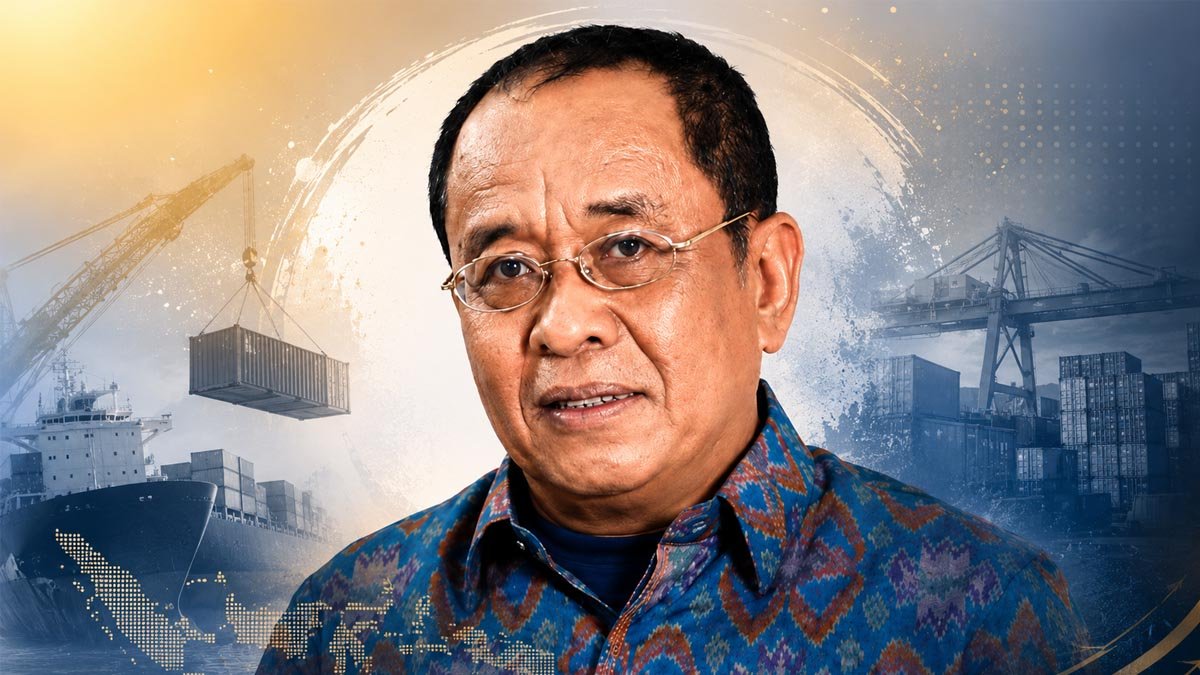
Amid concerns raised by several sectors, including the palm oil industry, former State-Owned Enterprises Ministry official and public policy observer Said Didu voiced strong support for the government’s initiative, arguing that tighter export governance is necessary to prevent long-standing state revenue leakages.
In a post shared on social media platform X, Said Didu encouraged the public to support the government’s efforts to manage natural resource exports through a more integrated state-controlled mechanism.
“Let us support the government’s policy to manage natural resource exports,” Said Didu wrote, as quoted by Palmoilmagazine.com on Sunday (24/5/2026).
According to him, opposition to the proposed policy may come from groups that have benefited from loopholes within Indonesia’s export trading system. He argued that the reform is aimed at eliminating practices that have caused significant financial losses to the state.
Said Didu identified five major practices that he believes have contributed to state revenue leakages: under-invoicing, transfer pricing, smuggling, manipulation of export product classification or HS Codes, and financial engineering schemes.
Also Read: Indonesia Eyes Single-Gate CPO Export System to Curb Revenue Leakages
“These five forms of theft have caused state losses amounting to thousands of trillions of rupiah,” he stated.
He also argued that companies operating transparently and in compliance with regulations should have no reason to fear the upcoming policy changes. According to Said Didu, strategic commodities such as crude palm oil (CPO), coal, ferro alloys, nickel, tin, and gold are traded using internationally recognized benchmark prices that can be monitored openly.
For that reason, he suggested that recent declines in the share prices of several companies following discussions about the new export governance policy may reflect concerns among certain business groups.
Also Read: Prabowo Highlights Palm Oil Export Leakages, Warns of Under-Invoicing Practices
“Honest companies will not be affected by this policy because the commodity prices being regulated are based on international auction prices that can be monitored at any time,” he wrote.
Previously, the government’s plan to strengthen export governance through a state investment management institution had attracted broad attention from industry players, including the palm oil sector, which emphasized the need for clear implementation mechanisms and transparency to avoid disrupting Indonesia’s export trade flows.
The proposed reform is part of broader government efforts to tighten oversight of strategic commodity exports and maximize state revenue from Indonesia’s natural resources. (P2)